Crash Casino Game Australia: How It Really Works
 Available in AU
Table of Contents
- Cash Casino Environment for Crash Games in Australia
- Playing Crash Casino Games Online – What Australian Players Must Know
- What Is a Crash Casino Game? Mechanics and Popularity in Australia
- Crash Slots vs Traditional Slots – Key Differences
- Beyond Crash: Other Casino Game Types Available to Australians
- Free Crash Casino Game Versions – Risks and Realities
- Crypto‑Based Crash Casinos: Opportunities and Legal Gray Areas
- Crash Casino Strategy, Rules, and Stake Management
- Bitcoin and Balloon Variants of Crash Games
- Provably Fair and Play‑Safe Crash Casino Platforms
Cash Casino Environment for Crash Games in Australia
Walk into any physical casino floor in this country and you won’t find a machine with "crash" written on it. I’ve gone looking, more than once, mostly because I wanted to see if the thing I was playing at 2am on my phone had a real-world cousin sitting under fluorescent lights next to the pokies. It doesn’t, not really. What you find on the floor of a licensed Australian venue is a strictly regulated environment, and that regulation is exactly why crash games don’t live there.
Here’s the split that took me a while to actually understand, not just repeat. Land-based casinos in Australia are regulated by state government regulators and law enforcement agencies. That’s a completely separate system from the one covering online gambling, which sits with the Australian Communications and Media Authority at the federal level. Two different rulebooks, two different enforcement chains, and — this is the part that surprised me — no single body sitting above both of them. There is no single overarching statute or single overarching gambling authority regulating gambling in Australia. It’s state by state on the floor, and federal online, with gaps between the two that a lot of operators have made a living inside of.
Before you dive into a crash game, it helps to know which casino you’re playing at — payout speed and deposit requirements matter just as much as the game itself. Here’s a quick rundown of what each operator on this page brings to the table.
Bonus: up to A$750 + 50 jackpot spins, 35x wagering · Payout speed: crypto ~90 minutes, fiat 1-5 days · Min. deposit: A$30 Kingmaker offers a welcome package that includes jackpot spins alongside the deposit bonus, with crypto withdrawals processed in around 90 minutes and a low entry deposit of A$30.
License: Curacao eGaming OGL/2023/174/0082 (Dama N.V.) · Bonus: up to A$10,000 + 500 free spins across 4 deposits · Min. deposit: A$15 LevelUp Casino runs under a Curacao eGaming license held by Dama N.V., with a large multi-deposit bonus and a low A$15 minimum deposit for easy entry.
License: Curacao · Bonus: 100% up to A$500 + 200 free spins, 10x wagering · Payout speed: crypto 30-60 minutes, fiat 1-5 days · Min. deposit: A$10 Wild Tokyo holds a Curacao license and pairs a low 10x wagering requirement with fast crypto payouts of 30-60 minutes, plus a low A$10 minimum deposit.
Bonus: 240% up to A$4,100 + 300 free spins WinShark stands out with a sizeable 240% match bonus and a solid batch of free spins on top.
Bonus: up to A$7,500 + 550 free spins across 10 deposits, 50x wagering · Payout speed: crypto under 1 hour, PayID 1-3 business days · Min. deposit: A$20 (A$30 to qualify for the bonus) Ricky Casino spreads a large bonus across ten deposits and offers quick crypto withdrawals under an hour, with PayID as a fiat option for Australian players.
License: Curacao Gaming Control Board OGL/2023/176/0095 (Hollycorn N.V.) · Bonus: up to A$11,000 + 300 free spins (code NEO100) Neospin is licensed by the Curacao Gaming Control Board under Hollycorn N.V. and offers a large welcome bonus with free spins activated via a bonus code.
License: Tobique Gaming Commission · Bonus: up to A$8,000 + 400 free spins across 4 deposits · Payout speed: crypto ~10-15 minutes, fiat 1-5 days · Min. deposit: A$30 SkyCrown operates under a Tobique Gaming Commission license and spreads its bonus across four deposits, with notably fast crypto withdrawals of around 10-15 minutes.
License: Curacao eGaming (Dama N.V.) · Bonus: up to A$10,000 + 180 free spins, 40x wagering JeetCity Casino is licensed by Curacao eGaming under Dama N.V. and offers a substantial welcome bonus with a 40x wagering requirement.
License: Curacao Gaming Authority (Jumpman Gaming Ltd) · Bonus: up to A$6,600 + up to 250 free spins across 4 deposits DragonSlots Casino is licensed by the Curacao Gaming Authority under Jumpman Gaming Ltd, offering a bonus spread across four deposits with a solid free spins allowance.
License: Curacao eGaming (Roby Games Ltd) · Bonus: 100% up to A$750 + 200 free spins Roby Casino holds a Curacao eGaming license under Roby Games Ltd and provides a straightforward welcome bonus matched with free spins.
Each state and territory runs its own regulator for the venues within its borders. New South Wales has its own approach, Victoria has the Victorian Gambling and Casino Control Commission, and so on. The VGCCC’s job isn’t limited to Victorian floors either — it monitors all wagering service providers, including those based in other states, checking them against the National Consumer Protection Framework. That’s a genuinely broad remit on paper. What it doesn’t extend to, and this matters a lot for anyone chasing a crash multiplier from their couch, is any real power over offshore online casinos. State regulators like the VGCCC and Liquor & Gaming NSW have limited power over offshore online casinos. They can write reports, they can warn people, they can’t shut down a site hosted in another jurisdiction with a licence from somewhere else entirely.
Why crash games skip the physical floor
Crash games are a digital invention through and through — a rising line, a cash-out button, a countdown to a number nobody controls until it happens. There’s no mechanical or even video-slot equivalent that a state gaming authority has certified for a casino floor, because the entire premise depends on live, continuous online interaction with a server, not a certified RNG chip sitting in a cabinet that’s been tested and sealed by an inspector. Licensed land-based venues run games that have gone through a certification process specific to that state. Nothing about a crash game’s format fits that process, so it never shows up there.

That absence is also downstream of the bigger legal wall. Online casino style games, including slots, poker, blackjack, and roulette, are prohibited under the Interactive Gambling Act 2001. Crash games sit in that same bucket in every practical sense — they’re an online casino product, whatever wrapping they come in. Online casino, poker, and in-play betting are prohibited federally under this same law. And it’s not a matter of applying for the right paperwork: it is illegal to offer online casino gambling in Australia, and there’s no path to a domestic licence for running one, crash-branded or otherwise. There are no domestically licensed real-money online casino operators available to Australian players. Full stop. Not "limited options" — none.
So when people ask about "cash or crash" casinos as if they’re hunting for a local venue category, the honest answer is that the category doesn’t exist inside Australia’s licensed system. What exists is a legal gap: offshore sites offering these games to Australian residents, sitting outside the reach of both the state regulators who run the physical floors and, largely, the federal regulator meant to police the online space.
Illegal Operators
Playing crash games in Australia involves offshore operators that are illegal under the Interactive Gambling Act, putting you at risk of unregulated sites.
What this means if you’ve only ever played in person
If your gambling experience so far has been an actual casino trip — a real croupier, a real floor, a real licence on the wall — crash games are a different animal entirely, and not just because of the format. The whole regulatory scaffolding you’d normally rely on when you walk into a licensed venue simply isn’t underneath the crash game you’re looking at on a phone screen. There’s no state inspector who’s certified the multiplier curve. There’s no local licence number to check because, as covered elsewhere, no such register of legitimate operators exists for this market anyway.
I made this mistake myself early on, treating an offshore crash site with the same instinctive trust I’d give a casino floor with a Liquor & Gaming NSW sticker somewhere near the door. Wrong instinct. The comfort of a physical, regulated space — the kind state authorities actually oversee and can act against if something goes wrong — doesn’t transfer to whatever’s running behind a crash game’s interface. It’s not that one is automatically worse than the other. It’s that they’re answerable to entirely different systems, and only one of those systems has any real teeth inside Australian borders.

That’s the environment crash games actually exist in here: a legal no-man’s-land between state-licensed casino floors that will never carry the game, and a federal law that already prohibits the category it belongs to. Understanding that split is the first thing worth getting straight before going anywhere near what "playing" one of these actually looks like day to day.
Playing Crash Casino Games Online – What Australian Players Must Know
The first time a mate asked me if playing an online casino crash game from Perth was going to get him in trouble, I didn’t have a straight answer. So I went and read the actual law instead of guessing, and the answer turned out simpler than the fear-mongering forum posts suggested.
Here’s the legal shape of it: the Interactive Gambling Act 2001 is the Commonwealth law that governs this space. It exists, according to its own stated purpose, to protect the public and reduce gambling harm — not to punish people for having a flutter. Some older references cite an Interactive Gambling Act 1997 as the law banning online casino games for Australian residents. That’s worth flagging plainly rather than pretending there’s one tidy answer: sources disagree on which year the relevant Act belongs to, 1997 or 2001. I’m not going to pick a side for you — just know that if you dig around and see both dates floating around, that’s not you misreading something, that’s the actual state of the public record.
Sources differ on whether the ban is under the Interactive Gambling Act 1997 or 2001; both versions prohibit online casino games for Australian residents.
What both versions agree on is the target. The law goes after the people running the show — the operators — not the person sitting on the couch clicking "place bet" before a multiplier climbs. It is not illegal for an individual Australian to play at an offshore-licensed online casino. That includes crash games. You’re not committing an offence by loading one up and watching a rocket, a plane, or whatever animation they’ve bolted onto a rising-multiplier bet, and cashing out before it crashes.
So who’s actually breaking the law?
Short version: the site, not you.
Offering online casino games to Australian residents from an unlicensed offshore operation is illegal under the Act. That’s a big reason you won’t find a single Australian-licensed real-money online casino — because there isn’t one, and there can’t be one. The operators running crash games that Australians play are, without exception, licensed somewhere else entirely — Malta, Curaçao, wherever — and they’re technically operating outside what Australian law permits, even though the player on this end isn’t the one in breach.
This is where it gets a bit murkier than people expect. There’s no single national gambling regulator watching all of this from one desk. Enforcement of the Interactive Gambling Act sits with the Australian Communications and Media Authority, ACMA. But the entity that actually licenses most of the online bookmakers operating nationally is the Northern Territory Racing Commission, which does it because of the lower tax rate on offer there — and it functions as something close to Australia’s de-facto regulator for online wagering, even though its remit and ACMA’s don’t perfectly overlap.
What ACMA can and does do
ACMA doesn’t chase individual players. What it does is go after access. Since November 2019, it’s had the power to order Australian internet service providers to block illegal offshore gambling sites outright. According to figures reported as of August 2025, ACMA had blocked 1,296 illegal gambling sites and affiliates since that enforcement period began, and 220 illegal services had voluntarily pulled out of the Australian market rather than keep fighting it. I’ll say it as it was reported rather than as settled fact, because the numbers keep moving and different sources have quoted different totals at different points — it’s a snapshot, not a permanent scoreboard.
Practically, that means the crash casino sites you find through a search today might be gone, blocked, or replaced by a mirror domain in a few months. That’s not paranoia, that’s just how this corner of the internet works when a regulator is actively pulling down access points.
What this actually means for you
- Playing a crash game on an offshore site isn’t a criminal act on your part.
- The operator running that site is very likely operating illegally under the IGA regardless of what license badge sits in their footer, because no license makes offering online casino games to Australians lawful.
- Your ISP may eventually block the site you’re using — that’s ACMA’s tool, not a court coming after your bank account.
- There’s no domestic licence, no local regulator’s stamp, nothing to “check” before you sign up, because the register you’d want to check doesn’t exist here.
I’m not telling you what to do with that information. I’m telling you what it actually is, because most of what circulates about this is either scare tactics or wishful thinking, and neither one is accurate.
What Is a Crash Casino Game? Mechanics and Popularity in Australia
Strip away the graphics and a crash game casino is one of the simplest things you’ll find on a screen: a multiplier climbs from 1.00x upward, and you decide when to cash out before it crashes back to zero. No cards, no reels, no croupier making small talk. Just a number going up and your nerve deciding when to stop it.
That simplicity is exactly why it spread so fast. You don’t need to learn hand rankings or understand paylines. You place a bet, watch the line, click cash out. The whole round takes seconds. I remember the first time I played one at 1am thinking it was almost stupid how little there was to "learn" — and that was the trap. Nothing to learn means nothing stopping you from clicking again immediately. The house edge doesn’t disappear just because the interface looks like a stock chart instead of a slot machine.
Why it caught on the way it did
A few things stack together here. The rounds are fast, which means more decisions per minute than a pokies session or a hand of blackjack. The multiplier is visible in real time, so there’s a constant feeling of "I could have cashed out higher" that keeps you in the next round. And because the format borrows visual language from trading charts, it doesn’t feel like a traditional casino game to a lot of people who’d never sit down at a roulette table. Whether that feeling is accurate is a different question — underneath, it’s still a random number game with a house edge built in.
A multiplier climbs in real time and you cash out before it crashes, no reels or RNG chip.
Uses a random number generator to determine outcome before the reels stop, with fixed paylines.
Crash games are offered only by offshore operators and are illegal for operators; traditional slots are also prohibited online but exist in physical venues.
None of this happens on a licensed Australian platform, because none exists for this kind of game. Crash titles that Australian players find are running on offshore sites, operating outside the framework that governs local wagering.
Enforcement has been chipping away at availability
This is where the picture gets less simple than the game itself. Since the regulator began enforcing tougher rules in 2017, more than 100 illegal gambling services — including online casinos offering games like this one — have exited the Australian market, according to figures reported by theiaga.org. That’s one account of the trend, not a fixed industry statistic, and the numbers keep moving as enforcement continues.
Separately, reporting on ACMA’s website-blocking activity gives different tallies depending on when the snapshot was taken. One figure, current as of a 2024 publication, puts blocked illegal gambling and affiliate sites at 975 since November 2019. Another, current as of August 2025, puts the number at 1,296 blocked sites and affiliates since 2019, with over 220 services having voluntarily left the market — a figure also cited independently by boomaff.com. The two sets of numbers don’t match because they’re measuring the same enforcement drive at different points in time, not because one is wrong.
What matters practically: ACMA has the power to request that offshore sites offering prohibited games — casinos, pokies, in-play sports betting — be blocked at the ISP level. What it can’t do is force platforms like Facebook to pull gambling ads targeting Australians, because the law’s wording only bites on advertising happening "in Australia." That gap is part of why crash games keep surfacing in social feeds and on affiliate sites even as the underlying platforms get blocked one by one.
So the mechanics of the game haven’t changed — climb, cash out, or lose it. What’s changed is the landscape around it: a slow, uneven, well-documented squeeze on where you can actually access it from an Australian connection, with the count of blocked and departed operators still being tallied differently depending on who’s counting and when.
Crash Slots vs Traditional Slots – Key Differences
I used to think a "crash slot" was just a slot with a rocket on the reels. It’s not. The difference isn’t cosmetic — it’s the whole mechanic underneath, and once you see it, you can’t unsee it.
A traditional pokie — and yes, I’m using the word Aussies actually use, not "slot machine" like some translated brochure — runs on a random number generator that decides the outcome the moment you hit spin. Reels, paylines, a fixed RTP baked into the math. You’re betting on a static outcome. The animation is theatre; the result was already set before the wheels stopped turning.
No Domestic Licence
There is no Australian‑licensed operator offering crash games, so you cannot verify any licence or regulatory compliance.
A crash slot throws that structure out. There’s no reel. There’s a multiplier climbing in real time, and your only decision is when to cash out before the curve collapses. It borrows the visual skin of a slot — sometimes literally, rockets, balloons, whatever theme — but the engine is a live, continuously generated curve, not a spin result. You’re not betting on a combination. You’re betting on your own nerve.
What actually changes for the player
- Pacing. A pokie round ends in seconds regardless of what you do. A crash round ends when you decide, or when the curve decides for you. That single difference changes how people play — I’ve watched myself hold on two seconds too long more times than I’d like to admit.
- Control illusion. Traditional slots give you zero control past choosing your stake. Crash games make you feel like you’re steering the outcome because you pick the exit point. You’re not steering anything. The curve is still generated independently of your choice — you’re just choosing when to stop watching it climb.
- House edge visibility. With a pokie, the house edge is buried in the paytable math, invisible unless you go digging. With a crash curve, the edge is baked into the distribution of how often the multiplier crashes early versus late. Different mechanism, same underlying principle: the house edge doesn’t go anywhere just because the interface looks different.
- Session rhythm. Pokies are built for volume — spin after spin, low friction. Crash games have a natural pause built in: you watch, you decide, you watch again. Some players find that pause helps them think. Others, myself included on a bad night, find it just gives you more time to talk yourself into one more round.
Where the regulatory line actually falls
Here’s the part that matters more than any of the above, because it’s the part that decides whether the game reaches you legally at all. None of this — crash, pokies, whatever theme wraps around the mechanic — falls under the same rules as sports betting. Online sports betting is legal in Australia under state and territory licences. Casino-style games, crash slots included, aren’t offered through that same licensed path, and there’s no domestic licence covering them regardless of what the interface looks like.
There’s also a live-betting distinction worth knowing, even though it sits in a different corner of the law: in-play online betting is illegal in Australia, while live betting by phone is legal. Crash games run in real time, which makes people assume they sit in some similar grey zone. They don’t — they’re a different category of product entirely, and the "in-play" rule is about sports wagering, not about crash mechanics.
Interactive Gambling Act
The federal law that bans offering online casino games, including crash games, to Australian residents, regardless of the operator’s location.
What ACMA can actually do about any of this offshore is narrower than people assume. It can investigate and block prohibited interactive gambling services, and it issues notices to internet service providers to get offending sites blocked. It can also push things further — civil proceedings, flagging operators’ directors to border protection, working with foreign regulators. What it can’t do is get your money back or sort out a dispute with an offshore site on your behalf. That’s not a footnote. If a crash slot session goes sideways with a site outside Australia, there’s no regulator picking up your case.
So the real distinction between crash slots and traditional slots isn’t just how they play. It’s that the flashy new mechanic changes nothing about who’s answerable when something goes wrong.
Beyond Crash: Other Casino Game Types Available to Australians
Once you’ve spent a few weeks watching a multiplier climb and bail out (or not), you start noticing the rest of the lobby. Same site, same account, dozens of other games sitting right next to the crash tab. Poker variants, blackjack, roulette, pokies by the hundred, live dealer tables with a croupier dealing from what’s supposedly a studio somewhere overseas. I clicked through most of it out of curiosity more than strategy, and it’s worth being honest about what that catalogue actually is under Australian law.

None of it is legal for an operator to offer you. The Interactive Gambling Act 2001 is the law doing the work here — though you’ll sometimes see the 1997 Act cited for the same ban, and the sources genuinely don’t agree on which one gets the credit. Either way, the outcome is the same: slots, poker, blackjack, and roulette are all named explicitly as prohibited online casino games under that legislation. Crash games get discussed on their own because they’re new enough to sit in a grey zone about classification, but the classics don’t have that ambiguity. Roulette is roulette. Blackjack is blackjack. The law doesn’t care what skin the site puts on it.
What you’ll actually find in the lobby
- Live dealer games — blackjack, baccarat, roulette, streamed with a real croupier. Feels the most “casino” of anything on these sites, which is exactly why it’s popular and exactly why it’s banned for a reason: the harm-minimisation focus in the Act doesn’t distinguish between a live table and a random number game.
- Video poker and poker-style tables — Texas Hold’em variants, Caribbean stud, that sort of thing.
- Pokies — by far the biggest single category on any offshore lobby I’ve opened, running into the hundreds per site.
- Roulette — European, American, sometimes a dozen skinned versions of the same wheel.
- Blackjack — usually several rule variants sitting side by side.
I’m not naming which operators run which of these because that’s not something I can back with a source, and guessing at it here would be worse than saying nothing.
What struck me more than the games themselves was how little cover the operators have. The IGA doesn’t just target the obvious front-end — the regulator can go after the plumbing too. ACMA has the power to write to software developers and other third parties it considers ancillary to a breach, which tells you the enforcement net is meant to be wider than "block the website." And when a product shows up that ACMA considers seriously out of line, the response isn’t a polite letter — there’s precedent for warning notices being issued and matters referred straight to the Australian Federal Police.
None of that stopped me from being able to load the games. That’s the part that’s genuinely confusing if you’ve never dealt with this before: illegal to offer, not illegal to play, fully functional in your browser regardless. It doesn’t mean the games are safe or the site is accountable to anyone in Australia if something goes wrong with your withdrawal. It just means the ban sits on the operator’s side of the screen, not yours.
If you’re comparing crash games against everything else on offer, the honest takeaway is that crash isn’t special because it’s exempt from anything — it’s just newer, and the paperwork hasn’t fully caught up to naming it the way it’s named slots and blackjack. The rest of the catalogue has been called out by name for years. Worth remembering next time a site markets its "full casino experience" like that’s a selling point rather than a legal grey zone with better graphics.
Free Crash Casino Game Versions – Risks and Realities
Every crash casino site I’ve poked around has a "demo" or "free play" button sitting right next to the real-money one. I get why people click it first — you want to see the curve climb, watch a few rounds crash at different points, get a feel for the rhythm before you risk anything. That part’s fair enough.
Here’s the thing nobody tells you upfront: the free version exists to get you comfortable, not to teach you the game. It’s built to feel good. Some free modes run on the same random number generator as the paid game, some don’t, and there’s no way for you to check which one you’re playing unless the operator spells it out — most don’t. You’re trusting the house’s word on it.
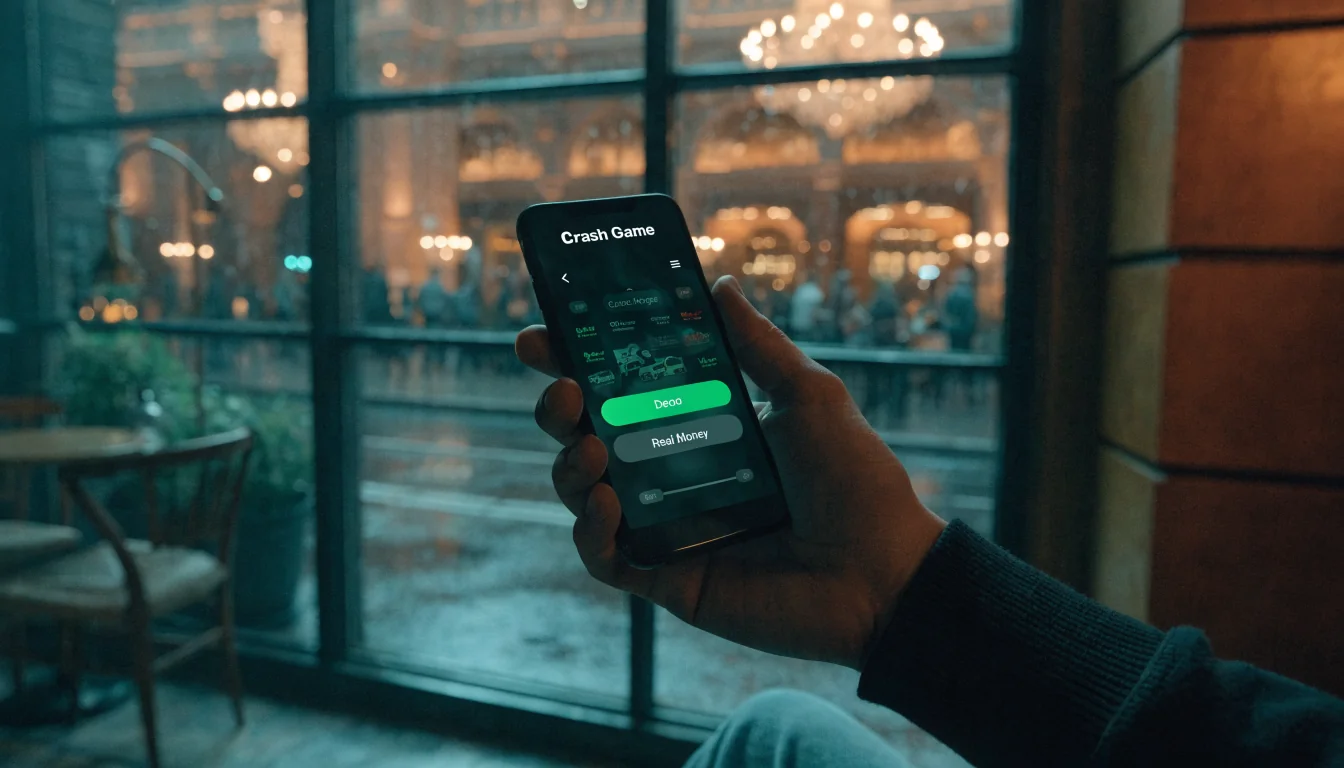
The bigger issue is what happens after. "Free crash" isn’t a separate product with its own rulebook — it’s a doorway into the same offshore casino operation that’s already outside Australian law. The moment you switch to real money, you’re back in the same territory covered elsewhere in this piece: an operator with no Australian licence, no local dispute process, nothing to appeal to if something goes wrong with your account or your withdrawal.
That’s not a small print detail. ACMA has been ordering internet providers to block offshore gambling sites since November 2019, and it keeps adding names to that list. A site offering "free crash" today can be blocked tomorrow — and if it is, whatever balance or account history you had there just disappears with it.
And even when ACMA does step in, its power stops at blocking access. It can investigate, it can order the block, but it can’t chase your money back or sit down and settle a dispute with the operator on your behalf. If a free-play site pushes you toward a real-money account and something goes sideways with a deposit or a payout, there’s no regulator picking up that fight for you.
So play the free version if you want to learn the pattern. Just don’t treat it as a safety test for the real thing sitting right behind it.
Crypto‑Based Crash Casinos: Opportunities and Legal Gray Areas
Bitcoin, Ethereum, and a handful of other coins keep showing up as deposit options on crash sites, and I get why that appeals to people. No bank statement with a gambling site’s name on it, no waiting on a card processor. But "crypto" doesn’t mean "outside the law." That’s the part I got wrong at first, thinking a wallet address somehow moved the whole thing into a different legal category. It doesn’t.
The rules that apply to a crash game funded with real money apply to the same game funded with Bitcoin. Interactive Gambling Act 2001 doesn’t carve out an exception for crypto payments — it’s still an online casino-style product, offered to someone in Australia, from an offshore operator with no domestic licence for this kind of game. The coin is just the payment rail. Nothing about how the deposit clears changes what the game legally is.
Using Bitcoin or other cryptocurrencies does not exempt crash games from the Interactive Gambling Act; the same legal restrictions apply.
Where things actually get murky is enforcement, not legality. ACMA can ask ISPs to block sites offering games not permitted here — and crypto-funded crash sites fit that description as much as any other. But the agency has no power to force platforms like Facebook to pull gambling ads aimed at Australians, because of how the advertising ban is worded — it only bites on ads placed "in Australia." Crypto casinos, many run from jurisdictions with no interest in cooperating, lean on exactly that gap. You’ll see the ads. The blocking happens after the fact, site by site, not before.
So the "opportunity" side is real in a narrow sense — faster deposits, sometimes fewer questions asked. The gray area isn’t whether it’s allowed. It’s how much slower the response is compared to how fast a new mirror site or a rebranded domain can appear. That gap is where the risk actually sits, not in the coin itself.
Crash Casino Strategy, Rules, and Stake Management
Every crash game runs on the same skeleton. A multiplier climbs from zero, you cash out whenever you want, and if you wait too long the round crashes and takes your stake with it. That’s the whole rulebook. No paylines, no bonus rounds, just a number going up and your nerve deciding when to stop.
The "strategy" talk online gets silly fast. People swear by cashing out at a fixed multiplier every round, or doubling their bet after a loss to "catch up." I tried both for a stretch. The fixed-multiplier approach felt disciplined right up until a string of early crashes wiped out three sessions in a row. The doubling one — chasing losses with bigger stakes — is how you turn a bad night into a genuinely bad month. Neither beats the game’s built-in edge. They just change how fast you find that out.
What actually helped me wasn’t a system, it was limits set before I opened the site. Decide your stake for the session, not per round. Decide when you stop — a number, not a "feeling." Write it down somewhere you’ll actually look at again, because in the moment the multiplier climbing past a number you’d normally cash out at feels like proof you should’ve waited longer. It’s not proof of anything. It’s one round.
A note on where this even sits legally: playing these games as an individual isn’t illegal in Australia — the Interactive Gambling Act 2001 targets the operators offering them, not the person clicking the button. Some sources cite this framework under the 1997 Act instead; either way, the offshore sites hosting crash games aren’t licensed here, and no strategy changes that fact.
Stake management, in the end, is the only "rule" you actually control. The crash point isn’t yours to predict.
Legal Risk
Playing crash games is legal for you, but the offshore operators providing them are breaking Australian law.
Bitcoin and Balloon Variants of Crash Games
Two spin-offs keep coming up whenever someone mentions crash games these days: the Bitcoin version and the balloon-themed one. They’re not different games so much as different skins on the same idea, but the wrapping matters for how people find them and think about them.
Bitcoin crash games are exactly what they sound like — the multiplier climbs the same way, you cash out before it pops, except your bet and payout are denominated in crypto instead of dollars. I’ve seen forum posts treating this like some kind of loophole, as if paying in Bitcoin sidesteps the rules somehow. It doesn’t. The underlying activity is still an online casino game, and online casino play is prohibited federally under the Interactive Gambling Act 2001 regardless of what currency changes hands. Swapping AUD for BTC doesn’t move the game into a different legal category — it’s still the same product, just harder to trace.
Balloon variants are more of a theming exercise. Instead of a rocket or a line graph climbing a chart, you’ve got a balloon inflating, and it pops instead of crashing. Mechanically it’s the identical bet-and-cash-out loop wearing a different costume. I played one for maybe twenty minutes once and kept expecting it to feel different because the animation was cuter. It didn’t. Same tension, same decision point, same result either way.
What neither variant does is create a new legal lane. There’s no separate rulebook for "Bitcoin games" or "balloon games" — they fall under the same prohibition as any other crash title marketed at Australian players. The one genuinely legal corner of online betting in this country is sports wagering through state and territory licensed operators, and that’s a completely different product with a different rulebook. Crash games, whatever they’re called and whatever currency they take, sit outside that.
If a site leans hard on the crypto angle or the cute theming, treat that as marketing, not as a sign the rules have changed.
Provably Fair and Play‑Safe Crash Casino Platforms
"Provably fair" gets thrown around a lot, and the first time I saw the badge I assumed it meant someone official had checked the game. Nobody had. What it actually means is that the crash multiplier is generated from a seed you can verify yourself, usually by running a hash check after the round ends, so you can confirm the outcome wasn’t altered once your bet was placed. It’s a math guarantee, not a legal one. Nobody licenses it, nobody audits it on your behalf.
That gap matters more than the badge does. If you play crash on an offshore site and something goes wrong — the round freezes, the cash-out doesn’t register, the site just stops replying — there’s no local body that steps in to sort it out. ACMA can investigate and shut down access to a service it decides is operating illegally, but it has no mechanism to get your money back or mediate a dispute with an operator sitting overseas. And when the same operator runs ads through Facebook or similar platforms, ACMA can’t force those platforms to pull them either, because the law only bites on advertising placed "in Australia," and offshore-run promotion slips around that.
So verify the hash if you want to, it’s a decent check on the game itself. Just don’t mistake it for protection. That part isn’t there.
Are crypto casinos legal in Australia in 2026?
No, it is illegal to offer online casino gambling in Australia under the Interactive Gambling Act 2001, and there is no domestic licensing path for any online casino, crypto-branded or otherwise. Individual players aren’t prosecuted for using offshore sites, but those operators are unlicensed and sit outside the reach of Australian regulators.
What payment methods are available for Australian players at online casinos?
Domestically licensed real-money online casinos don’t exist in Australia, so there’s no local payment pipeline for casino games. Any deposit or withdrawal methods you encounter would come from offshore operators operating outside the Australian regulatory system.
How do I deposit and withdraw at an online casino as an Australian player?
Since no domestically licensed online casinos are available, any deposit or withdrawal you’d make happens through offshore platforms that sit outside Australian law. ACMA actively blocks access to many of these illegal offshore sites, and it cannot recover funds or settle disputes if something goes wrong with your transactions.
How can a player verify that an online casino holds a valid licence in Australia?
You can’t, because there is no such thing as a valid Australian online casino licence. It is illegal to offer online casino gambling domestically and no pathway exists for operators to obtain one — any site claiming an Australian casino licence is misrepresenting itself.
Written by the editors at Casino Payments Info.