
Best Video Slots in Australia: How They Actually Work
 Available in AU
Table of Contents
What Video Slots Are and How They Work in Australia
I lost more money than I want to admit before I actually understood what "RTP" meant. I saw the number, nodded like it mattered, and kept spinning. It took a proper losing streak — the kind where you start doing maths on your phone at 1am — before I sat down and worked out what’s actually happening under the hood of a video slot. So let’s do this properly, without the marketing gloss.
A video slot is the digital descendant of the mechanical fruit machine. No physical reels, no springs, no levers that actually do anything mechanical — it’s a screen showing animated reels driven by software. Every result comes from a random number generator (RNG), a piece of code that spits out numbers constantly, and whatever number lands the moment you hit "spin" decides your outcome. The animation of spinning symbols is theatre. The actual decision happens instantly, before the reels even finish their little dance.
This matters because it kills one of the oldest gambling myths going: that a machine can be "due" a win, or that it’s "cold" after a run of losses. Each spin is independent. The RNG doesn’t remember your last ten spins, doesn’t know you’re frustrated, doesn’t care that you’ve been playing for three hours. It’s not tracking anything. It just generates a number, that number maps to an outcome, and the process resets completely for the next spin. I used to walk away from a machine convinced it "wasn’t paying out" and go find a different one that felt luckier. That’s not a strategy — that’s just a story I told myself to feel in control of something that has no memory at all.
With so many video slots platforms competing for Australian players, you need a quick way to see what each casino actually offers before you sign up.
Bonus: up to A$750 + 50 jackpot spins, 35x wagering · Payout speed: crypto ~90 minutes, fiat 1-5 days · Min. deposit: A$30 You get a bonus reaching A$750 plus 50 jackpot spins with 35x wagering, and crypto withdrawals land in around 90 minutes while fiat takes a few days, with a A$30 minimum deposit.
License: Curacao eGaming OGL/2023/174/0082 (Dama N.V.) · Bonus: up to A$10,000 + 500 free spins across 4 deposits · Min. deposit: A$15 Licensed under Curacao eGaming via Dama N.V., this operator offers a large welcome package worth up to A$10,000 with 500 free spins spread across four deposits, and a low A$15 minimum deposit.
License: Curacao · Bonus: 100% up to A$500 + 200 free spins, 10x wagering · Payout speed: crypto 30-60 minutes, fiat 1-5 days · Min. deposit: A$10 Curacao-licensed, with a welcome offer of 100% up to A$500 plus 200 free spins at 10x wagering, fast crypto payouts of 30-60 minutes, and a A$10 minimum deposit.
Bonus: 240% up to A$4,100 + 300 free spins You’ll find a sizeable 240% bonus up to A$4,100 plus 300 free spins here.
Bonus: up to A$7,500 + 550 free spins across 10 deposits, 50x wagering · Payout speed: crypto under 1 hour, PayID 1-3 business days · Min. deposit: A$20 (A$30 to qualify for the bonus) This operator offers a substantial bonus up to A$7,500 with 550 free spins across ten deposits at 50x wagering, plus quick crypto payouts under an hour and PayID processing within a few business days.
License: Curacao Gaming Control Board OGL/2023/176/0095 (Hollycorn N.V.) · Bonus: up to A$11,000 + 300 free spins (code NEO100) Licensed by the Curacao Gaming Control Board through Hollycorn N.V., you can claim up to A$11,000 plus 300 free spins using the code NEO100.
License: Tobique Gaming Commission · Bonus: up to A$8,000 + 400 free spins across 4 deposits · Payout speed: crypto ~10-15 minutes, fiat 1-5 days · Min. deposit: A$30 Holding a Tobique Gaming Commission license, this casino offers up to A$8,000 plus 400 free spins across four deposits, with very fast crypto payouts of around 10-15 minutes and a A$30 minimum deposit.
License: Curacao eGaming (Dama N.V.) · Bonus: up to A$10,000 + 180 free spins, 40x wagering Operating under a Curacao eGaming license via Dama N.V., you get a bonus up to A$10,000 with 180 free spins at 40x wagering.
License: Curacao Gaming Authority (Jumpman Gaming Ltd) · Bonus: up to A$6,600 + up to 250 free spins across 4 deposits Licensed by the Curacao Gaming Authority under Jumpman Gaming Ltd, this casino offers up to A$6,600 plus as many as 250 free spins spread over four deposits.
License: Curacao eGaming (Roby Games Ltd) · Bonus: 100% up to A$750 + 200 free spins Licensed through Curacao eGaming via Roby Games Ltd, you can claim a 100% bonus up to A$750 plus 200 free spins.
What RTP Actually Means
RTP stands for Return to Player, and it’s the single most useful number on any slot’s info screen — assuming you know how to read it. RTP is the percentage of all the money wagered on a slot that gets paid back to players over time. Not over your session. Not over your Tuesday night. Over time, meaning across a volume of play that’s frankly inhuman — millions or billions of spins.
Here’s the practical version: a slot with a 96% RTP is built to return about $96 for every $100 wagered, across that entire lifetime of play. The other $4 is the house-edge percentage — RTP and house edge are inverse values, two ways of describing the same split. High RTP, low house edge. Low RTP, high house edge. When you see one, you can work out the other by subtracting from 100.
I want to be direct about something I got wrong for a long time: I treated RTP like a prediction of what would happen to my money tonight. It isn’t. It’s a long-run average built into the game’s design, not a promise about your next hour. A 96% RTP slot can absolutely eat your deposit in twenty minutes, and it can also hand you a run of wins that makes no mathematical sense in the moment. Both outcomes are consistent with a 96% RTP — because that number only becomes meaningful across a sample size no individual player will ever personally generate.
Misinterpreting RTP as a short‑term guarantee can lead to losses – RTP describes long‑run averages, not what will happen on your next few spins.
This is the difference between theoretical RTP and experienced RTP, and it’s worth sitting with because it’s the part most people skip. Theoretical RTP is the built-in percentage — the number baked into the game’s math model by the developer. Experienced RTP is whatever you personally see over your limited session, and it can look nothing like the theoretical figure. You might play two hundred spins and experience an RTP of 60%, or 140%. Neither disproves the theoretical number. It just means two hundred spins isn’t enough data for the law of large numbers to smooth things out. The industry standard I’ve come across for calculating that theoretical figure is running computer simulations of millions or billions of spins and using probability-weighted outcomes across every possible combination the game can produce. That’s the only way to get a number stable enough to publish.
A high RTP does not guarantee you’ll win, and it definitely doesn’t guarantee you’ll win soon. I’m putting that plainly because I’ve seen how easy it is to read "96% RTP" and translate that in your head to "I’ll get most of my money back tonight." That translation is wrong, and it’s the kind of wrong that costs people real money.

Working Out RTP From Real Numbers
The formula behind RTP is simpler than the marketing makes it sound. If a slot takes $110,000 in total bets and pays back $100,000 in winnings across all players over a given stretch, its RTP for that stretch is 90.9% — total paid back divided by total wagered, turned into a percentage. Regulators and testing labs run this same logic at scale, using simulated data instead of live betting totals, to arrive at the certified figure you see on the info screen. That figure then has to go through regulatory certification, which requires third-party verification before a game can carry an advertised RTP at all. It’s not the developer marking their own homework — an outside lab checks the maths against the actual game code.
Where this gets genuinely useful for you as a player is benchmarking. From what I’ve seen across the industry, the RTP figure that keeps coming up as a rough benchmark sits around 96%. Anything meaningfully above that gets called high RTP, anything meaningfully below gets called low RTP. That’s not a regulation, it’s just a reference point — but it’s a useful one when you’re comparing games. If a slot advertises something noticeably under that mark, it’s not broken or rigged, it’s just built with a bigger house edge, often because of extra features stacked into the game.
Progressive jackpot slots usually have a lower RTP because a portion of each bet funds the jackpot pool.
Progressive jackpot slots are the clearest example of that trade-off. Progressive jackpots often carry a lower RTP because a slice of every wager gets siphoned off to feed the jackpot pool that keeps growing until someone hits it. You’re not just betting against the base game’s paytable anymore — a portion of your stake is redirected before the base RTP calculation even happens. That’s not a hidden trick, it’s just the mechanic doing exactly what it’s designed to do. If you’ve ever wondered why a jackpot slot feels "tighter" than a standard one with a similar theme, that’s usually why.
One thing that surprised me when I actually looked into it: the same slot title can carry different RTP versions depending on which operator is running it. This isn’t universal across every provider, but it’s been reported for real — I came across it specifically through BGaming’s own documentation on their game library, where they note that certain titles ship with multiple configurable RTP settings that operators can select between. So the "Book of X" you’re playing on one site isn’t necessarily running the identical math model as the "Book of X" on another site, even though the artwork and theme are the same. It’s worth checking the specific game’s info screen on whichever platform you’re actually using rather than assuming a number you saw somewhere else applies.
Volatility Is the Other Half of the Story
RTP tells you how much a game gives back over time. It says nothing about how that money arrives. That’s volatility — a separate concept describing the pattern, frequency and size of payouts. Two slots can both carry a 97% RTP and feel like completely different games to actually play.
Low volatility means frequent, smaller wins — steadier, less dramatic, your balance drifts rather than swings. High volatility means long dry stretches punctuated by wins big enough to matter, and it can chew through a bankroll fast before it pays anything back. Neither is "better." They’re different shapes of the same long-run average, and which one suits you depends entirely on what you actually want out of a session — plenty of small hits to stay entertained, or the patience to sit through drought for a shot at something bigger.

A few concrete examples make this easier to picture than any abstract description will:
- Golden Paw: Hold & Win — RTP of 97%, medium volatility. Steadier pacing, wins come more evenly.
- Cat’s Soup — RTP of 98.06%, medium volatility. One of the higher published RTPs I’ve come across, still with a moderate payout rhythm.
- Aztec Clusters — RTP of 97%, very high volatility. Same headline RTP as Golden Paw, but a completely different play pattern — long gaps, bigger spikes.
- Merge Up™ 2 — RTP of 97%, very high volatility. Another high-volatility title in that same 97% bracket.
- Always Up! x10000 — RTP of 96.05%, very high volatility. Sits right near that 96% benchmark but plays nothing like a “standard” game because of the volatility.
- Blazing Fire Pots Hold & Spin — RTP of 96.27%, medium-high volatility. Slightly steadier than the very-high-volatility group above, but still leaning toward bigger, less frequent hits.
Look at that list again: three of those games cluster around a 96-98% RTP, but their volatility ratings range from medium to very high. If you only checked the RTP number before playing, you’d assume they behave similarly. They don’t. I made that exact mistake once — picked a game purely because the RTP looked good, then got frustrated twenty minutes in because I didn’t understand why it wasn’t paying out like the last one, which happened to have a much steadier volatility profile. The RTP was fine. I just hadn’t checked the other half of the equation.
Online vs. Land-Based: Why the Numbers Differ
There’s a structural reason online slots tend to run higher RTP than their land-based counterparts, and it comes down to overhead. A physical machine on a casino floor costs real money to house, maintain and service — rent, staff, electricity, floor space. Software running on a server doesn’t carry the same weight of running costs, which gives online operators more room to set the RTP dial higher and still turn a profit.
Australia gives a useful real-world anchor point here. Land-based machines at Crown Perth are required to run a minimum RTP of 90%. That’s a floor, not a typical figure — plenty of machines run above it — but it establishes a baseline you can actually compare against. Online slots, running with lower overhead, routinely publish figures well above that floor, often landing in that mid-to-high 90s range the industry treats as standard.
Online vs Land‑Based RTP
Online video slots tend to run higher RTP than land‑based machines because they avoid the overhead of physical cabinets, staff, rent and electricity. The lower operating costs give online operators more room to set the RTP dial higher while still turning a profit.
This is also why Australian game information often lists RTP figures explicitly on the info screen or paytable — it’s part of protecting players by giving them the raw number instead of vague marketing language about "great odds" or "big wins." If a game’s info screen doesn’t show it, that’s worth noticing. A properly certified title should have it available, usually a tap or click away from the reels.
Reading the Info Screen Like You Mean It
Practically, here’s what to actually look for before you spend a cent on a video slot, online or otherwise:
- The RTP figure itself — usually tucked into an “i” icon or a paytable page, expressed as a percentage.
- Volatility rating — not every game states this outright, but many do, often as low/medium/high or a numeric scale.
- Whether it’s a progressive jackpot title — if it is, expect the base RTP to sit lower than a comparable non-progressive game, because part of your stake is funding that jackpot pool.
- Whether the RTP is theoretical or session-specific — it will almost always be theoretical, the long-run figure, not a promise about your next twenty spins.
None of this turns you into someone who wins more often. What it does is stop you from making the kind of decision I made repeatedly — judging a game by vibes, or by how "hot" it felt, instead of by the two numbers that actually describe how it behaves: RTP for the long-run payback, volatility for the shape of getting there. Everything else about a video slot — the theme, the animations, the sound design — is set dressing on top of those two mechanics.
Online Casino Video Slots: Legal Landscape and What You Need to Know
Here’s the part nobody explains properly, and it cost me a genuinely embarrassing amount of confusion before I bothered to read the actual law instead of forum posts. Video slots casino online in Australia sits in a weird legal spot. Not banned for you. Banned for whoever runs the site.
That distinction matters more than almost anything else in this whole topic, so let’s get it straight before touching RTP or mobile compatibility or any of the stuff that actually made me want to play in the first place.

The law that governs this
The Interactive Gambling Act 2001 (IGA) is the primary Commonwealth law covering online gambling in Australia. It was introduced to protect the public, and the stated focus is harm minimisation — not to squeeze operators out of existence for the sake of it, though that’s the practical effect for casino-style games.
I’ll flag something here rather than pretend it’s tidy: some sources reference an "Interactive Gambling Act 1997" as the law prohibiting online casino games for Australian residents. Other sources point to the 2001 Act doing that job. I’m not going to pick a winner between those two dates and present it as settled — the discrepancy exists in the record, and I’d rather tell you that than quietly choose one and hope you don’t notice. What’s consistent across both versions is the outcome: online casino-style games aren’t something an operator can legally offer to people in Australia.
Under the Interactive Gambling Act 2001, online casino style games — slots, poker, blackjack, roulette, all of it — are prohibited. Not "restricted." Not "regulated with conditions." Prohibited, federally, for operators.


Online sports betting is a different animal entirely. That’s legal under state and territory licences. So is in-play betting by phone, oddly enough, even though in-play online betting is illegal. If that sounds inconsistent, that’s because it is — the law drew its lines around specific product types and specific delivery methods, not around "gambling" as one lump category. Video slots landed on the wrong side of that line. Sports betting didn’t.
What this actually means if you’re the one playing
Here’s the bit that took me too long to accept: it is not illegal for individual Australians to play at offshore-licensed online casinos. The Act targets operators, not players. Nobody’s coming after you for spinning a reel. What doesn’t exist is a domestically licensed real-money online casino operator you could play at even if you wanted the reassurance of a local licence — there isn’t one. It’s illegal to offer online casino gambling in Australia, and there’s no pathway to get a domestic licence to run one. So every real-money video slots casino online option accessible to an Australian player is, by definition, operating under a licence issued somewhere else.

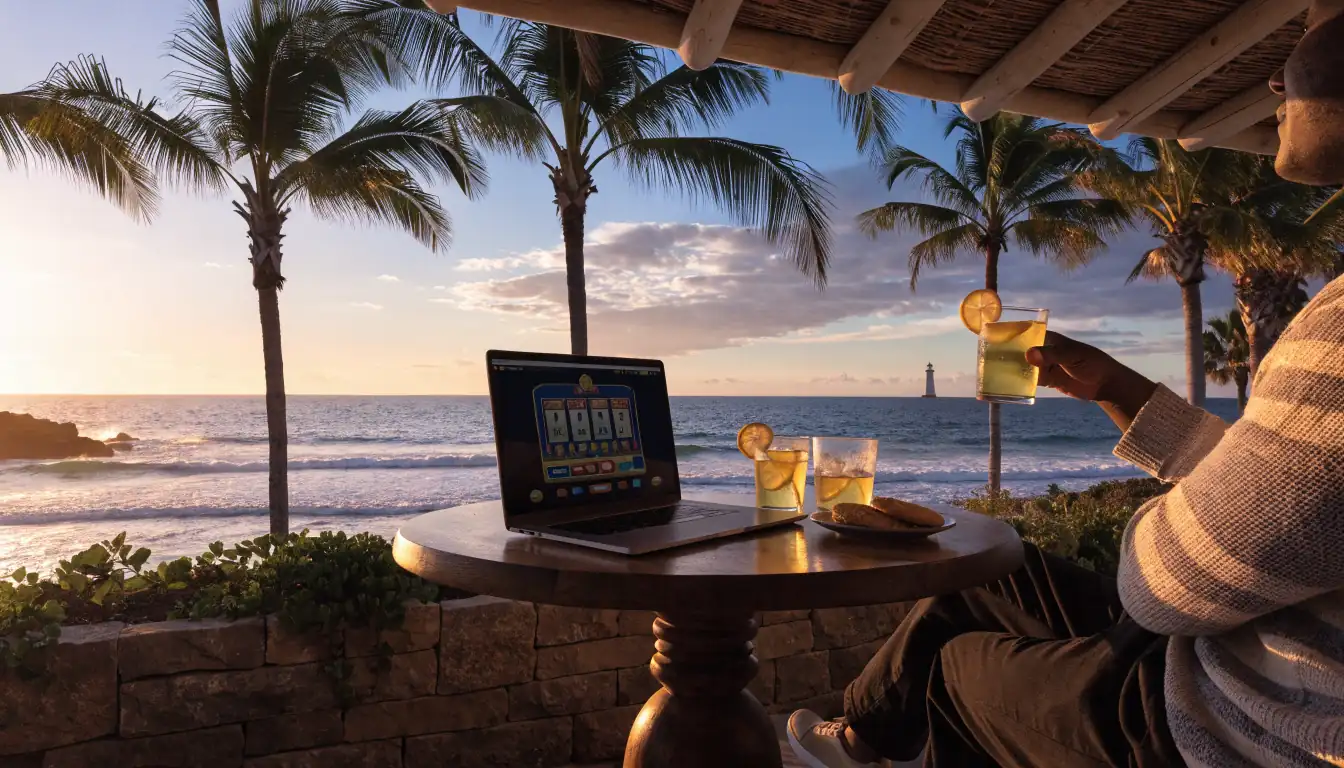
That’s not me telling you to go find one. It’s just the honest shape of the situation: the games exist, people play them, and the legal weight of that arrangement sits entirely on the side offering the service, not on the side clicking the spin button.
One thing I want to be direct about, because it’s the kind of line that sounds like good advice and isn’t: "stick to licensed operators" or "check the licence" only means something when there’s a licence to check that’s relevant to where you live. Australia doesn’t maintain a public register of approved online casino operators, because there’s no category of approved online casino operator to register. So if a site tells you to "verify our Australian licence" — there’s no such thing to verify. Any licence a real-money slots site holds will have been issued by a regulator in another jurisdiction, for players in that jurisdiction’s own regulatory reach, not as an Australian stamp of approval.
There is no Australian licence to verify; any licence displayed will be issued by another jurisdiction.
How this differs from a pokies venue
Land-based venues like Crown Perth operate under a completely different framework — state gambling regulation, physical premises, machines certified and audited under rules specific to that venue and that jurisdiction. That’s a known, licensed, on-the-ground category. Online casino video slots have no equivalent domestic structure. There’s no Australian body that licenses an online slots operator the way a state body licenses a physical gaming floor. That’s the core difference, and it’s not a technicality — it’s the whole reason "check the licence" means something different depending on which of the two you’re talking about.
RTP disclosure and what regulation actually buys you
Where regulation does show up usefully is in how the games themselves get certified before they ever reach a screen. Regulatory certification requires third-party RTP verification — meaning an independent lab, not the operator and not the game studio, confirms that a slot’s advertised return-to-player figure is what the math actually produces. In Australia, game information often includes RTP values specifically because of that layer of verification; it’s treated as part of protecting players, not as marketing decoration.
I used to skip past RTP figures entirely. Then I noticed something worth mentioning: online slots tend to run higher RTP than their land-based counterparts. Makes sense once you think about overheads — a physical cabinet on a casino floor carries costs a server farm doesn’t. That doesn’t make either version "better" in some general sense, but it’s a real, structural difference between the two channels, not a marketing line.
The industry benchmark sits around 96% RTP. Anything meaningfully above that gets called high RTP, anything meaningfully below gets called low RTP. Progressive jackpot slots tend to sit on the low end of that range, because a slice of every wager on those games is being siphoned off to build the jackpot pool rather than being paid back on the spot. That’s not a flaw in the game — it’s the mechanism the jackpot runs on.

One more thing worth saying plainly, because I got burned by not knowing it: the exact same slot title can carry a different RTP depending on which operator is running it. That’s not a rumour — it’s something bgaming.com states about its own catalogue, and I’m naming the source rather than dressing it up as a universal rule, because I don’t know that every provider works the same way. What it means practically is that the name of a game tells you less than the specific build of it on the specific site you’re playing. Two casinos, same title, potentially two different return figures. Worth checking per-site if you can, rather than assuming a slot behaves identically everywhere it appears.
None of this — RTP, certification, volatility profiles — changes anything about the legal status covered above. A game can be third-party certified, transparently disclosed, mathematically fair, and still be offered by an operator with no domestic Australian licence, because no domestic licence for this category exists to hold.
What responsible play looks like in this landscape
A few things worth being blunt about, because the industry doesn’t always say them out loud:
- High RTP is not a guarantee. A 96% RTP figure describes behaviour across an enormous number of spins in simulation, not what happens in your session tonight. Treat it as a long-run design characteristic, not a promise.
- The minimum legal gambling age in Australia is 18. No exceptions, no grey area, regardless of which jurisdiction licenses the operator.
- Youth exposure is a real, measured problem here. Data on Australian gambling shows close to a third of 12-to-17-year-olds and nearly half of 18-year-olds gamble in some form. That’s part of why harm-minimisation sits at the centre of the IGA rather than being an afterthought bolted onto commercial rules.
- If play stops feeling optional, Gambling Help Online exists specifically for that. Not as a footnote — as an actual service built for this exact situation.
I’m not going to tell you where to play, because that’s not what this section is for, and pretending a licence check will protect you when there’s no local licence to check would be worse than saying nothing. What I can tell you is the shape of the rules as they actually stand: legal for you to play, illegal for anyone to run it from here, no domestic register to lean on, and RTP figures that mean something specific and limited — not a promise about your next spin.
Playing Video Slots for Real Money vs. Free: Risks and Rewards
I used to think practice mode was a waste of time. Why spin fake credits when you could be spinning real ones? Took me a while to understand what I was actually giving up by skipping it.
The math behind both modes is identical. RTP — the percentage of everything wagered that a slot machine gives back to players over time — doesn’t change depending on whether you’re using real money or demo credits. A machine built to return 96% works that way in both modes, because the industry benchmark sits around that figure, with anything above counted as high RTP and anything below as low. The number is baked into the game’s programming, not switched on when you deposit.
Free demo mode lets you learn a game’s volatility without risking money.
What actually changes is what you’re risking to find that out.
Free play: zero financial exposure, same math
Playing for free costs you nothing but time. You get the same reels, the same volatility, the same theoretical return baked in — you’re just not testing it with your own cash. This is where free video slots earn their keep: you can watch how a game behaves, how often it pays small versus how long it stays dry, without a single dollar leaving your account.
The catch is that free play tells you nothing about how it feels to lose real money. RTP is a long-run average, not a promise for your session. A slot could easily eat $110,000 in total bets across its player base and pay back $100,000 — a 90.9% RTP — and that number only shows up after enough spins to smooth out the noise. In a short free session, or a short real-money one, you can sit well above or well below that line. Feeling "up" on virtual credits doesn’t prepare you for the sting of being down real ones.
Real money: same odds, real consequences
Betting real cash on video slots means every spin’s outcome is exactly as random as it was in demo mode, but now the losses actually cost you and the wins actually mean something. That’s the whole trade. Online slots tend to run higher RTP than their land-based counterparts, so the venue matters more than most people assume — but a favourable RTP figure still isn’t a guarantee of profit, especially over a handful of spins.
If you’re going to play with real money, know the number before you start, and treat it as a description of the machine, not a forecast of your night.
If gambling stops feeling optional, contact Gambling Help Online for support.
If gambling stops feeling like fun, Gambling Help Online is there — free, confidential, no lecture attached.
Free Video Slots: How to Play Without Spending a Dime
Free versions of video slots run on the same demo mode you’ll find built into most game providers’ software. No app to install, no account you need to fund, no download sitting on your hard drive. You open a browser, pick a game, and you’re spinning on fake credits that reset whenever you refresh the page.
Where do you actually find them? Provider websites themselves often host playable demos of their own catalogues, and plenty of casino sites let you try a slot before you register — the "practice" or "fun" button sitting right next to the real-money one. Video poker slots get the same treatment: draw, discard, redraw, all with zero risk attached.
Here’s the thing I got wrong for a long time: I assumed free play was just a toy version, so I didn’t bother paying attention to how it behaved. That was a mistake. The RTP and volatility built into a slot don’t change because you’re not risking anything. A 96% RTP slot is still built to return about $96 for every $100 wagered — that math sits underneath the game whether you’re playing with real money or with credits that mean nothing.
Volatility matters just as much in free mode. It describes the pattern of wins — how often they land and how big they are when they do. A high-volatility slot in demo mode will still go quiet for long stretches and then hit hard, same as it would for real money. If you’re using free play to figure out whether a game suits you, that’s exactly the detail worth watching.

What free play can’t show you is the difference between theoretical RTP and what you’ll actually experience. Theoretical RTP is the number built into the game’s math model. Experienced RTP is what you personally see over a limited session — and a session, free or paid, is never long enough to smooth out the randomness. So treat demo spins as a way to learn a game’s rhythm, not as proof of what it will pay.
Bonus Rounds in Video Slots: Features and What to Expect
Bonus rounds are the "extra" part of a slot that everyone chases — hold-and-win screens, free spins, pick-a-prize boards. They don’t sit outside the math, though. They’re built into it. Whatever a bonus feature pays out gets folded into the same RTP figure printed on the info screen.
Take Golden Paw: Hold & Win. By BGaming’s own listing, it runs at 97% RTP with medium volatility, and the hold-and-win mechanic is the whole point of playing it — you’re spinning toward that bonus screen, not away from it.
Progressive jackpot slots work differently. Part of every wager gets skimmed off to feed the jackpot pool, which is why these titles often carry a lower RTP than a straightforward bonus-round game. You’re not paying for extra features there — you’re paying into someone else’s future prize.
Worth remembering: a flashy bonus round says nothing about how volatile the base game is.
How do video slots actually work?
Every outcome is decided instantly by a random number generator (RNG) the moment you hit spin. The spinning reels on your screen are just visual animation — the RNG doesn’t track your previous spins, so each result is completely independent and a machine is never “due” for a win.
What does RTP mean on a video slot?
Return to Player (RTP) is the percentage of all wagered money a slot pays back to players over time, not over a single session. A 96% RTP slot is built to return about $96 for every $100 wagered across millions of spins, with the remaining $4 representing the house edge.
What is the difference between theoretical RTP and experienced RTP?
Theoretical RTP is the built-in percentage verified by third-party labs across computer simulations of billions of spins. Experienced RTP is whatever you personally see during your limited session, which can swing wildly because a few hundred spins aren’t enough data for the long-run average to apply.
Why do progressive jackpot slots often have a lower RTP?
A portion of every wager is redirected to feed the growing jackpot pool before the base game’s payout calculation happens. Because that stake is siphoned off, the slot is built with a bigger house edge and a lower base RTP compared to standard video slots.
Are online casino slots legal for players in Australia?
The Interactive Gambling Act 2001 prohibits operators from providing online casino games to Australian residents, but it is not illegal for you as an individual to play at offshore-licensed online casinos. The law targets the providers, not the players.
Published by the Casino Payments Info team.