Live Baccarat Online Casino Australia: What Actually Exists
 Available in AU
Table of Contents
- Understanding the Australian Legal Landscape for Online Baccarat Casinos
- What Is Baccarat? Game Types and Core Mechanics
- Live Baccarat in Australia: Availability and Legal Nuances
- Live Dealers, Real Money, and What You Can Legally Bet On
- How to Judge a “Best” Baccarat Casino When No Official Rankings Exist
- Step‑by‑Step Guide: How to Play Baccarat Online Safely
- Bitcoin Bonuses, Odds, and the Reality of Crypto Baccarat in Australia
- Why “Top” Baccarat Casino Lists Are Misleading for Australian Players
- Finding a Legitimate Online Casino That Offers Baccarat
- Baccarat Rules You Must Know Before You Sit at the Table
Understanding the Australian Legal Landscape for Online Baccarat Casinos
The first thing I tell anyone asking about baccarat casinos online in Australia is this: there’s no licence to check. Not because the operators are hiding it, but because it genuinely doesn’t exist. I spent a solid afternoon a few years back trying to find "the Australian gaming commission" that supposedly licensed the site I was playing on. Turns out I was chasing a document that was never going to appear, because you can’t get a domestic licence to run an online casino here. It’s not that the process is hard or expensive. It’s illegal to offer online casino gambling in Australia at all, and there’s no path to a licence, period.
That single fact reshapes how you should read everything else about baccarat casinos in this country. Every real-money baccarat table you’ll find operating online is licensed somewhere else — Malta, the UK, or one of a handful of other jurisdictions. None of them are Australian. There are no domestically licensed real-money online casino operators available to Australian players, full stop.
Why there’s no single regulator to point to
If you’re used to markets with one clean regulatory body, Australia will frustrate you. There is no single overarching statute or single overarching gambling authority regulating gambling here. Instead, you’ve got a patchwork: federal law sits alongside separate state and territory regulators, and they don’t all do the same job.
At the federal level, the Australian Communications and Media Authority — ACMA — enforces the Interactive Gambling Act 2001. Its job isn’t to license casinos (it can’t, since none can be licensed) but to police the ban on offshore operators serving Australians, mainly by going after the internet infrastructure side of things rather than the casino side directly.
Then there’s the Northern Territory Racing Commission, or NTRC. This one confused me for a while because it doesn’t license casinos either — but it does license most of the national online bookmakers, largely because operating out of the NT comes with a lower tax burden. That’s made the NTRC something like Australia’s de-facto online gambling regulator, even though its actual remit is sports and race betting, not baccarat tables.
On top of that, every state and territory runs its own separate gambling regulator. Victoria has the Victorian Gambling and Casino Control Commission (VGCCC), New South Wales has Liquor & Gaming NSW, and so on. These bodies genuinely do have teeth — the VGCCC, for instance, monitors wagering service providers Australia-wide, including ones based interstate, to check compliance with the National Consumer Protection Framework. That’s real oversight. It’s just oversight of licensed wagering and land-based venues, not of the offshore sites running baccarat tables.
Where the authority runs out
Here’s the part that matters most if you’re actually going to play: state and territory regulators like the VGCCC or Liquor & Gaming NSW have limited power over offshore online casinos. They can regulate what happens inside their own licensed wagering and land-based sectors, but a baccarat site operating from Malta or Curaçao sits outside their reach almost entirely. Land-based casinos are a different story again — those are regulated by state government bodies and law enforcement, completely separate from ACMA’s federal role over online gambling. A Crown Casino table in Melbourne and a live baccarat stream on an offshore site are governed by two entirely different systems that don’t talk to each other.
Playing on offshore baccarat sites gives you no local consumer protection; if the operator disappears or mishandles your funds, Australian regulators cannot intervene.
I used to assume "regulated" meant one thing — a body that licenses, monitors, and can discipline an operator if something goes wrong. In Australia’s online casino context, that assumption doesn’t hold. ACMA enforces a ban. The NTRC licenses sports betting operators, not casino sites. State bodies watch their own licensed sectors and land-based venues. None of them license, monitor, or discipline the offshore baccarat operator you’re actually sitting down to play with.
What this actually means when you’re looking at a baccarat site
Once you get this structure, a few things stop being confusing:
- “Licensed” on a baccarat site’s footer never means licensed in Australia. It can’t. Read it as “licensed somewhere else,” and check where.
- ACMA’s involvement is about blocking access, not approving operators. Seeing ACMA mentioned near a gambling site is far more likely to be about enforcement action than endorsement.
- State regulators’ credibility doesn’t transfer. A regulator doing solid work overseeing Victorian wagering providers has essentially no jurisdiction over an offshore baccarat table, however well-run that state body might be elsewhere.
- The NTRC’s name shows up a lot, but rarely for casino games. Its real influence is over the bookmaking side of the market — worth knowing so you don’t mistake it for a casino gatekeeper.
None of this makes playing baccarat online illegal for you personally — the law is aimed at operators, not at individual players placing bets from home. But it does mean the usual advice of "just check the licence" doesn’t map cleanly onto this market the way it might elsewhere. There’s no domestic register to check, no local authority that vouches for a table, and no state body that can step in if an offshore operator misbehaves. Understanding who does what — and, just as importantly, who doesn’t have jurisdiction at all — is the groundwork for everything else about playing baccarat online in Australia, from picking a site to understanding what happens if things go wrong.
What Is Baccarat? Game Types and Core Mechanics
Baccarat looks intimidating the first time you see it. Everyone’s talking about "Player" and "Banker" like they’re betting on a football match, cards fly across the screen in seconds, and there’s a croupier calling numbers you don’t understand yet. Then you actually sit down and realise it’s one of the simplest games in the entire building. You’re not making decisions. You’re picking a side and watching what happens.
The whole premise: two hands get dealt, Player and Banker. Each starts with two cards, sometimes a third gets added depending on fixed rules, and whichever hand totals closer to nine wins. You’re not playing against the dealer personally, and you’re not even really playing against the other hand — you’re betting on an outcome that’s largely out of your hands once the cards are dealt. Card values are simple too: aces count as one, tens and face cards count as zero, everything else is face value. If a total goes over nine, you drop the first digit. An eight and a seven doesn’t make fifteen, it makes five.
That’s the whole game, stripped down. No bluffing, no strategy decisions mid-hand, nothing to memorise beyond the drawing rules — which, by the way, the house handles automatically. You just watch.
The Main Variants
Not every table runs the same version, and the differences matter more than they look on the surface.
- Punto Banco — the version you’ll see on almost every online casino and live-dealer stream. Fully automated drawing rules, no player decisions beyond the initial bet. This is what most people mean when they say “baccarat” without qualifying it.
- Chemin de Fer — the older, more traditional French form, where players take turns acting as the banker and there’s an actual decision involved in whether to draw a third card. Rare online, more of a heritage variant you’ll read about than actually play.
- Baccarat Banque — similar lineage to Chemin de Fer, with a banker position that stays fixed for a round rather than rotating constantly. Also uncommon outside specialist tables.
- Mini Baccarat — same rules as Punto Banco, smaller table, faster pace, usually lower stakes. This is the format most digital and live-stream tables are built around, even when the branding doesn’t say “mini” anywhere.
For nearly everyone playing online, the practical answer is Punto Banco or a mini variant of it. The other versions exist, and it’s worth knowing the names so you’re not confused when you see them mentioned, but you’re unlikely to stumble into a live table running Chemin de Fer by accident.
How It’s Actually Presented Online
Two formats dominate.
The first is the standard digital table — random number games, essentially. No physical cards, no dealer, just software generating outcomes according to the same rules as the physical game. Fast, always available, no waiting for a seat. This sits in the same regulatory category as pokies, roulette and other computer-generated casino titles.
The second is the live-dealer format: an actual croupier, an actual shoe of cards, streamed to your screen in real time. You place bets through an interface, the croupier deals on camera, and the outcome is whatever the physical cards say. It’s slower than the digital version and it’s supposed to be — that’s the appeal for people who got tired of instant results and wanted something that felt like sitting at a real table.

Both formats run on the same core mechanics described above. The difference is entirely in presentation, not in the maths of the game itself.
Why This Matters Before You Go Further
I’ll be straight about something now, because it saves confusion later in this piece. Online casino-style games — and that includes baccarat, along with pokies, roulette and blackjack — fall under the same category the Interactive Gambling Act 2001 addresses federally. Whether it’s presented as a random number game or streamed live with a croupier doesn’t change what category it sits in. That’s a legal detail, not a gameplay one, and the next section deals with what it actually means for accessing a live table from here.
For now, the gameplay side is what matters: baccarat is a two-hand comparison game with fixed drawing rules, a small handful of real variants, and two very different ways of being presented on screen. Once you know that much, the rest of the terminology — third-card rules, the house edge on each bet type, how a shoe gets shuffled — starts making a lot more sense instead of sounding like table noise.

Live Baccarat in Australia: Availability and Legal Nuances
Here’s the question I get asked most: can you actually stream a live baccarat table from your couch in Sydney or Perth without breaking the law? Short answer — yes, you can watch and play. Longer answer involves a piece of legislation that doesn’t quite say what most forum posts claim it says.
The confusion starts with the name and date of the law itself. Most legal summaries point to the Interactive Gambling Act 2001 as the current federal statute covering this. But you’ll also find references to an Interactive Gambling Act 1997 that supposedly bans online casino games for Australian residents. I’m not going to pretend that discrepancy doesn’t exist — different sources cite different years for what looks like the same prohibition. What matters for you isn’t the exact year on the cover page; it’s that the ban on offering these games has been on the books for a long time and hasn’t gone anywhere.
What the Act actually restricts
Here’s the part that trips people up. The Interactive Gambling Act doesn’t say "Australians can’t play baccarat online." It says operators can’t offer it to you. That’s a real distinction, not a technicality invented by some offshore casino’s marketing team.
The Act was built around harm minimisation — protecting the public from the operators’ side of the table, not punishing the person clicking "deal." So when a live dealer streams a baccarat shoe from a studio somewhere overseas, and you’re sitting in Australia watching the croupier flip cards, the law’s target is the studio, the platform, the company running the stream — not you.
Illegal Offer
Offshore operators offering live baccarat to Australian players are breaching the Interactive Gambling Act 2001, which can lead to site blocking and potential legal action against the provider.
I say this having spent an embarrassing number of late nights convinced I was doing something illegal just by having a live baccarat table open in another tab. I wasn’t. What I was doing was using a service that itself has no legal footing to operate here — which is a different problem, and one worth sitting with for a second.
Available, but never sanctioned
This is the nuance nobody puts in the headline: availability and legality aren’t the same axis. You can, right now, load up a live baccarat stream from an offshore operator. The technology doesn’t check your passport at the door. But the operator running that stream has no domestic approval to be offering it to an Australian audience, and never will, because no such approval exists to be granted.
So "available" here means something narrower than it sounds. It means:
- The stream loads, the croupier deals, the outcome is real.
- No Australian regulator signed off on any of it.
- If something goes wrong with your account or your money, you’re dealing with an operator sitting entirely outside Australian jurisdiction.
None of that makes the stream fake. It makes the safety net underneath it thinner than what you’d get from a wagering product with an actual domestic licence — the kind that exists for sports betting, but not for this.
Why the site loads today and might not tomorrow
Live dealer availability in Australia has always had a slightly temporary feel to it, and that’s not paranoia — it’s how the enforcement side of the Act works. Sites get flagged, ISPs get instructed to block them, and the table you were playing at last month can simply stop resolving in your browser one day. I’ve had it happen. You bookmark a live baccarat room, come back a few weeks later, and it’s just gone from where you left it.
That instability is baked into the legal nuance here. The Act isn’t chasing players, but it is chasing the infrastructure players rely on, which means the ground under any given live baccarat stream is never as solid as the graphics make it look.
None of this is a reason to panic if you’re just watching a hand of Punto Banco unfold in real time. It’s a reason to hold the whole experience a little loosely — treat access as something that exists today, not as a guarantee about tomorrow, and don’t build your bankroll planning around a site staying reachable indefinitely.
Live Dealers, Real Money, and What You Can Legally Bet On
The first time I sat down at a live baccarat table, real money on the line, croupier dealing from a shoe on the other side of a camera, I remember thinking: this is either completely fine or completely illegal, and nobody’s told me which. Turns out the answer is messier than either.
Playing with real money against a live dealer isn’t the thing the law cares about. What it cares about is timing.
Here’s the distinction that actually matters. Live, in-play online betting — placing a wager on an outcome while the action is already unfolding — is illegal in Australia. That’s a hard line, not a grey area. But the same live bet placed by phone is legal. Same wager, same moment, different channel, different legal status. I didn’t believe this the first time someone told me either, but it’s true, and it tells you something about how this legislation was written: for a world where "online" meant something narrower than it does now.
So where does baccarat fit into that?
Betting on cards, not on a race
Baccarat doesn’t have the "in-play" problem the way sports betting does. You’re not adjusting your wager mid-hand as cards come out — you bet Player, Banker or Tie before the cards are dealt, the hand resolves, and that’s the round. There’s no equivalent of live in-play sports betting happening inside a single hand of baccarat. The bet itself isn’t the issue.
The issue is the platform offering it.
Even though live baccarat itself isn’t illegal for you to play, the platform delivering it has no legal standing in Australia, meaning you risk losing access and your money without recourse.
Online casino games — and that includes any live dealer table, baccarat or otherwise — fall under the same prohibition that covers pokies and roulette. It’s not legal for an operator to offer this to Australians online, full stop, regardless of whether the betting format inside the game is "in-play" in the sports sense or not. So when you’re playing live baccarat for real money on an offshore site, the legality question was already answered before you placed a single chip — and not in the operator’s favour.
What that means for you, practically
Nobody’s coming to arrest you for playing. The law targets the operator, not the person clicking "deal." But you should know what you’re actually doing when you sit at one of these tables:
- You’re playing on a platform that has no legal standing to offer this to an Australian address.
- The site can be blocked at any point — ACMA has been ordering ISPs to cut off offshore gambling sites since November 2019, and that hasn’t stopped.
- If a site vanishes overnight, mid-session or with a balance sitting in your account, there’s no local regulator you can complain to.
I lost access to a table once because the whole domain got blocked between one session and the next. No warning, no email, just a dead link where a baccarat table used to be. That’s the real-world version of "the game itself is fine, the platform isn’t."
What’s actually off the table
Live phone betting on sports and racing — legitimate, licensed, no issue. Live baccarat streamed to your browser with real money down — not something any Australian-licensed operator can offer you, because no such licence exists for this kind of product. Anything advertised as "in-play casino betting" online, dressed up in baccarat’s clothes or anyone else’s, sits on the wrong side of the same line.
The house edge doesn’t change because the dealer’s a real person on video instead of an RNG. What changes is your legal footing, and it’s worth being honest with yourself about that before you deposit anything. The game hasn’t moved. The rulebook around where you’re allowed to play it has.

How to Judge a “Best” Baccarat Casino When No Official Rankings Exist
I spent a good while looking for the "best baccarat casino" before I understood the question itself was broken. There’s no Australian body that ranks these sites. No government list, no star system, nothing with a stamp on it. Every "best of" page you find is written by someone with an affiliate link, including, if I’m honest, plenty of pages that look exactly like this one. So the useful question isn’t which casino wins — it’s which casino doesn’t lie to you about what it is.
Here’s what I actually check now, in order.
Licence transparency. Not "is it licensed" — something will always claim to be. The question is whether the licence is named, checkable, and displayed where you can see it, usually the footer. Malta Gaming Authority and the UK Gambling Commission are names you’ll recognise if a site is being straight with you. No Australian licence will ever appear here, because none exists for this kind of gambling — if a site implies otherwise, that’s your answer already.
Responsible-gambling tools, not just a badge. Can you actually set a deposit limit or a time limit on your account, or is there just a link to Gambling Help Online buried in the footer for show? A site that lets you cap your own spending before you ask is telling you something real. One that only mentions help services after you’ve lost money is telling you something else.

Identity checks before withdrawal. This one surprised me the first time — I expected the ID request to be a hassle designed to slow down payouts. It’s not optional anywhere legitimate, and honestly its presence is a good sign, not a red flag. A site that lets you cash out real money with zero verification isn’t being generous, it’s being careless with money-laundering rules, and that carelessness tends to show up elsewhere too.
Payment methods. Credit cards and crypto deposits shouldn’t be on the table at all under Australian rules, so if a site is pushing Bitcoin bonuses or letting you punt on a credit card, it’s not offering you convenience — it’s ignoring a restriction that exists for a reason.
Bonus terms you can read before you click accept. Wagering requirements should be stated plainly before you take the bonus, not discovered in a support chat after you try to withdraw.
A complaints process that goes somewhere. Look for actual dispute-resolution membership, not just a contact email that bounces.
None of this produces a ranking. It produces a filter — a way to knock out the sites that are clearly cutting corners before you’ve handed over a card number. I’ve been burned by skipping this exact checklist, twice, thinking I could just "check the reviews" instead. Reviews lie easier than footers do.
There’s no shortcut here, and no authority is going to hand you a shortlist. What you get instead is a habit: read the footer, read the terms, and treat any site that avoids both as an answer in itself.
Step‑by‑Step Guide: How to Play Baccarat Online Safely
First time I sat down to play baccarat online, I skipped every step below and just wanted cards on screen. Cost me a delayed withdrawal and a week of emailing support with photos of my licence. Do it in order and none of that happens to you.
1. Sort your ID before you sort your deposit
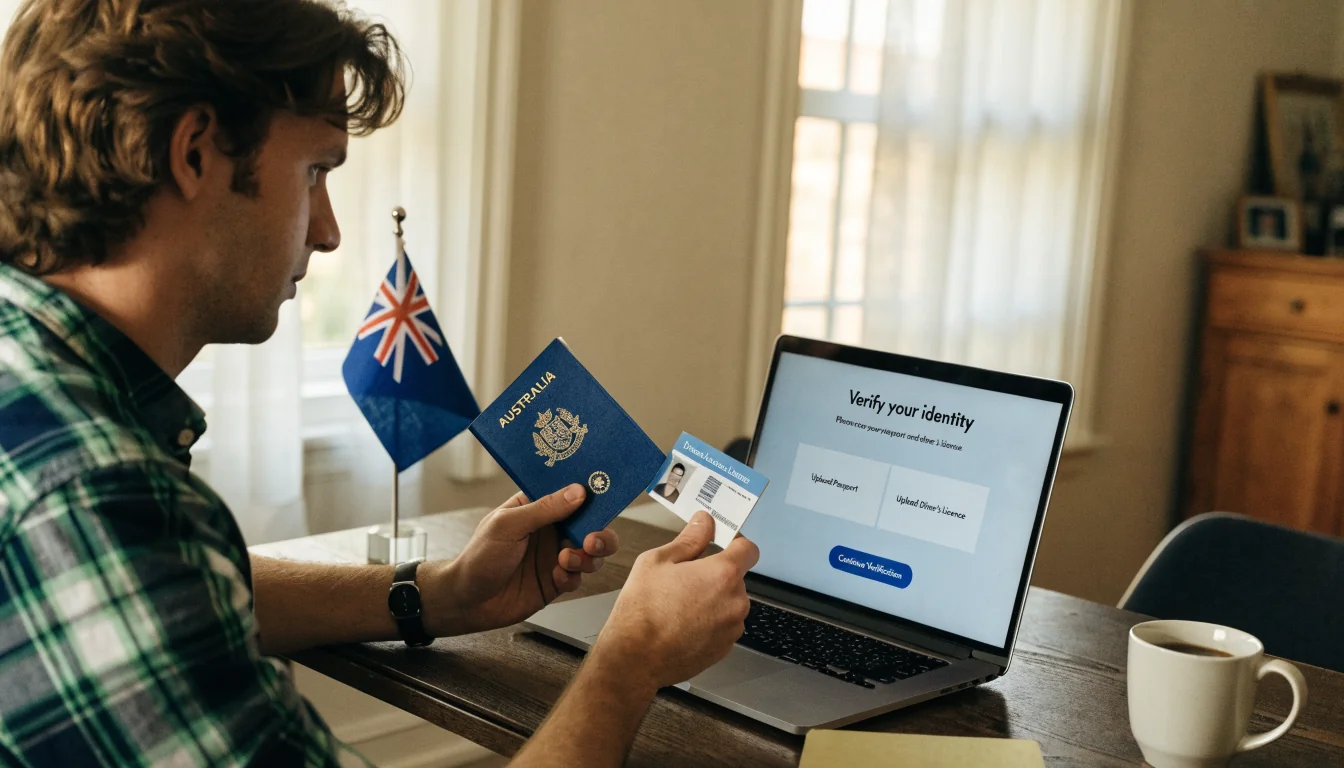
Every offshore operator that takes Australian players will eventually ask for a government‑issued ID — driver’s licence or passport, usually a selfie with it too. This isn’t optional paperwork the casino invented to annoy you. It’s how any operator handling money is expected to confirm who you are. Do it the day you register, not the day you try to cash out. I learned that the hard way: won a decent hand, wanted my money, and sat waiting because I hadn’t uploaded a single document. Get verified while you’re still deciding whether you like the site, not when you’re impatient to leave with your winnings.
2. Set your limits before you place a single bet
Most platforms let you set a deposit cap, a loss limit, or a time limit on your account. Do this before you fund anything. Nobody sets a limit after a bad session — you set it when you’re calm and the number still looks generous. If the site doesn’t offer this option anywhere in the account settings, that tells you something about how seriously they take the rest of their responsible‑gambling messaging.
3. Fund the account
Deposit through whatever payment method the casino actually supports — bank transfer, PayID, or similar options depending on the operator. Keep the amount small for your first session. You’re testing the withdrawal process as much as the game itself, and you won’t know if either works smoothly until you’ve been through it once.
4. Find the baccarat table
Whether it’s a live-dealer stream or a random number game, the table layout is the same everywhere: a spot to bet Player, a spot to bet Banker, a spot to bet Tie. That’s it. No side tables, no hidden menus. If a site buries baccarat three clicks deep behind "card games," that’s a minor annoyance, not a red flag — just note it and move on.
5. Place a small bet first
Don’t open with your biggest stake. Put down the minimum, watch how the round plays out, watch how fast the payout lands in your balance. This tells you more about the operator than any review will — whether the numbers match what the table showed you, whether the croupier or the software confirms the outcome cleanly.
6. Request a small withdrawal early
Not after a big win — after a small one. Ask for a modest amount back out and see how long it takes and what they ask for. This is the real test of the site, not the sign-up bonus or the graphics.
One thing worth saying plainly: none of this is illegal for you to do. Australian law targets the operators offering these games, not the individual sitting at home playing them. That doesn’t mean every site is trustworthy — it means the legal risk sits elsewhere, and your job is picking a platform that treats verification and limits as standard, not as an afterthought you have to chase up yourself.
Bitcoin Bonuses, Odds, and the Reality of Crypto Baccarat in Australia
Somewhere in a Discord server for problem gamblers trying to quit — yes, I lurked there for a while, don’t ask — someone posted a screenshot of a "match bonus" that doubled their Bitcoin deposit before they’d even sat down at a table. Free money, basically. That’s the pitch, and it works, because crypto bonuses are usually bigger and flashier than the fiat ones. No card fees, no bank flagging the transaction, instant deposits. What’s not to like.
Here’s what’s not to like: none of it is legal to offer to you.
The Interactive Gambling Act 2001 prohibits online casino games for Australian residents regardless of what currency you’re funding the account with. Bitcoin doesn’t create some separate lane where the rules don’t apply — it just makes the transaction harder for anyone to trace, which is exactly why offshore operators like it. A "crypto bonus" isn’t a loophole. It’s the same prohibited product wearing a different wallet.
Why the odds "look" better in crypto
I’ve heard the argument that crypto baccarat tables run better odds or fairer scoreboards because the outcomes are provably fair on-chain. Maybe on some sites that’s true. But there’s no domestic regulator checking any of it, no licence register to confirm the operator is who they say they are, and no way to verify that the "house edge" displayed on the table matches what’s actually happening behind it. You’re taking the operator’s word for it. I did that once, watched a shoe run suspiciously cold for an hour, and never got a straight answer about it from support.
The enforcement is real, even if it feels distant
This isn’t theoretical. According to figures reported by iclg.com, as of August 2025 the ACMA had blocked 1,296 illegal gambling sites and affiliates since 2019, and around 220 services had voluntarily pulled out of the Australian market. That’s not a rumour from a forum — it’s a regulator actively shutting doors. Crypto casinos aren’t exempt from that list just because they take Bitcoin or Ethereum instead of a Visa card.
So when a site dangles a Bitcoin bonus with terms that sound almost too generous, that’s not a reflection of Australia loosening up. It’s usually a sign the operator is trying to look attractive faster than ACMA can catch up. Sites get blocked, mirror domains pop up under a slightly different name, and the bonus terms get copy-pasted across all of them.
None of this makes playing at these sites illegal for you personally — the law targets operators, not players. But "not illegal for me" and "safe, regulated, and fair" are two very different sentences, and crypto bonuses tend to blur that line on purpose. Pick the currency, sure. Don’t mistake it for protection.
Why “Top” Baccarat Casino Lists Are Misleading for Australian Players
If you’re chasing live baccarat tables in 2026, the operator behind the scenes matters just as much as the game itself — licensing, payout speed and deposit requirements shape how smooth your real-money experience will be. Here’s a quick rundown of what stands out about each site on this list.
Bonus: up to A$750 + 50 jackpot spins, 35x wagering · Payout speed: crypto ~90 minutes, fiat 1-5 days · Min. deposit: A$30 Offers a welcome package worth up to A$750 plus 50 jackpot spins with 35x wagering, and caters to both crypto and fiat users, with a A$30 minimum deposit.
License: Curacao eGaming OGL/2023/174/0082 (Dama N.V.) · Bonus: up to A$10,000 + 500 free spins across 4 deposits · Min. deposit: A$15 Operates under a Curacao eGaming license held by Dama N.V., and backs a large welcome offer of up to A$10,000 plus 500 free spins spread across four deposits, with a low A$15 minimum deposit.
License: Curacao · Bonus: 100% up to A$500 + 200 free spins, 10x wagering · Payout speed: crypto 30-60 minutes, fiat 1-5 days · Min. deposit: A$10 Holds a Curacao license and pairs a 100% match bonus up to A$500 with 200 free spins at a manageable 10x wagering requirement, plus fast crypto payouts and a low A$10 minimum deposit.
Bonus: 240% up to A$4,100 + 300 free spins Stands out for a sizeable 240% match bonus up to A$4,100 alongside 300 free spins.
Bonus: up to A$7,500 + 550 free spins across 10 deposits, 50x wagering · Payout speed: crypto under 1 hour, PayID 1-3 business days · Min. deposit: A$20 (A$30 to qualify for the bonus) Provides an extensive bonus structure of up to A$7,500 plus 550 free spins across ten deposits, with quick crypto payouts under an hour and PayID processing within a few business days.
License: Curacao Gaming Control Board OGL/2023/176/0095 (Hollycorn N.V.) · Bonus: up to A$11,000 + 300 free spins (code NEO100) Licensed by the Curacao Gaming Control Board under Hollycorn N.V., offering a substantial bonus of up to A$11,000 plus 300 free spins via a bonus code.
License: Tobique Gaming Commission · Bonus: up to A$8,000 + 400 free spins across 4 deposits · Payout speed: crypto ~10-15 minutes, fiat 1-5 days · Min. deposit: A$30 Licensed by the Tobique Gaming Commission, with a bonus up to A$8,000 plus 400 free spins across four deposits and notably fast crypto withdrawals of around 10-15 minutes.
License: Curacao eGaming (Dama N.V.) · Bonus: up to A$10,000 + 180 free spins, 40x wagering Operates under a Curacao eGaming license via Dama N.V., offering up to A$10,000 plus 180 free spins with 40x wagering.
License: Curacao Gaming Authority (Jumpman Gaming Ltd) · Bonus: up to A$6,600 + up to 250 free spins across 4 deposits Licensed by the Curacao Gaming Authority under Jumpman Gaming Ltd, with a bonus of up to A$6,600 plus up to 250 free spins spread across four deposits.
License: Curacao eGaming (Roby Games Ltd) · Bonus: 100% up to A$750 + 200 free spins Holds a Curacao eGaming license through Roby Games Ltd, offering a 100% match bonus up to A$750 plus 200 free spins.
I used to bookmark those "top baccarat casino sites" pages like they meant something. They don’t, not here.
Here’s the problem: there’s no register of licensed online casinos in Australia to check any of these sites against. No domestic licence exists for real-money online baccarat, full stop. So when a list ranks seven or ten "best" crypto casino baccarat platforms, it’s ranking sites that are, by definition, operating outside Australian law. Nobody official vetted them. Nobody official ever will.
Second problem: these sites get blocked. ACMA has been ordering ISPs to block offshore gambling operators since 2019, and the list of blocked domains keeps growing. A site sitting at number one on some "top baccarat casino" ranking published last month might be unreachable today, or it’s rebranded under a new domain and the review is now describing a casino that no longer exists in that form.
So the ranking itself is built on sand twice over — once because there’s no licensing body to separate legitimate from illegitimate, and again because the sites themselves are moving targets.
Treat these lists as someone’s opinion on a given day, not as due diligence. They can point you toward names worth researching. They can’t do the checking for you.
Finding a Legitimate Online Casino That Offers Baccarat
There’s no register to check here, so "legitimate" doesn’t mean licensed in Australia — it can’t, since that licence doesn’t exist. What you’re actually checking for is whether a site is still standing.

ACMA can ask internet providers to block sites offering games that aren’t allowed under Australian law, online casinos included. If a baccarat site you bookmarked six months ago suddenly won’t load, that’s usually why. No warning email, no explanation — the domain just stops resolving one day. I’ve had it happen twice, and both times I found out by trying to log in, not by reading a notice anywhere.
What ACMA can’t do is touch the ads. The law only bans advertising gambling "in Australia," which is oddly narrow — it doesn’t reach platforms like Facebook the same way. So you’ll keep seeing casino ads long after the actual site’s been cut off at the ISP level. Ad presence tells you nothing about whether a site still works, or should.
Baccarat Rules You Must Know Before You Sit at the Table
Card values trip up more people than anything else. Aces count as one, cards two through nine count face value, and tens plus all picture cards count as zero. Add up both cards, and if you go over nine, drop the first digit. An eight and a seven isn’t fifteen, it’s five.
That’s it for the maths. No memorising anything harder.
Drawing rules decide whether a third card gets dealt to the player or banker hand, and they’re fixed, not optional. Nobody at the table chooses to draw or stand, unlike blackjack. The croupier follows the table exactly, every time.
Betting options are simple: Player, Banker, or Tie. Banker wins more often over time, which is why casinos take a commission on it. That’s the house edge showing up in the rules themselves, not hidden in the fine print.
No side rules to learn beyond that. Sit down knowing this much, and you already know more than most players at the table.
Are crypto casinos legal in Australia in 2026?
No, offering any online casino gambling is illegal and you cannot obtain a domestic licence for it. Playing at offshore crypto casinos isn’t illegal for you personally, as the law targets operators rather than individual players.
How can a player verify that an online casino holds a valid licence in Australia?
You can’t verify it, because domestic online casino licences simply don’t exist. Any real-money baccarat table operating online is licensed elsewhere, so check the site’s footer for a foreign jurisdiction like Malta or the UK.
Is online gambling legal in Australia?
Online sports betting is legal under state or territory licences, but online casino games and live in-play betting are prohibited federally. It is not illegal for you to play at offshore-licensed casinos, as the ban targets operators, not players.
Where can I complain about an online casino in Australia?
You can report illegal sites to the Australian Communications and Media Authority (ACMA), but they cannot recover your funds or settle individual disputes. State regulators have no jurisdiction over offshore operators, leaving you without a local body to resolve your complaint.
Prepared by the Casino Payments Info editorial staff.