Pocket Pokies Casino Australia: Market, Rules and Risks
 Available in AU
Table of Contents
Understanding Pokies in Australia: Market, Regulation and Risks
Let’s get the search term out of the way first, because it’s probably why you’re here. If you typed something like "pocket pokies casino Australia 2026" into Google, hoping to find an app or a site where you can spin slots for real money on your phone — I need to stop you before you go further. There is no domestically licensed online casino in Australia. Not "pocket pokies," not any other branded app promising real-money slots to Australian players. The Interactive Gambling Act 2001 makes it an offence for operators to offer that kind of real-money gambling to people living here. It doesn’t matter how polished the app looks or how many free spins it dangles in front of you. If it’s offering online pokies, blackjack, or roulette for real cash to an Australian resident, it’s operating outside the law — the operator’s law, not yours, but that distinction doesn’t make the platform safe to trust.
I’ve spent enough time around pokies — the physical kind, in pubs and clubs — to have a decent read on why people go looking for a "pocket" version they can carry in their phone. The lure makes sense. You’ve had a session on the machines at the local, you liked the noise and the flashing lights and the occasional small win, and now you want that same hit without leaving the couch. The problem is that the thing you’re picturing — a legit Australian online pokies app — doesn’t exist as a legal product here. What does exist is a massive, heavily regulated physical pokies market, a lot of confusion about what’s legal and what isn’t, and a genuine money-laundering problem that regulators are only now getting serious about. That’s what this section is actually about.
Before you pick a pokies casino to join in 2026, it helps to see how the current crop of sites stack up on bonuses, deposits and payout speed so you know what you’re actually signing up for.
Bonus: up to A$750 + 50 jackpot spins, 35x wagering · Payout speed: crypto ~90 minutes, fiat 1-5 days · Min. deposit: A$30 Kingmaker pairs a bonus package with jackpot spins and backs it with fast crypto payouts, making it worth a look if you value quick access to winnings alongside a manageable minimum deposit.
License: Curacao eGaming OGL/2023/174/0082 (Dama N.V.) · Bonus: up to A$10,000 + 500 free spins across 4 deposits · Min. deposit: A$15 LevelUp Casino operates under a Curacao eGaming license from Dama N.V. and spreads a large bonus across multiple deposits, with a low entry point for new players.
License: Curacao · Bonus: 100% up to A$500 + 200 free spins, 10x wagering · Payout speed: crypto 30-60 minutes, fiat 1-5 days · Min. deposit: A$10 Wild Tokyo is Curacao licensed and combines a matched bonus with free spins on relatively easy wagering terms, plus fast crypto withdrawals and a low minimum deposit.
Bonus: 240% up to A$4,100 + 300 free spins WinShark stands out for a sizeable percentage bonus bundled with a large number of free spins.
Bonus: up to A$7,500 + 550 free spins across 10 deposits, 50x wagering · Payout speed: crypto under 1 hour, PayID 1-3 business days · Min. deposit: A$20 (A$30 to qualify for the bonus) Ricky Casino offers a substantial multi-deposit bonus with free spins, and its crypto payouts are notably quick, though PayID withdrawals take a few business days.
License: Curacao Gaming Control Board OGL/2023/176/0095 (Hollycorn N.V.) · Bonus: up to A$11,000 + 300 free spins (code NEO100) Neospin is licensed by the Curacao Gaming Control Board via Hollycorn N.V. and offers a large bonus with free spins unlocked through a promo code.
License: Tobique Gaming Commission · Bonus: up to A$8,000 + 400 free spins across 4 deposits · Payout speed: crypto ~10-15 minutes, fiat 1-5 days · Min. deposit: A$30 SkyCrown holds a Tobique Gaming Commission license and spreads a generous bonus across several deposits, with especially fast crypto payout times.
License: Curacao eGaming (Dama N.V.) · Bonus: up to A$10,000 + 180 free spins, 40x wagering JeetCity Casino runs under a Curacao eGaming license from Dama N.V. and offers a large bonus with free spins, though the wagering requirement is on the higher side.
License: Curacao Gaming Authority (Jumpman Gaming Ltd) · Bonus: up to A$6,600 + up to 250 free spins across 4 deposits DragonSlots Casino is licensed by the Curacao Gaming Authority through Jumpman Gaming Ltd and offers a solid bonus with free spins spread across multiple deposits.
License: Curacao eGaming (Roby Games Ltd) · Bonus: 100% up to A$750 + 200 free spins Roby Casino, licensed via Curacao eGaming under Roby Games Ltd, offers a straightforward matched bonus with a decent number of free spins.
What "pokies" actually means
In Australia, "pokies" is just the everyday word for what regulators call electronic gaming machines, or EGMs. Overseas you’ll hear "poker machines" or "gaming machines," but nobody standing at a bar in Sydney or Perth calls them that. They’re pokies. Same machines, same coin-in-coin-out mechanics dressed up as digital reels, same flashing promise of a jackpot that mostly doesn’t come.
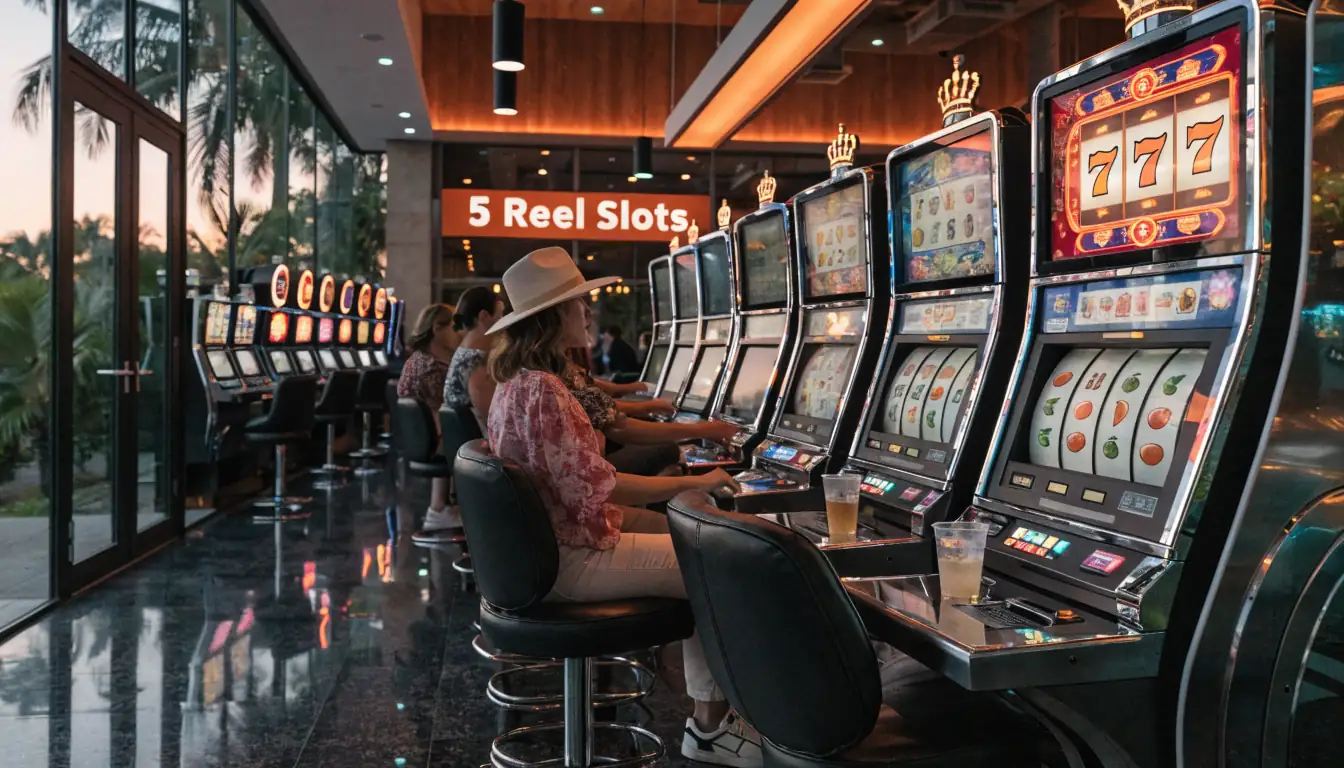
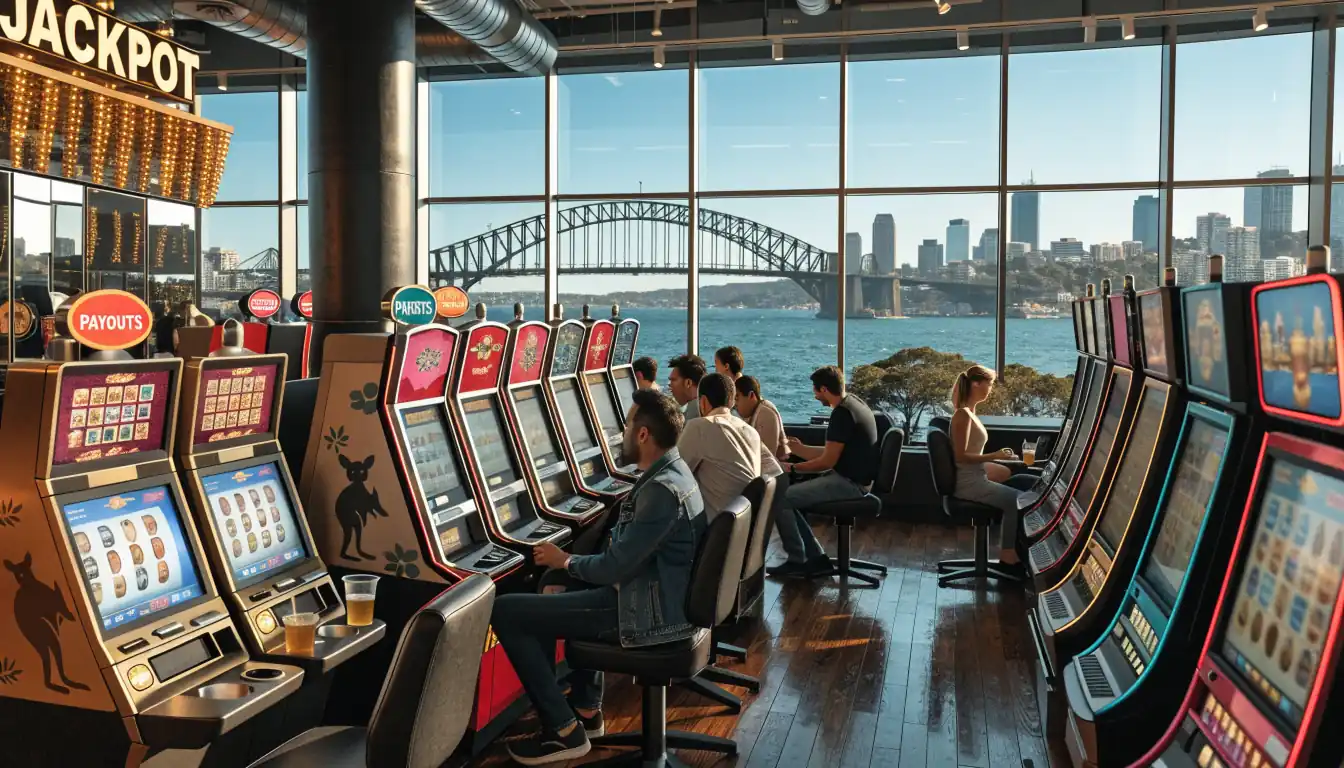
These machines aren’t a niche product tucked away in a handful of casinos. They’re operated in every state, in the Australian Capital Territory, and in the Northern Territory. Walk into almost any suburban pub or licensed club anywhere in the country and there’s a good chance you’ll find a bank of them sitting in a side room, usually with the blinds half-drawn and a separate entrance so the kids at the bistro don’t wander in. That’s not an accident — it’s part of how venues are required to manage access, since only people 18 and over are allowed anywhere near them. I’ve had my ID checked walking into a pokies room more times than I can count, even well past the point where anyone could mistake me for a teenager. That’s the system working as intended, not the venue being paranoid.

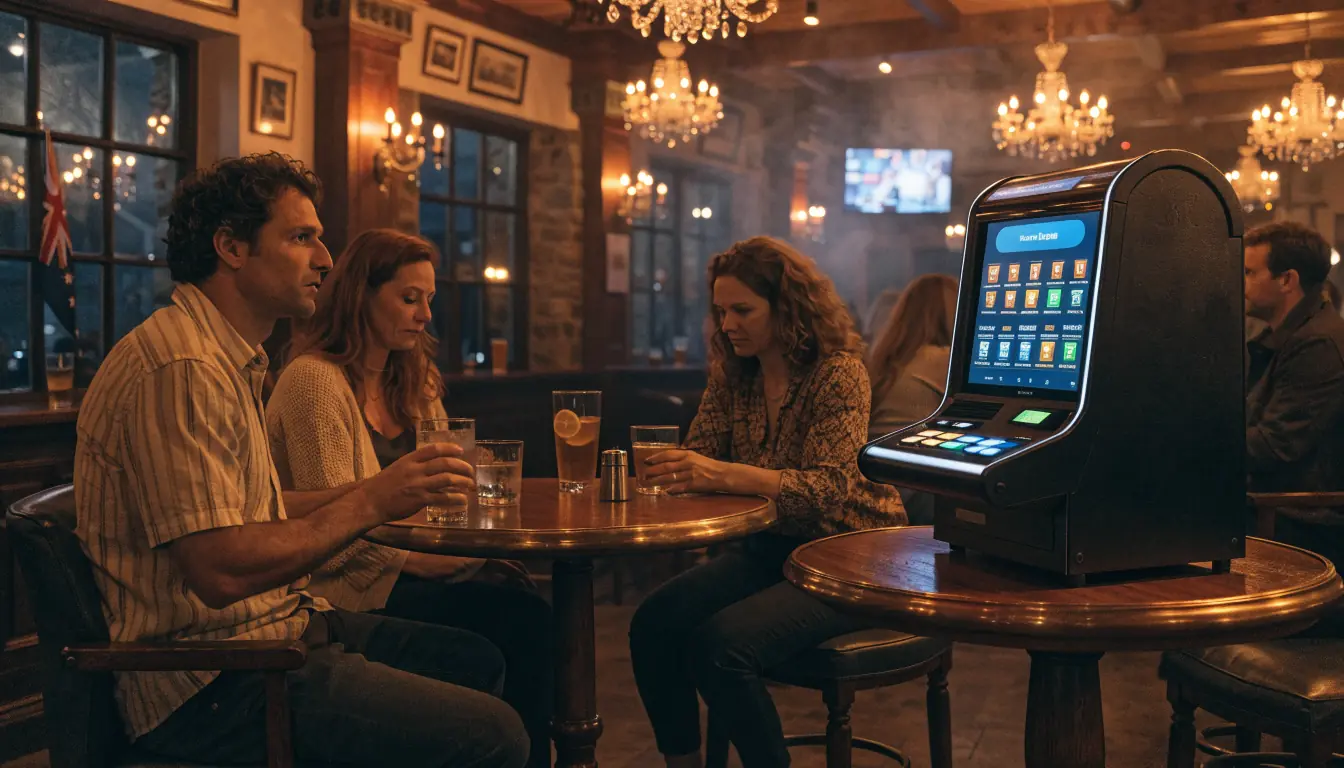
The sheer physical footprint of pokies in Australia is genuinely strange when you say it out loud to someone from another country. This is a small population, geographically speaking, but it hosts a wildly disproportionate share of the world’s poker machines. One figure puts Australia’s share of the world’s pub and club poker machines at 3%. Another, older figure puts it closer to 18%. I’m not going to pretend those two numbers are compatible, because they’re not — they come from different counts, possibly different definitions of what counts as a "machine" or what’s included in "the world," and I haven’t seen anything that reconciles them. What I can tell you is that both figures are trying to describe the same basic reality: for a country of this size, there are a lot of pokies here, and they are not confined to casinos the way they are in a lot of other countries. They’re in your local. They’re in the club where your mate’s five-a-side team has its post-match beers. They’re everywhere.
In the 2020-2021 financial year Australians wagered almost AUD 150 billion on pokies, with roughly AUD 12 billion lost.
The size of the market, in real money
I used to think of pokies losses the way most casual players do — as a personal thing, my own bad Friday night, my own "I’ll stop after this note." It wasn’t until I saw the aggregate numbers that I understood how much this adds up to at a national level.
In the 2020-2021 financial year, Australians placed bets worth almost AUD 150 billion on electronic gaming machines. That’s turnover — money cycled through the machines, not necessarily money lost, since a chunk of that gets paid back out as wins that then often go straight back into the machine. The number that actually matters if you’re trying to understand the cost to players is the loss figure: about AUD 12 billion lost across the country that same financial year. Divide that across the population and you get a per-capita loss of AUD 608 for that year — which is a way of saying that, statistically, close to every adult in the country is carrying a slice of that loss, even the ones who’ve never touched a machine.
There’s a more recent figure floating around too: pokies generated AUD 191.2 billion in gambling turnover in 2023, according to figures reported by complyadvantage.com. I want to flag that clearly as a claim from one source rather than an agreed industry benchmark, because the subject matter shifts between reports — sometimes it’s turnover, sometimes it’s losses, sometimes it’s a specific state — and treating any single number as "the" market size would be misleading. What both sets of figures agree on, regardless of which exact number you trust, is that this is one of the largest gambling markets of its kind anywhere in the world, running through machines most people walk past without a second thought.
None of this money follows you home as a tax bill, by the way. If you win on a pokie in Australia, that win isn’t taxed — gamblers’ winnings here aren’t subject to tax. The industry’s tax burden sits on the operators, not the punters, and it varies by state and by the type of gambling service being taxed. That’s worth knowing if you’ve ever wondered why the rules feel different depending on which state you’re standing in — because they genuinely are different, state by state, venue type by venue type.
Online pokies for real money are not licensed in Australia; using such services can expose you to illegal operators.
The legal line that actually matters
Here’s where I want to be blunt, because this is the part that gets muddied by marketing and by badly written blog posts chasing the same keywords you probably searched.
The Interactive Gambling Act 2001 is the primary Commonwealth law covering online gambling in Australia. It was introduced with harm minimisation as a stated goal, and its practical effect is this: it is illegal for an operator to offer online casino-style games — slots, poker, blackjack, roulette, live dealer tables, all of it — to anyone living in Australia. That prohibition sits on the operator’s side of the transaction. It is not illegal for an individual Australian to play at an offshore-licensed online casino; the law was built to target the businesses providing the service, not the person clicking play. But "not illegal for you personally" is a long way from "safe" or "regulated" or "recommended," and I’d genuinely push back on anyone framing it that way.
What is legal and licensed in Australia is online sports betting, under state and territory licences, and lotteries, which are also licensed. Live, in-play online betting is illegal, though — oddly, if you’ve never looked into it — placing that same live bet over the phone is legal. It’s one of those quirks in the law that makes more sense once you remember the Interactive Gambling Act was written in 2001, well before anyone was streaming a match on their phone while trying to punt on it in real time.

A rundown of online gaming options in Australia, from slot variants and RTP to live…
So when something calls itself a "pokies casino" and markets itself directly to Australians for 2026, with free spins and app downloads and all the rest of it, there is no licence sitting behind that offer that a regulator here would recognise. There’s no domestic real-money online casino licence to hold, because none exists. And because there’s no public licensee register in this market for that kind of product, there’s nothing for you to look up to confirm it’s legitimate — the register you’d want to check simply isn’t there, because the activity it would need to license isn’t permitted in the first place. Any site telling you to "check the licence" for an online pokies operator in Australia is either pointing you toward an offshore regulator that has no jurisdiction here, or hoping you won’t ask the question at all.
I learned this the slow way, clicking through a few too many app download pages a while back, half-convinced I’d found some clever loophole because the site looked professional and had an Australian flag in the corner. It hadn’t occurred to me yet that "looks professional" and "operates legally here" are unrelated facts. They still are.
Illegal Offer
Offering or promoting a real‑money online pokies app to Australian residents breaches the Interactive Gambling Act 2001.
Why pokies dominate the way they do
Part of what makes pokies so embedded in Australian life is that they’re not treated as a special destination activity the way a casino trip might be elsewhere. They’re ambient. Pokies are widely used in Australian pubs, clubs, and casinos — which means they show up in the ordinary rhythm of a night out rather than requiring you to plan a trip somewhere. You go for a counter meal, you have a few games of pool, and the pokies room is just there, humming along, no different in accessibility terms than the jukebox or the TAB terminal.
That ordinariness is exactly why the losses stack up the way they do. Nobody plans to lose six hundred-odd dollars a year on a machine. It happens in small increments — a twenty here after a bad day, another twenty because the last twenty "almost" came good — spread across a hundred small, forgettable sessions rather than one dramatic binge. I’ve had those nights. The self-talk is always some version of "just this note," and the machine is patient enough to let you believe it every single time.
The regulatory patchwork
If you’re trying to make sense of why pokies rules feel inconsistent depending on where you are, that’s because they genuinely are inconsistent — regulation and taxation both vary by state and by the type of gambling product involved. There’s no single national pokies regulator sitting over the top of every venue; instead you’ve got a scattered set of bodies, each with jurisdiction over their own patch. The ACT Gambling and Racing Commission covers the territory. The Office of Liquor and Gaming Regulation covers gaming in its own jurisdiction. NSW has its own layered structure, including scrutiny from the NSW Crime Commission when things tip from "regulatory breach" into genuine criminal territory. On top of all of that sits AUSTRAC — the federal financial intelligence and anti-money-laundering regulator — whose reach cuts across every state because money laundering doesn’t respect state borders even when gambling licensing does.
This patchwork matters if you’re trying to work out what "the law" says about pokies, because the honest answer is: it depends which pokie, in which venue, in which state, doing what. A machine in a Queensland club sits under different day-to-day oversight than one in a Northern Territory casino, even though both are subject to the same overarching federal concerns about money laundering and harm minimisation.
Money laundering: the risk nobody puts on the machine’s sticker
This is the part of the pokies story that doesn’t get talked about at the pub, but it’s arguably more consequential than the personal losses, because it’s what’s driving a lot of the regulatory tightening you’ll see discussed elsewhere on this page and in the years ahead.

Pokies are, structurally, a near-perfect vehicle for washing dirty cash. The reason is simple once you see it: a high volume of cash transactions combined with limited traceability makes them attractive for exactly that purpose. A machine doesn’t ask where your banknotes came from. It takes the cash, lets you press some buttons, and eventually spits out a ticket you can redeem for "winnings" — winnings that, on paper, look exactly like clean money, because as far as the system is concerned, that’s precisely what they are.
The mechanics criminals use aren’t especially exotic. The basic move is this: insert a large sum of cash into a machine, play the absolute minimum required to trigger a payout, and cash out. What comes back out the other end is a clean, traceable, entirely legitimate-looking gambling win, with none of the fingerprints of wherever that cash actually came from. Some offenders take it a step further and buy winning tickets off other players outright — handing over dirty cash in exchange for someone else’s already-validated winning ticket, which converts the money without the buyer even needing to touch a machine. And when the amounts involved are large enough to risk tripping reporting thresholds, there’s a technique called structuring across venues — spreading smaller cash deposits across a number of different venues rather than dumping it all into one machine in one place, specifically to stay under the radar of the reporting rules.
Pokies are a prime vehicle for money laundering because large cash deposits can be converted into seemingly clean winnings.
There’s also a labour side to this that’s worth naming plainly: money mules are recruited to launder money through pokies, according to figures reported by complyadvantage.com. That’s a claim from a single source describing a specific laundering method rather than an established statistic about how widespread mule recruitment is across the market, so I’d treat it as a description of a known technique rather than a measured trend. But as a description of method, it lines up with everything else here — someone with a clean identity and no obvious red flags feeds cash through machines on behalf of someone else who very much doesn’t want their name anywhere near the transaction.
What regulators are actually watching for
AUSTRAC issued a guide in 2024 specifically to help venues and compliance staff recognise the red flags of money laundering through pokies. It’s a genuinely useful document if you ever want to understand what a compliance officer is actually looking for when they eye someone up at the cashier’s window, because the indicators it lists are concrete rather than vague hunches.
The red flags AUSTRAC points to include:
- Unusually high cash access relative to a person’s apparent means or stated occupation
- Large deposits that don’t fit a typical player pattern
- Cash transfers that look designed to move money rather than to gamble
- Requests for casino disbursement cheques used to convert gambling funds into a clean paper trail
- Certain occupations that are statistically more associated with cash-intensive fronts
On the ground, in terms of actual behaviour a venue might notice, the patterns line up with what I described above: large or repeated cash insertions followed by almost no actual play before an immediate cash-out; the same person doing frequent small redemptions across a handful of different venues within a short window of time; or a customer who refuses to provide identification, or who’s cycling through multiple player cards rather than sticking to one. None of these on their own necessarily means anything sinister — plenty of people are just cautious about ID, or play across a few different clubs because that’s where their mates drink — but stacked together, they’re exactly the pattern AUSTRAC’s guide is built to catch.
The compliance burden on venues
This is where it stops being an abstract regulatory concept and becomes a genuine operational headache for the pub down the road, and it’s worth understanding because it explains a lot of the friction you might notice next time you’re at the cashier’s desk.
The obligations scale with how many machines a venue runs:
| Venue size | Core obligations |
|---|---|
| Up to 15 pokies | Register with AUSTRAC, keep identification records on players, submit suspicious matter reports when something looks off |
| More than 15 pokies | All of the above, plus: appoint a dedicated compliance officer, conduct formal risk assessments, implement a full AML/CFT program, carry out customer due diligence, and report any cash transaction over AUD 10,000 |
That AUD 10,000 cash-transaction reporting threshold is a big part of why "structuring" across venues exists as a laundering tactic in the first place — it’s the exact number people are trying to stay under when they spread cash across multiple clubs instead of one.
None of this is optional theatre. A venue that doesn’t comply can end up on the receiving end of remedial directions, infringement notices, civil fines, and the kind of reputational damage that doesn’t show up on a balance sheet immediately but tends to matter a lot once local media gets hold of it. NSW went further still: an amendment to the Casino Control Act 1992 allows NSW casino operators to be fined up to AUD 100 million for compliance failures — a figure large enough that it’s clearly meant to function as a genuine deterrent for large operators, not a slap on the wrist that gets absorbed as a cost of doing business.
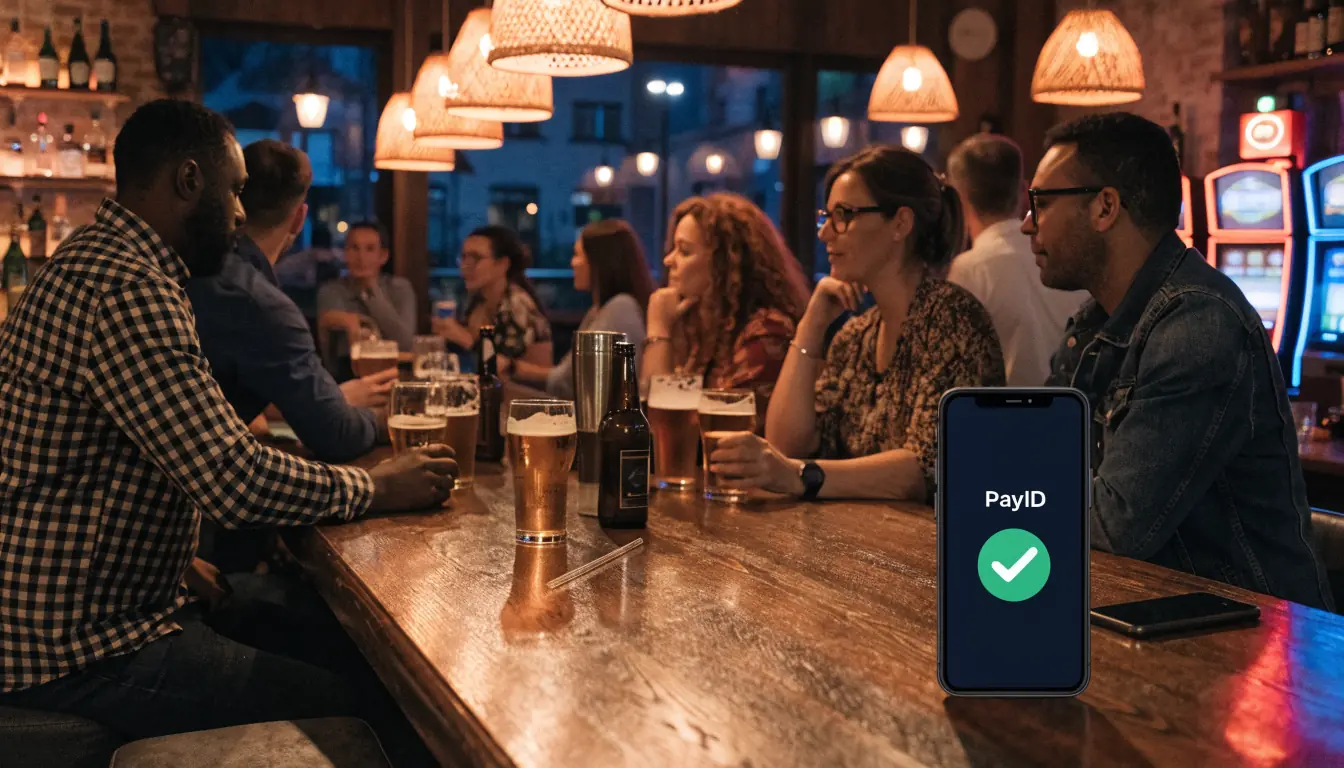
Playing state‑licensed sports betting apps is a legal alternative for wagering from your phone.
Where the regulation is heading
The direction of travel here is fairly consistent, even if the pace differs by state. The 2022 NSW Islington Report — a single, specific piece of analysis rather than a national consensus — recommended making all NSW pokies cashless by the end of 2028. I’m naming that as one report’s recommendation rather than settled policy, because recommendations and legislated timelines are different things, and it’s worth not blurring the two. But it does point at where the broader conversation is going: away from cash, and toward account-based systems that leave a trail.
The logic behind that push is straightforward. Adoption of cashless, account-based pokies improves traceability and reduces anonymity, according to analysis published by facctum.com — again, a claim worth attributing rather than presenting as an agreed industry fact, since it’s one provider’s framing of the benefit, even if the underlying mechanism is easy enough to follow on its own terms. A transparent, account-based pokie gives a full record of deposits, gameplay, and withdrawals tied to an identified account, rather than a wad of cash that could have come from anywhere and a payout ticket that could go to anyone. Regulators, in general terms, are pushing in this direction: tighter customer due diligence, better transaction monitoring, and a shift toward cashless gaming systems as the default rather than the exception.
For what it’s worth, this isn’t unique to pokies compliance — the wider anti-money-laundering technology space, with providers like FacctGuard, FacctShield, and FacctView, has been building tools aimed at exactly this kind of transaction monitoring and customer screening, and gambling venues are increasingly a customer base for that kind of software rather than a sector left to police itself with a clipboard at the door.

Where this leaves you as a player
None of the above is a reason to panic if you occasionally put money through a pokie at your local — the vast, overwhelming majority of people doing that are just having a punt on a Friday night, not laundering anything. But it does explain a few things that might otherwise seem like pointless bureaucracy: why the venue wants your ID before a large payout, why cash transactions over a certain size get extra scrutiny, why some clubs are quietly moving toward card-based or account-based machines instead of coin-fed ones.
It should also make you suspicious of anything marketing itself as an Australian online pokies platform for real money, "pocket" branding or otherwise. The legal, regulated version of pokies in this country is the physical machine in the pub with the ID check at the door and the AUSTRAC-driven paperwork behind the counter. There is no equivalent product operating legally online. If you’re looking for something to play on your phone, sports betting apps under state and territory licences are the legitimate option — pokies, in the online, real-money, app-on-your-phone sense you might be picturing, simply aren’t part of that legal landscape here, no matter what any given website’s branding wants you to believe.
If gambling has stopped feeling like something you can take or leave, Gambling Help Online and BetStop are genuine, Australia-based services set up for exactly that situation — not a marketing footnote, an actual place to start.
Are crypto casinos legal in Australia in 2026?
No. The Interactive Gambling Act 2001 makes it an offence for any operator, crypto or otherwise, to offer real-money online gambling to Australian residents. There is no domestically licensed online casino, so any app or site offering real-money pokies to Australians is operating outside the law.
What is the minimum legal gambling age in Australia?
You must be 18 or over to access electronic gaming machines. Venues are required to manage access to pokies rooms — including separate entrances and ID checks — to ensure only adults enter.
What payment methods are available for Australian players at online casinos?
No domestic online casino exists legally, so there are no licensed payment methods for real-money online pokies. For physical pokies in pubs and clubs, cash remains the dominant method, though regulators are pushing toward cashless, account-based systems to improve traceability.
What advanced security features are used in Australian casinos?
Operators with more than 15 pokies must implement AML/CFT programs, appoint a compliance officer, perform customer due diligence, and report cash transactions over AUD 10,000. Regulators also recommend cashless, account-based gaming systems that provide full traceability of deposits, gameplay, and withdrawals.
Published by the Casino Payments Info team.