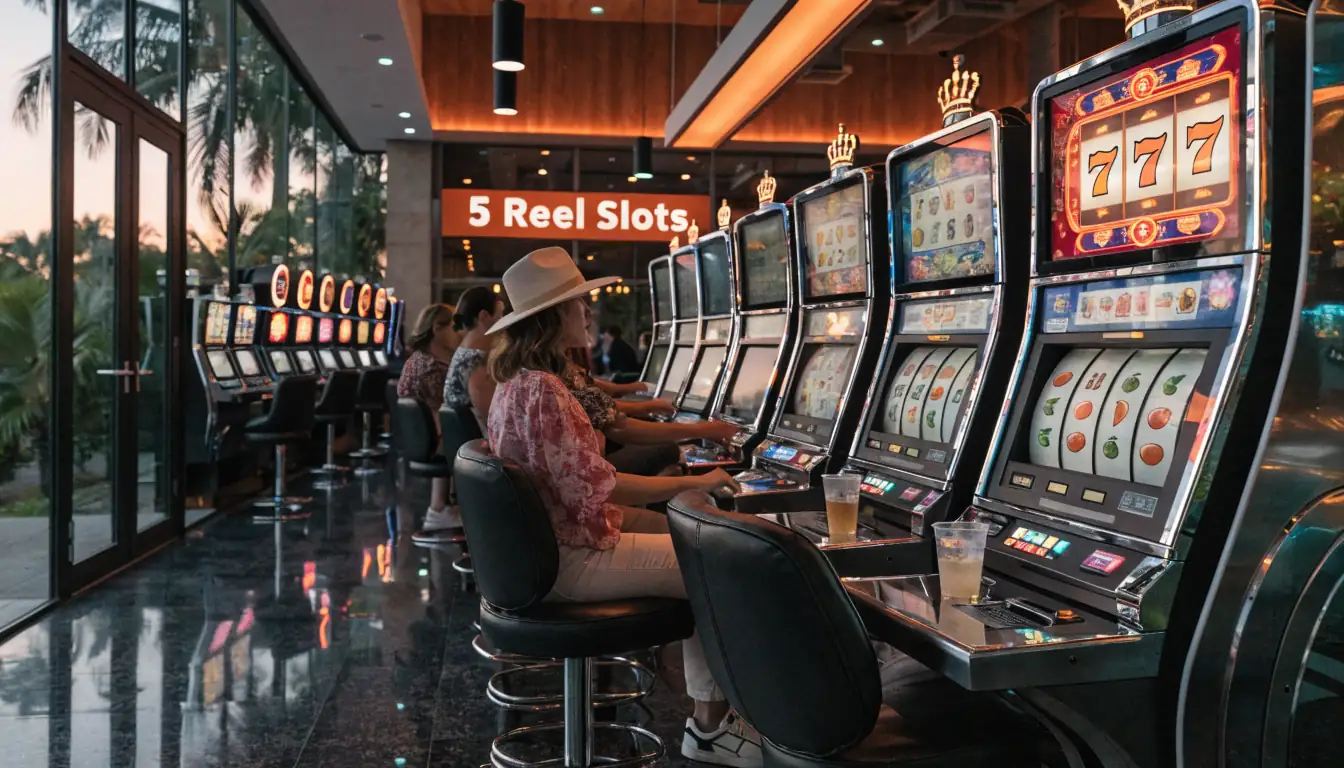
Pokies Tips and Tricks 2026: Strategies That Actually Hold Up
 Available in AU
How to Win at Australian Pokies – Proven Strategies
I lost track of how much I fed into pokies before I actually sat down and looked at the numbers behind them. Not the flashing "big win" numbers on the screen — the real ones. Once you see them, you play differently. Or you should.
Here’s the scale of it. Australians bet almost AUD$150 billion on electronic gaming machines in FY 2020‑2021. Out of that, players lost AUD$12 billion. Not turned over, not "risked" — lost. Gone. That works out to a per‑capita loss of AUD$608 for that same year, which means if you average it across every adult in the country, that’s roughly what came out of pockets and stayed with the venues.
Now zoom out further. Australia has 0.3% of the world’s population but is home to 3% of the world’s pub and club poker machines. One source puts the global share even higher, at around 18% of the world’s poker machines total, though that figure covers a different scope and I’d treat it as a separate claim rather than the same stat restated. Either way, the message is the same: there are a lot of machines here relative to how many people live in this country. New South Wales alone has approximately 95,800 pokies. That’s not a typo — that’s one state.



Under the Interactive Gambling Act 2001, offering real-money pokies to Australians online is illegal. Here's…
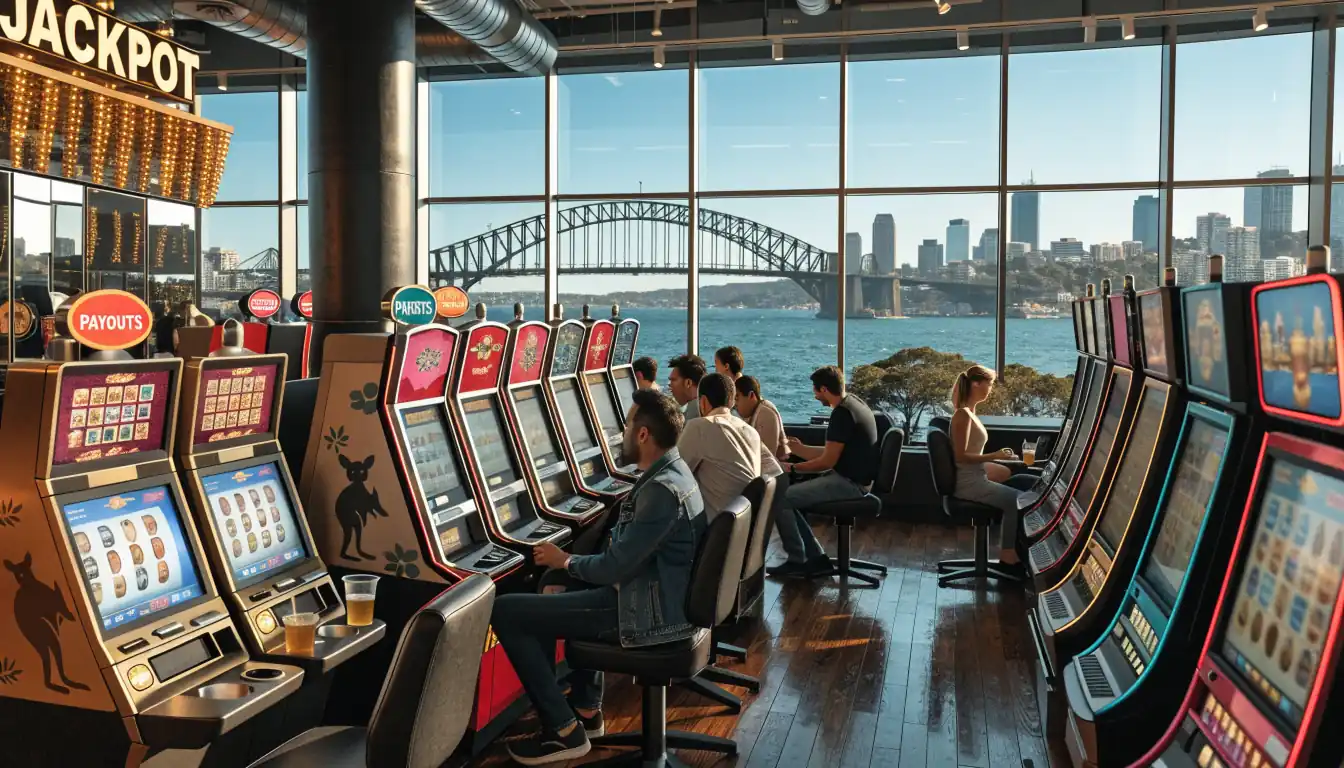


Pokies, formally called electronic gaming machines or EGMs, turned over $191.2 billion in Australian gambling turnover in 2023, according to the data behind that figure. And poker machines are officially recognised as the most harmful form of gambling in NSW — not slots at a casino table game, not the wagering apps, the actual pokies sitting in your local pub.
I’m putting these numbers up front because "tips and tricks" pages usually skip straight to the fun part — which machine to pick, when to walk away — without explaining why the maths is stacked the way it is. You can’t out-strategize a machine if you don’t understand what you’re actually playing against. So let’s get into it properly.
Why "beating" a pokie is the wrong frame
A pokie doesn’t get tired, doesn’t get greedy, doesn’t remember the last spin. Every result is independent of the one before it. I used to think a machine that hadn’t paid out in a while was "due." It’s not. That belief cost me more than any single bad session — it’s what kept me sitting there long after I should have cashed out and left.
What you actually control:
- How much you sit down with
- How long you play for
- Which machine you choose and why
- When you get up and stop
That’s it. That’s the entire list of things a player can influence. Everything else — the outcome of any given spin — is outside your hands completely. Real strategy here isn’t about tricking the machine. It’s about managing the four things above so the money lasts longer and the session doesn’t turn into the kind of night that becomes a story you don’t tell anyone.
Set the number before you sit down, not during
The single biggest change I made was deciding my loss limit before I put a note in, not somewhere around the third top-up when I was already annoyed and chasing. If you decide "I’m playing with this and no more" while you’re calm, you’ll actually stick closer to it than if you decide it mid-session, when the part of your brain doing the deciding is the same part that just watched a near-miss.
Practical version of this: take out cash, leave the card at home or in the car, and treat what’s in your hand as the whole budget for the session. Once it’s gone, it’s gone — not "just quickly grab more from the ATM in the foyer." I know because I’ve done exactly that walk to the ATM more times than I want to admit, and I never once came back from it up.
Don’t chase losses – set a strict loss limit before you sit down and stick to it.
Pick machines with a purpose, not a feeling
I used to choose a machine because it "felt lucky" or because someone had just walked away from it. Neither of those is a reason. What actually matters:
Denomination and bet size. A cent machine and a dollar machine can eat through your budget at wildly different speeds even if you’re pressing the same button the same number of times. If your goal is a longer session for the same money, lower denomination stretches it further. If your goal is a shot at a bigger single hit, higher denomination gets there faster — and empties your budget faster too.
Volatility, in plain terms. Some machines pay small amounts often. Others sit quiet for long stretches and then pay big, rarely. Neither is "better" — they’re different shapes of the same long-run outcome. If you’re playing for a session that feels active and keeps topping you back up in small amounts, that’s one style of machine. If you’re playing for the chance at a rarer, bigger result and you’re fine with long dry stretches to get there, that’s the other. Know which one you actually want before you sit down, because playing a high-volatility machine expecting frequent small wins is how a session goes sideways fast.
Bonus features and free spin triggers. These are part of how the machine is built to give you moments that feel like progress even inside a losing session. They’re not a loophole, they’re a design feature — which is fine to enjoy, just don’t mistake a free spins round for a sign the machine "owes" you anything.
Dragon Link, 5 Dragons and similar linked-jackpot machines
If you’ve played anything in the Dragon Link or 5 Dragons families, you’ll know they’re built around the "hold and spin" bonus round — you land enough scatter symbols, the bonus triggers, and you get a set number of spins where landing more of the same symbol resets the spin count and locks in a credit value, working toward one of several jackpot tiers.
The bonus round is where the real money is made; track its frequency rather than the base‑game spins.
A few things I’ve picked up from actually playing these that apply whether it’s Dragon Link, 5 Dragons, or the newer variants in the same family:
- The bonus round is the entire game, financially speaking. Base game spins are mostly there to get you into the feature. If you’re tracking how a session is going, judge it by how the bonus rounds performed, not by the base spins in between.
- Jackpot tiers are shown on screen — read them before you sit down. These machines usually display the current jackpot levels somewhere on the cabinet. It costs nothing to check what you’re actually playing toward before you commit a session to a specific machine.
- Bet size affects which jackpot tier is reachable. On many machines in this family, the top jackpot tiers are only accessible at higher bet levels. If you’re betting the minimum, you may be locking yourself out of the tier you’re actually hoping to hit — worth knowing before you sit there for an hour aiming at a prize your bet size can’t reach.
- A triggered bonus round with a low symbol count isn’t a “bad” bonus — it’s just the bonus round doing what it does most of the time. The big hold-and-spin outcomes people talk about are the exception, not the baseline, on any machine in this family.
None of this changes the underlying odds. It just means you’re playing with your eyes open instead of feeding the machine on autopilot, which is what I did for longer than I’d like to admit before I actually paid attention to what the bonus screen was telling me.
Table: session approach by what you’re actually trying to get out of it
| What you want from the session | Denomination | Volatility style | Time you should expect to sit there |
|---|---|---|---|
| A longer, active session on a fixed budget | Lower | Frequent small pays | Longer, more spins per dollar |
| A shot at a bigger single result | Higher | Long quiet stretches, rarer big pays | Shorter, budget can go quickly with nothing to show |
| Working toward a specific jackpot tier (Dragon Link style) | Whatever the tier requires | Feature-driven | Depends entirely on bonus frequency, not base game |
I’m not putting numbers in this table because the honest answer is that the exact odds and pay frequencies aren’t something venues or manufacturers publish per machine. Anyone giving you a specific percentage on a specific cabinet is guessing or making it up.
The "near miss" is not information
Two symbols matching and a third landing just above or below the payline is one of the most deliberately engineered feelings in the machine. It’s built to feel like you were close. You weren’t. The result was already locked in the moment you hit spin — the reels landing "almost" is a display choice, not a signal. I spent years thinking a string of near-misses meant a win was coming. It doesn’t mean anything at all about the next spin.
Same goes for a machine that hasn’t paid in a while — that’s not tension building toward a release, that’s just what randomness looks like from the outside when you watch it long enough to want a pattern to be there.
Near‑miss myth
Near‑misses give a false sense of being ‘due’ – they do not improve your odds of the next spin.
Play the machine you understand, not the one with the biggest sign
There’s a pull toward whatever machine has the flashiest cabinet or the biggest advertised jackpot figure lit up above it. That’s marketing doing its job, not a signal about your actual odds on that cabinet compared to the quieter one next to it. The machines I’ve had the most sensible sessions on were ones I’d played enough times to actually know the bonus triggers, the paytable, and roughly how the feature round behaved — not the one that looked most exciting from across the room.
Before you commit real money to a machine, sit through a few spins mentally, or check the paytable screen most cabinets let you pull up. It tells you the actual bonus triggers and prize structure for that specific game, which varies between titles even within the same "family" of games. Two Dragon Link cabinets can have different jackpot levels and bet requirements sitting right next to each other.
Walking away — the part nobody actually practises
Every guide says "know when to stop" like it’s obvious. It’s not obvious in the moment. The moment where you should stop is usually right after a win, when it feels like the machine is finally paying and you want to keep going, or right after a loss, when it feels like you’re due to get it back. Both of those feelings are the same trick wearing different clothes.

What actually worked for me: deciding the stop point in two ways before I sat down — a dollar figure and a time figure — and leaving when either one hit, regardless of what the screen was doing at that exact second. Not "one more spin to see." One more spin to see is how the last four times ended too.
A quick gut check before you play
- Did I decide my budget before walking in, or am I deciding it as I go?
- Do I know what denomination and volatility this specific machine is, or am I guessing from how it looks?
- If this is a Dragon Link or 5 Dragons type machine, do I know the jackpot tiers and what bet level reaches them?
- Have I set a time to leave by, separate from how the session is going?
- Am I treating a near-miss or a dry spell as information about what happens next? (It isn’t.)
None of this turns the odds in your favour — nothing does, and anyone telling you otherwise is selling something. What it does is stop you handing over more of that AUD$608 average than you meant to, and stop a session from turning into the kind of night where you’re doing the ATM walk again, telling yourself it’s the last one.
Pokies Tricks for 2026 – Behavioural Hacks and Compliance Tips
Before you dive into pokies strategies for 2026, it helps to know which platforms are actually worth testing them on. Here’s a quick rundown of vetted operators to consider.
Bonus: up to A$750 + 50 jackpot spins, 35x wagering · Payout speed: crypto ~90 minutes, fiat 1-5 days · Min. deposit: A$30 Kingmaker pairs a solid welcome package with jackpot spins thrown in, and crypto players get notably fast payouts around 90 minutes, with a manageable A$30 minimum deposit.
License: Curacao eGaming OGL/2023/174/0082 (Dama N.V.) · Bonus: up to A$10,000 + 500 free spins across 4 deposits · Min. deposit: A$15 LevelUp Casino operates under a Curacao eGaming license via Dama N.V. and offers a large multi-deposit bonus package with hundreds of free spins, plus a low A$15 minimum deposit.
License: Curacao · Bonus: 100% up to A$500 + 200 free spins, 10x wagering · Payout speed: crypto 30-60 minutes, fiat 1-5 days · Min. deposit: A$10 Wild Tokyo holds a Curacao license and backs its bonus with a relatively low 10x wagering requirement, plus quick crypto withdrawals in the 30-60 minute range and a low A$10 minimum deposit.
Bonus: 240% up to A$4,100 + 300 free spins WinShark stands out for a high-percentage 240% match bonus combined with a generous 300 free spins.
Bonus: up to A$7,500 + 550 free spins across 10 deposits, 50x wagering · Payout speed: crypto under 1 hour, PayID 1-3 business days · Min. deposit: A$20 (A$30 to qualify for the bonus) Ricky Casino offers one of the larger multi-deposit bonus packages on this list, with fast crypto payouts under an hour and PayID processing within a few business days.
License: Curacao Gaming Control Board OGL/2023/176/0095 (Hollycorn N.V.) · Bonus: up to A$11,000 + 300 free spins (code NEO100) Neospin is licensed under Curacao’s Gaming Control Board through Hollycorn N.V. and offers a sizeable bonus plus free spins unlocked with a specific promo code.
License: Tobique Gaming Commission · Bonus: up to A$8,000 + 400 free spins across 4 deposits · Payout speed: crypto ~10-15 minutes, fiat 1-5 days · Min. deposit: A$30 SkyCrown is licensed by the Tobique Gaming Commission and combines a strong multi-deposit bonus with very fast crypto withdrawal times of around 10-15 minutes.
License: Curacao eGaming (Dama N.V.) · Bonus: up to A$10,000 + 180 free spins, 40x wagering JeetCity Casino operates under a Curacao eGaming license via Dama N.V. and offers a substantial bonus package with free spins, subject to a 40x wagering requirement.
License: Curacao Gaming Authority (Jumpman Gaming Ltd) · Bonus: up to A$6,600 + up to 250 free spins across 4 deposits DragonSlots Casino is licensed by the Curacao Gaming Authority through Jumpman Gaming Ltd and spreads its bonus and free spins across multiple deposits.
License: Curacao eGaming (Roby Games Ltd) · Bonus: 100% up to A$750 + 200 free spins Roby Casino holds a Curacao eGaming license under Roby Games Ltd and offers a straightforward matched deposit bonus alongside free spins.
Winning strategy is one half of the story. The other half is not getting flagged, not getting hustled by someone standing next to you at the bank of machines, and not getting caught up in something you didn’t sign up for. Nobody talks about this stuff in the usual guides, probably because it’s less fun than "which button to press." But I’ve watched venue staff pull someone aside for a chat that had nothing to do with jackpots, and it stuck with me.
The habits that actually keep you sane
None of this is about superstition. It’s about not turning a night out into a mess.
Set your amount before you sit down, and leave the card at home if you can’t trust yourself to stop. I used to tell myself "just one more twenty" so many times that the phrase stopped meaning anything. Now I take cash, a fixed amount, and when it’s gone I’m gone. Boring. Works.
Take breaks that are actually breaks — walk outside, don’t just switch machines. Sitting at a new pokie because the old one "wasn’t hitting" is the same money leaving the same wallet, just with extra steps.
Track time, not just money. Venues design games without clocks or a natural stopping point on purpose. I’ve sat down at 8pm and looked up at midnight more than once. A phone alarm sounds pathetic until it saves you four hours.
AML red flags
- Large cash insertions followed by minimal play and immediate cash‑out
- Frequent small redemptions across multiple venues by the same person
- Multiple patrons appearing to move cash together
- Refusal to provide ID or use of several player cards
- Transaction amounts that don’t match the player’s usual profile
Know that your winnings aren’t taxed here — gambling winnings are not taxed in Australia — which is nice, but it’s also exactly why there’s no tax paperwork trail forcing you to reflect on what you actually walked away with. Keep your own count. Nobody else will do it for you.
The "transparent pokies" shift
If you’ve played in the last couple of years you might have noticed newer machines feel different — no coin hopper, no ticket in some cases, everything running through an account. That’s the move toward what’s increasingly called transparent pokies: account-based, cashless systems where your play is tied to a traceable record rather than loose cash and anonymous tickets.
From a player’s side, this cuts both ways. You lose the anonymity of a fistful of coins, but you gain a system that’s harder to manipulate and easier for you to audit yourself. If you’ve ever wanted an honest record of exactly what you fed into a machine over a session, cashless play basically hands you one. I didn’t love it at first — felt like being watched — but it’s also the reason I finally know my real numbers instead of guessing.
Why pokies attract more than just players chasing a win
Here’s the part most "tips and tricks" pages skip entirely: pokies aren’t just a target for people trying to beat the house. They’re a target for people trying to clean dirty money, and that shapes the environment you’re playing in.
Cashless ‘transparent’ pokies automatically record your spend, giving you an easy way to audit your own play.
The reason is simple. Pokies involve a high volume of cash transactions and limited traceability, which is exactly the combination that makes them attractive for money laundering. Public inquiries and sector guidance in Australia have flagged pokies specifically as a major AML risk area — this isn’t a fringe concern, it’s on record.
The mechanics are almost insultingly simple once you see them written out:
- Cash placement with minimal play — someone feeds a large amount of cash into a machine, presses a few buttons, and cashes out almost immediately. The machine is just a conversion tool, not entertainment.
- Purchasing winning tickets — buying someone else’s winning ticket off them for cash, so the “win” on paper belongs to a different person than the one who actually walked away with clean money.
- Structuring across venues — spreading cash through multiple venues in smaller amounts so no single transaction looks large enough to draw attention.
None of that has anything to do with strategy or odds. It’s laundering, dressed up as a night at the pokies. And it matters to you as a regular player because it’s part of why venues watch the floor the way they do, why ID checks happen, and why some sessions get interrupted by a staff member who wants "a quick word."
The red flags venues are actually trained to watch for
I used to think staff hovering near the machines were just topping up drinks or checking on jackpots. Some of it is that. But venues with enough machines run active monitoring, and the patterns they’re told to watch for are specific:
- Large cash insertions followed by minimal play and an immediate cash-out
- Frequent small redemptions across different venues by the same person
- Multiple patrons appearing to work together to move cash through machines
- Customers who refuse identification, or who use multiple player cards
- Redemption patterns that don’t match the venue’s usual averages
- Someone with access to more cash than expected for their profile
- A customer suddenly depositing higher values and larger amounts than usual
You’ll notice none of these describe an ordinary player having a good or bad night. A long losing streak doesn’t look like this. A lucky win doesn’t look like this either. What triggers attention is the shape of the transaction pattern, not the outcome. If you play normally — put money in, play it, cash out what’s left — you’re nowhere near this list. But it’s worth knowing what the list actually contains, because "why did they ask for my ID just to cash out" has an answer, and it’s not personal.
Where collusion and weak oversight come in
The uncomfortable truth in a lot of AML guidance is that these schemes don’t usually work alone. Collusion and weak oversight — a staff member looking the other way, a venue under-resourcing its compliance function — are what let illicit cash actually move through the system undetected. The machine itself doesn’t launder anything; it’s the combination of cash, low scrutiny, and someone willing to ignore what’s in front of them.
Compliance risk
Using multiple cards or sharing cash can trigger staff checks and result in ID requests.
This is also, bluntly, why some players get roped into being what’s called a money mule without fully understanding what they’ve agreed to. Someone offers cash to "just play this through and hand back a ticket," it seems harmless, and suddenly you’re the name attached to a transaction pattern that fits every red flag on the list above. It’s not a strategy tip so much as a warning: if a stranger’s cash and your player card are being combined into someone else’s plan, that’s not a favour, that’s a liability with your name on it.
What venues are actually doing about it
Compliance isn’t just a poster in the corner. Under Australia’s AML/CFT framework, venues use a mix of controls that shape what you’ll see on the floor:
| Control | What it looks like from the player’s side |
|---|---|
| Customer verification | ID checks, especially for large or unusual cash-outs |
| Patron profiling | Staff noting play patterns that don’t match your usual behaviour |
| Cashless/account-based systems | Fewer loose cash transactions, more traceable play history |
| Staff reporting obligations | Questions or a temporary pause on play when something looks off |
Customer verification and patron profiling are standard AML controls, not a sign you’ve done anything wrong. And the push toward cashless and account-based pokies exists specifically because it improves traceability — for the venue, for regulators, and honestly, for you if you ever want to check your own history instead of relying on memory.
A quick reality check on scale
By one estimate, Australia holds about 18% of the world’s poker machines — a figure that comes from a single industry source (complyadvantage.com) rather than an official national count, so treat it as a data point, not gospel. What it does explain is the sheer size of the compliance problem regulators are dealing with. A country this small running that share of the world’s machines isn’t just a fun fact — it’s the reason AML guidance keeps circling back to pokies specifically, rather than gambling in general.
Staying legal without overthinking it
None of this requires a law degree. The framework that matters here is the Interactive Gambling Act, passed on 28 June 2001, which is the reason there’s no such thing as a licensed online pokies casino for Australian residents — a point that trips people up more than almost anything else in this space. If a site is offering you "online pokies" for real money, that’s not a grey area you’ve stumbled into by accident; it’s outside what’s permitted here, full stop. Land-based pokies in pubs, clubs and casinos are the legal, regulated version, and that’s genuinely where the tricks-and-tips conversation belongs.
The practical version of staying on the right side of all this:
- Don’t take cash from someone else to “play through” your card. Ever. It doesn’t matter how small the ask sounds.
- Don’t get frustrated by ID checks on big cash-outs — they’re a standard control, not an accusation.
- Don’t spread your own cash across venues to “avoid attention.” If you’re doing that on purpose, ask yourself why you feel the need to.
- Keep your own play on one card, one identity, one honest record. It’s the least suspicious pattern there is, because it’s just… playing.
I’ll be honest, the first time a staff member asked for my ID after a decent win, I got defensive about it for about ten seconds before realising it had nothing to do with me personally. The system’s built to catch the cash-placement-and-run pattern, not the guy who actually sat there and played his money through. Once you know what the flags actually are, the whole floor makes a lot more sense — and you stop mistaking basic compliance for an insult.
What is the minimum legal gambling age in Australia?
18 years old — that’s the legal age for gambling across all Australian states and territories.
Is online gambling legal in Australia?
No, providing online gambling services to Australian residents is illegal under the Interactive Gambling Act passed on 28 June 2001.
How did Covid‑19 lockdowns affect land‑based casinos and boost online gambling?
Lockdowns forced physical venues to close, pushing players toward online alternatives and accelerating the shift to digital gambling.
What does RTP mean in pokies?
RTP, or Return to Player, is the percentage of wagered money a machine pays back to players over time — the higher the RTP, the less the house keeps.
Prepared by the Casino Payments Info editorial staff.