
Aussie Crypto Casino 2026: How They Work and What to Know
 Available in AU
Table of Contents
- Understanding Australian Crypto Casinos: Core Features and Regulations
- Australian Market Specifics: Payment Options and Legal Landscape
- Playing Online: How Crypto Casinos Operate on the Internet
- What Makes a Crypto Casino the "Best" in Australia?
- Crypto‑Focused Casinos: Acceptance and Advantages
- Slots on Crypto Casinos: What to Expect
- Deposits and Bonuses: What Really Comes with Crypto Casino Offers
- KYC Requirements: Navigating Identity Verification in Aussie Crypto Casinos
- Cryptocurrency‑Only Casinos: Pros and Practicalities
- Free Spins and Review Highlights: Quick Look at Crypto Casino Offers
Understanding Australian Crypto Casinos: Core Features and Regulations
I spent way too long thinking crypto casinos were basically the same thing as any other online casino, just with a fancier deposit button. They’re not. And the first thing you need to get straight, before we even talk about wallets or withdrawal speeds, is where these sites actually sit legally — because that shapes everything else about how they work.
Here’s the blunt version: there’s no such thing as a licensed online casino in Australia. Not "hard to find," not "only the good ones have it" — it doesn’t exist. The Interactive Gambling Act 2001 is the Commonwealth law that governs this, and it was written with harm minimisation as the stated goal, not to hand out domestic casino licences. So when you see a "crypto casino for Aussies," you’re always looking at an offshore operator. That’s not a red flag by itself, but it’s the frame you need before you read anything else about "Australian" crypto casinos — including the rest of this article.
Before you deposit crypto at an Aussie casino in 2026, it pays to know how each site handles bonuses, payout speed, and minimum stakes so you can pick one that matches how you actually play.
Bonus: up to A$750 + 50 jackpot spins, 35x wagering · Payout speed: crypto ~90 minutes, fiat 1-5 days · Min. deposit: A$30 Kingmaker pairs a bonus of up to A$750 plus 50 jackpot spins with fast crypto payouts around 90 minutes, though wagering sits at a steep 35x and the minimum deposit is A$30.
License: Curacao eGaming OGL/2023/174/0082 (Dama N.V.) · Bonus: up to A$10,000 + 500 free spins across 4 deposits · Min. deposit: A$15 LevelUp Casino runs under a Curacao eGaming license from Dama N.V. and offers a large bonus of up to A$10,000 with 500 free spins spread across four deposits, with an accessible A$15 minimum deposit.
License: Curacao · Bonus: 100% up to A$500 + 200 free spins, 10x wagering · Payout speed: crypto 30-60 minutes, fiat 1-5 days · Min. deposit: A$10 Wild Tokyo holds a Curacao license and backs its 100% bonus up to A$500 plus 200 free spins with a low 10x wagering requirement, fast crypto payouts in 30-60 minutes, and a low A$10 minimum deposit.
Bonus: 240% up to A$4,100 + 300 free spins WinShark stands out for a sizeable 240% bonus worth up to A$4,100 plus 300 free spins.
Bonus: up to A$7,500 + 550 free spins across 10 deposits, 50x wagering · Payout speed: crypto under 1 hour, PayID 1-3 business days · Min. deposit: A$20 (A$30 to qualify for the bonus) Ricky Casino offers one of the larger bonus packages here, up to A$7,500 plus 550 free spins across ten deposits, with crypto withdrawals typically clearing in under an hour, though wagering is a demanding 50x.
License: Curacao Gaming Control Board OGL/2023/176/0095 (Hollycorn N.V.) · Bonus: up to A$11,000 + 300 free spins (code NEO100) Neospin is licensed under Curacao’s Gaming Control Board via Hollycorn N.V. and offers a substantial bonus of up to A$11,000 plus 300 free spins using the code NEO100.
License: Tobique Gaming Commission · Bonus: up to A$8,000 + 400 free spins across 4 deposits · Payout speed: crypto ~10-15 minutes, fiat 1-5 days · Min. deposit: A$30 SkyCrown operates under a Tobique Gaming Commission license and combines a bonus of up to A$8,000 plus 400 free spins across four deposits with notably quick crypto payouts of around 10-15 minutes.
License: Curacao eGaming (Dama N.V.) · Bonus: up to A$10,000 + 180 free spins, 40x wagering JeetCity Casino is licensed through Curacao eGaming under Dama N.V. and offers a bonus up to A$10,000 plus 180 free spins, subject to 40x wagering.
License: Curacao Gaming Authority (Jumpman Gaming Ltd) · Bonus: up to A$6,600 + up to 250 free spins across 4 deposits DragonSlots Casino is licensed by the Curacao Gaming Authority under Jumpman Gaming Ltd and provides a bonus of up to A$6,600 with up to 250 free spins spread over four deposits.
License: Curacao eGaming (Roby Games Ltd) · Bonus: 100% up to A$750 + 200 free spins Roby Casino, licensed through Curacao eGaming under Roby Games Ltd, offers a straightforward 100% bonus up to A$750 plus 200 free spins.
So what actually makes a casino a "crypto casino"
A crypto casino, in the way people mean it now, is a site built around cryptocurrency as a funding method — sometimes the only one, sometimes one option among several. Cryptocurrency payments are widely accepted across Australian-facing online casinos at this point, which is honestly a bigger shift than most people give it credit for. A few years back it felt niche, almost sketchy. Now it’s just another tab in the cashier.
What separates a genuine crypto casino from a regular site that happens to bolt on a Bitcoin option is usually the whole pipeline: how fast deposits clear, how the platform handles verification, and — this is the part people skip — what happens when you try to get money back out. That last bit is where the real differences show up.
Deposits are the easy part. Withdrawals tell you the truth.
I learned this the annoying way. Every casino makes deposits look effortless — you scan a QR code, you wait a few minutes, your balance updates. Cryptocurrency deposits genuinely do take just a few minutes, and that part isn’t marketing fluff. It’s real, and it’s one of the actual advantages crypto has over some of the older payment rails.

Withdrawals are a different story, and this is where "crypto casino" starts to matter as a category rather than a buzzword. Withdrawals in crypto are usually processed within 24 hours, according to how operators themselves describe their own processing windows — which is faster than a lot of the fiat alternatives. Compare that to bank transfers, which can be the slowest method out there, sometimes stretching up to seven business days by an operator’s own stated terms. Or card withdrawals through Visa or Mastercard, where deposits land instantly but pulling money back out can take anywhere from one to five business days.
None of these numbers are guarantees — they’re what operators publish about their own processing, and one casino’s "24 hours" is another casino’s "we’ll get to it." But the pattern holds: crypto tends to close that deposit-to-withdrawal gap faster than fiat rails do, at least on paper.
Why your withdrawal doesn’t actually depend on the coin
Here’s the thing nobody tells you upfront: the blockchain isn’t usually what slows you down. The most common reason a withdrawal gets paused isn’t the network, it’s verification — KYC — or some bonus condition you didn’t fully read. I’ve sat there refreshing my wallet balance blaming "crypto being slow" when really the casino was just waiting on me to upload a driver’s licence photo that wasn’t blurry.
KYC Mandatory
KYC checks are mandatory at every Australian‑facing online casino. Skipping them will block withdrawals and may breach the Interactive Gambling Act.
KYC checks are mandatory at every Australian-facing online casino, full stop, crypto or not. That "instant, anonymous crypto casino" pitch some sites lean on is mostly theatre. You will be asked to verify who you are before a withdrawal clears, because that’s a baseline requirement, not an option operators get to skip because you paid in Bitcoin.
Same goes for wagering requirements. If you took a deposit bonus, your funds can sit locked until you’ve met whatever conditions came attached to it, regardless of what currency you funded the account with. Crypto doesn’t get you around that. It just changes how fast things move once the conditions are actually cleared.
The "same method" thing catches people out
Something else that trips people up constantly: most operators want your withdrawal to go back out the same way it came in. Deposited with crypto, cash out with crypto. Deposited with a card, cash out to that card. It sounds obvious once you say it, but I’ve seen people top up with a Visa card during a promo, then get confused why the casino won’t just send their winnings to a crypto wallet instead. It’s not the casino being difficult — it’s a standard control, and it applies whether the original deposit was fiat or crypto.

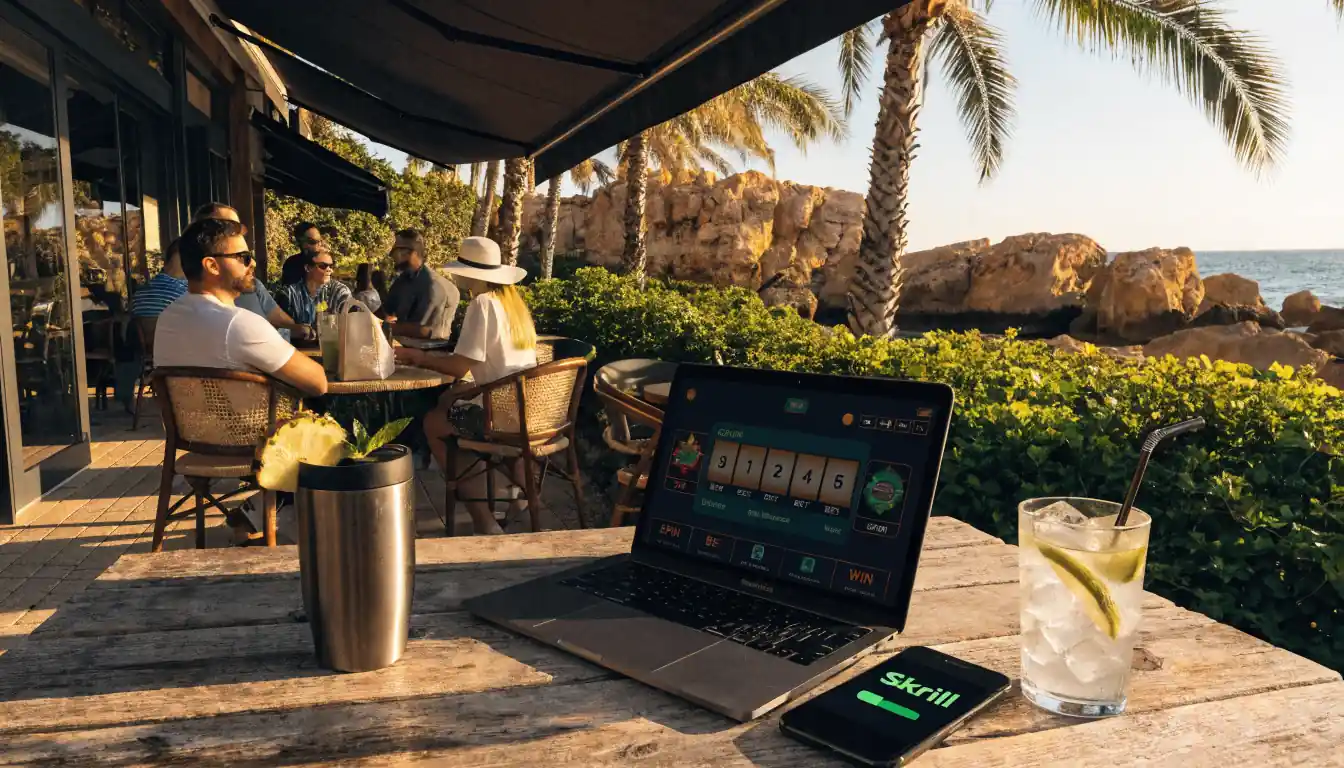
What’s actually different, security-wise
On the technical side, the security layer doesn’t really change based on what currency you’re using. Reputable operators run SSL/TLS encryption and PCI-DSS compliance across the payment options they offer, crypto included. That’s baseline plumbing, not a selling point specific to crypto casinos — I mention it here because people sometimes assume crypto sites are less secure since there’s no bank in the middle. In practice the encryption layer is the same regardless of whether you’re pushing AUD through a card or ETH through a wallet.
Fast doesn’t mean fastest for everyone
If speed is genuinely your priority, it’s worth knowing that the quickest withdrawals in the Australian-facing market tend to land under two hours, and sometimes near-instant — but that’s usually reported for accounts that are already fully verified and not sitting on unmet wagering conditions. Get your KYC sorted early, before you’re trying to pull out a win at midnight wondering why nothing’s moving.
Same Withdrawal Method
Withdrawals must use the same method as the deposit. Trying to cash out to a different wallet or card will be rejected.
Crypto casino, offshore operator — hold both facts at once
None of this changes the legal frame. These are offshore platforms serving Australian players, not Australian-licensed businesses, because that licence category doesn’t exist here. Playing at one isn’t illegal for you as an individual — the law is aimed at operators, not players — but "crypto-powered" doesn’t mean "locally regulated." It just means the payment rail underneath is different, and in a lot of practical ways, faster and a bit less friction-heavy than the fiat alternatives once you’re past verification.
That’s really the core distinction worth carrying into the rest of this: crypto casinos aren’t a separate legal category, they’re a different plumbing system sitting inside the same offshore reality every other online casino operates in for Australian players.
Australian Market Specifics: Payment Options and Legal Landscape
Before we get into how the money actually moves, let’s settle the legal picture, because it decides everything else in this section. The Interactive Gambling Act 2001 is the Commonwealth law that governs this space, and it exists to protect the public through harm minimisation. Some sources still refer to an "Interactive Gambling Act 1997" prohibiting online casino games for Australian residents — you’ll see both dates floating around, and I’m not going to pretend I know which one a given writer meant. What matters is the substance: online casino-style games — slots, poker, blackjack, roulette — are prohibited under the 2001 Act. Not "regulated." Not "licensed with conditions." Prohibited, at the federal level, for any operator trying to offer them from inside Australia. There’s no domestic licence for this. None. So any mention of "checking the operator’s licence" for casino games specifically is pointing you at something that doesn’t exist here.
That’s the part nobody selling you a bonus wants to lead with.
Where the money actually comes from
Once you accept that the casino itself sits offshore, the payment side gets more interesting, because that’s where Australian habits show through. Cards, e‑wallets, bank transfers and crypto each carry their own speed and fee profile — none of them behave the same way twice across operators, and I’ve had that inconsistency bite me more than once.
Visa is accepted almost everywhere I’ve tried. Mastercard too, on the deposit side — but I’ve hit limits on the withdrawal end with Mastercard specifically, and by "hit limits" I mean the withdrawal form quietly stopped offering it as an option after I’d deposited with it. Annoying, not catastrophic, just plan for it.
According to one industry review, most offshore operators lean on PayID as their go-to AUD deposit rail. Makes sense — it’s instant on the Australian banking side and doesn’t force a currency conversion. Most casinos serving this market actually price everything in AUD to begin with, which quietly saves you the conversion fee that would otherwise eat into every top-up.

Flexepin gets a mention too — per that same review, it’s a genuinely popular local option going into 2026, the kind of prepaid voucher players reach for when they don’t want a bank trail attached to a deposit. I get the appeal. I don’t love that it’s one source’s read on a moving market rather than something I can independently confirm, so take it as a real option worth checking on your operator’s payment page, not a universal ranking.
What this means for crypto
Crypto sits in its own category here — not because it dodges the legal framework (it doesn’t; the prohibition on casino games applies regardless of what currency moves the chips), but because it doesn’t touch your bank at all. No PayID trail, no card statement line reading "gambling," no FX conversion since most crypto-friendly operators just let the coin be the coin. That’s the actual appeal, and it’s a payments appeal, not a legal loophole — playing at an offshore-licensed casino isn’t illegal for an individual Australian, since the law targets operators rather than players. Worth remembering before you read too much into any "official" branding.
None of this changes the basic reality: you’re choosing a payment rail, not a jurisdiction that will chase down your money if something goes wrong. Pick the one whose fee and speed profile actually matches how you play, and don’t assume the loudest-advertised option is the cheapest one.
Playing Online: How Crypto Casinos Operate on the Internet
Here’s the thing nobody tells you before you fund an account: the game itself is the fast part. Spinning a reel takes seconds either way. What actually varies — a lot — is everything around the game. Getting money in, getting money out, and whatever the platform decides to check before letting you touch your own balance.
Instant Crypto Deposits
Crypto deposits are processed in a few minutes, letting you start playing almost instantly.
Deposits with crypto are close to instant. You send from your wallet, the network confirms, and within a few minutes the balance shows on the casino side. That’s the whole appeal of playing this way rather than sitting on a card deposit page waiting for a "processing" spinner.
Withdrawals are where the story splits, and this is the part worth paying attention to before you pick a platform, not after.
Withdrawal speed, method by method
- Crypto: usually processed within 24 hours, according to how one industry review measured it — your own casino’s terms are the only real answer for your account.
- E‑wallets: can come out faster than card withdrawals, but that depends entirely on the casino’s processing queue and where your verification stands.
- Bank transfers: the slowest option on the list, with waits stretching up to 7 business days per that same review.
- Fastest cases overall: some operators clear payouts in under two hours, occasionally instantly — but that’s the best-case end of the range, not a promise.
I’ve had a crypto withdrawal land while I was still on the confirmation screen for another site. I’ve also had one sit "pending" long enough that I checked my email three times to see if I’d missed a KYC request. Both were technically "crypto casinos." The difference wasn’t the coin — it was the operator’s own processing and how far along my verification already was.
Why "online" doesn’t mean "automatic"
A crypto casino running purely online still has the same checkpoints as any other operator: identity checks, bonus terms, internal review queues. The blockchain part moves fast. The casino’s own processes don’t automatically move at blockchain speed just because the currency does.
Wagering requirements are the other trap. If you took a deposit bonus, your balance can sit locked until you’ve met the conditions attached to it — crypto or not, that rule doesn’t care what currency you funded with. I’ve watched a balance that should’ve been withdrawable stay stuck for exactly that reason, and it had nothing to do with the coin, the network, or the casino being slow on purpose.

What actually differs from a fiat-only site
Fiat-only platforms route everything through banking rails — cards, bank transfers, PayID — which means you’re subject to banking hours, bank transfer settlement times, and whatever your card issuer decides to flag. Crypto platforms skip the bank entirely for the deposit and withdrawal legs, which is where the speed advantage comes from. But the casino’s side of the process — verification, bonus locks, payout review — runs on the same logic regardless of what currency sits in your account.
So when people ask what makes playing on a crypto casino feel different online, my honest answer is: less waiting on the money-movement part, same waiting on the casino’s own part. If you’re comparing sites, don’t judge by "accepts crypto" alone. Ask what happens between clicking withdraw and the funds actually clearing — that’s the number that matters, and it’s set by the operator, not by the blockchain.
Fastest withdrawals under ideal conditions
When your account is fully verified, you have no pending bonus conditions, and the operator’s queue is clear, payouts can be completed in under two hours, sometimes instantly.
What Makes a Crypto Casino the "Best" in Australia?
Every offshore site calls itself the "best crypto casino" on its homepage. I’ve clicked through enough of these banners to know that word means nothing on its own — it’s just what the marketing team typed before the design team picked a colour scheme. So let’s skip the badge and talk about what I actually check before I trust a site with my wallet.
First thing: the legal reality doesn’t change no matter how polished the site looks. The Interactive Gambling Act 2001 is the Commonwealth law covering online gambling here, and it’s built around harm minimisation — protecting players, not endorsing casino sites. Some sources point to a 1997 version of the same act prohibiting online casino games for Australian residents; the naming differs between references, but the outcome is the same either way: there’s no domestic licence behind any of these platforms, "best" or not. So when a badge says "top rated," that’s someone’s opinion, not a government stamp.
Hidden Bonus Terms
Bonus terms are often hidden until after you deposit; not reviewing them can lock your funds behind wagering requirements.
What actually separates a decent site from a bad one
None of this is about jackpot size or how flashy the lobby looks. It’s about the boring stuff that matters when something goes wrong.
- How they handle fees. Fees aren’t common across the board, but they show up — crypto network fees when your transaction hits the blockchain, FX conversion if your wallet holds a coin the casino has to convert, sometimes a withdrawal fee on an e‑wallet. A site worth using tells you this upfront, not buried three menus deep in a help centre. If I have to dig for it, that’s already a red flag.
- Whether the age gate is real. The minimum gambling age in Australia is 18, full stop. A casino that treats this as a checkbox rather than an actual verification step isn’t one I’d call “best” — it’s one I’d close the tab on.
- How they talk about winning. Anything that treats losing streaks as a joke, or nudges you to “just one more spin” after a rough session, isn’t a quality signal. It’s the opposite. I’ve seen sites lean on that tone precisely because it works on people who are already chasing losses.
- Whether the bonus terms are visible before you deposit, not after. This one gets its own section later in this piece, but it’s worth flagging here too — a site that shows you the bonus number before the conditions is doing marketing, not disclosure.
The "beyond marketing hype" part
Here’s the rubric I actually use now, after enough mistakes:
- Can I find the fee structure without opening a support chat?
- Does the site ask for real ID at some point, and does it say so plainly rather than hiding it until withdrawal day?
- Is the tone around gambling itself sober — no “lucky streak” language dressing up bad math?
- Does it treat crypto as a payment rail, or as a gimmick to dodge scrutiny?
That last one matters more than people think. A site built properly around crypto treats it like any other payment method — something with its own fee quirks and processing behaviour, worth explaining plainly. A site using crypto as a shortcut to skip normal checks is telling you something about how it’ll treat you later, too.
None of this makes a casino "the best" in some objective, rankable sense — that word is doing marketing work, not descriptive work. What it does is tell you whether a site is being straight with you before you’ve handed over anything. That’s the only ranking that’s ever mattered to me since I started paying attention.
Crypto‑Focused Casinos: Acceptance and Advantages
By "crypto-focused" I mean something specific: not a casino that bolts on a Bitcoin option next to Visa and PayID, but one built around crypto from the ground up. Wallet integration is the first thing you notice, then the odd absence of a currency dropdown because there’s nothing to convert.
Acceptance is not the issue anymore. Cryptocurrency payments are widely accepted across Australian online casinos at this point, crypto-focused or not, so "do they take crypto" isn’t really the question worth asking in 2026. The real question is what changes once crypto is the primary rail instead of an afterthought.
What actually changes:
- Deposits clear in a few minutes rather than sitting in a “pending” state you keep refreshing.
- Withdrawals get processed within roughly a day under normal circumstances — still bound to whatever KYC and bonus checks the operator runs, which is covered properly in its own section.
- Fee structure looks different. Fees stay rare overall, but on a crypto-first site the ones that do turn up are usually network fees rather than the bank-transfer or FX charges you’d hit elsewhere.
That last point cost me some money the first time I moved funds during a network congestion spike — the casino did nothing wrong, the chain itself was just backed up. Worth knowing before you assume every delay is the operator’s fault.
Security, without the theatre
Every legitimate payment option here runs SSL/TLS encryption and PCI-DSS compliance, crypto-focused casinos included. That part isn’t a selling point unique to crypto sites — it’s baseline. What crypto adds on top is that your wallet address isn’t tied to your bank account the way a card transaction is. Less exposure if the operator’s database ever gets breached, which, in an industry full of offshore platforms, is not a hypothetical worth dismissing.
The practical trade-off
Nothing here is free of friction. A crypto-focused casino means:
- You need a wallet set up correctly before you even reach the cashier — no “forgot my card number” recovery option.
- Volatility is yours to manage. Deposit in ETH on a bad day and you’ve effectively bought at that price, win or lose.
- Support staff at these sites tend to know crypto issues cold but can be slower with anything payment-related that isn’t crypto, if the platform offers a fallback option at all.
None of that makes crypto-focused casinos "better" in some absolute sense — it makes them a different shape of trade-off. Faster in, faster out, fewer fee surprises, more responsibility on you to get the wallet side right. If that trade suits how you play, it’s a real advantage. If you want a human to fix a mistake by phone, less so.
Slots on Crypto Casinos: What to Expect
Here’s the thing nobody tells you upfront: slots aren’t legal for Australian residents, full stop. Under the Interactive Gambling Act 2001, online slots — along with poker, blackjack and roulette — are on the prohibited list. That law targets the operator, not you personally for pressing "spin", but it means there’s no such thing as a locally licensed slot game for Aussie players. Every crypto slot you’ll find is coming from an offshore-licensed operator. Worth knowing before you get attached to a game.
Slots are prohibited
Online slots are prohibited for Australian residents; all crypto slots are offered by offshore operators.
I spent way too long assuming a "crypto slot" meant something technically different from a normal online slot — like the blockchain was somehow spinning the reels. It’s not. The game itself runs the same way it would on any fiat casino. What actually changes is what happens around the game: how you fund your balance, how fast you can pull money back out, and what strings are attached to any bonus that got you playing in the first place.
What’s actually different
- Funding speed. Crypto deposits land in your balance quickly, so you’re not sitting there refreshing a page waiting to spin.
- Withdrawal speed, sometimes. I’ve seen e-wallet withdrawals clear faster than card withdrawals on some platforms — but that depends entirely on the casino’s own processing and where you’re at with verification. One slow KYC check and none of that speed matters.
- The fastest cases. Under ideal conditions — verified account, no bonus attached, a cooperative operator — withdrawals in this market have come through for me in under two hours, occasionally instantly. “Ideal conditions” is doing a lot of work in that sentence.
Where the games trip you up
The slot doesn’t care about your crypto balance, your bonus, or your good intentions. What it does care about — indirectly — is the wagering requirement sitting behind whatever bonus got you playing. If you claimed a deposit match or free spins to try a new slot, that balance is usually locked until you’ve wagered it through according to the terms. I’ve hit "withdraw" on what looked like real winnings and got told the funds weren’t unlocked yet. Not a scam, just wagering doing its job of keeping you playing longer than you planned.
So before you load up a slot on a crypto site:
- Check whether a bonus is attached to your balance — if it is, assume there’s a wagering condition sitting on top of it.
- Don’t judge the operator by the game. Judge it by what happens when you try to cash out.
- Remember the legal reality underneath all of this: there’s no domestic licence covering any of it, so “which casino is compliant” isn’t really the right question to ask about slots specifically.
None of this makes the actual spinning-reels experience worse. It just means the interesting part — the part that decides whether you actually get paid — happens after you stop playing, not during.
Deposits and Bonuses: What Really Comes with Crypto Casino Offers
Every "no deposit bonus" ad you’ve seen for a crypto casino works the same way: they show you the headline number, and they let the wagering requirement do the quiet work of taking most of it back. I used to read the bonus banner and skip straight to spinning. Now I read the terms first, and it’s usually the terms that decide whether the bonus is worth chasing at all.
Here’s the mechanic nobody puts in the ad copy: a bonus, deposit or not, comes wrapped in wagering requirements, and those requirements can lock your funds — including your own money, not just the "free" part — until you clear them. That’s not a scam, it’s just how the offer is structured. But it means "free spins" or "bonus credit" isn’t free until you’ve played through whatever condition sits behind it, and that condition determines whether you’ll ever see the money as a withdrawal.

The other cost people don’t budget for is fees. In practice, fees on Australian crypto casinos are rare — but rare isn’t the same as never. When they show up, it’s usually as a crypto network fee on the way in or out, an FX conversion if the casino settles in something other than AUD, or an e-wallet withdrawal fee tacked on at the processing stage. None of that gets mentioned next to the bonus percentage. It gets mentioned, if at all, three menus deep in the payments page.
And then there’s the part that actually stops your money moving: verification. If a withdrawal sits in limbo, it’s almost always one of two things — KYC checks that haven’t cleared, or a bonus condition that hasn’t been met yet. Not the crypto network, not the casino "processing time" they’ll tell you about. The pause is administrative, and it’s the same pause whether you deposited five dollars or five hundred.
Wagering locks funds
Wagering requirements can lock both bonus and your own money until they’re met, delaying withdrawals.
So before you claim anything with the word "bonus" on it: check what has to happen before that money becomes withdrawable, and don’t assume "no deposit" means no strings. It just means the string starts before you’ve put anything in.
KYC Requirements: Navigating Identity Verification in Aussie Crypto Casinos
I used to search for a "no KYC" crypto casino like it was some secret door. Spent a weekend on it, actually. Found nothing that held up.
Here’s the reality: KYC checks are mandatory at every Australian online casino. Doesn’t matter if you’re funding your account with a card, an e-wallet or straight Bitcoin — someone, somewhere in that operator’s compliance chain, is going to ask for your ID before your money comes back out. Crypto doesn’t skip this step. It just feels like it might, because the deposit side is fast and anonymous-looking. The withdrawal side is where the paperwork catches up with you.
And that’s exactly where things stall. The most common reason a withdrawal gets paused isn’t some technical glitch or a network fee dispute — it’s verification, or unmet bonus conditions sitting underneath it. You click withdraw, nothing happens for a while, and you start refreshing the page like that’ll speed anything up. It won’t.
What actually helps
- Upload your ID documents when you register, not when you try to cash out for the first time.
- Use a name and address that match your payment method exactly — mismatches are what trigger manual review.
- Read the bonus terms before you claim anything, because a “pending” wager condition looks identical to a KYC hold from the outside.
None of this guarantees an instant payout. What it does is remove the delays you actually control. The ones you don’t — an operator’s internal queue, a slow compliance officer — you just wait out.
So if a site is advertising itself as free of any identity checks, that’s not a feature. It’s a red flag wearing a marketing label.
Cryptocurrency‑Only Casinos: Pros and Practicalities
Some platforms skip fiat entirely. No card fields, no bank details form, just a wallet address. I was suspicious the first time — felt like half a site was missing. Turns out that’s the point.
Crypto is widely accepted across Australian online casinos now, but a crypto-only setup is a narrower thing. You fund with a coin, you cash out in a coin, and everything in between happens without a bank ever seeing the transaction. Deposits land in a few minutes. Withdrawals, going by one industry operator’s own stated terms, are usually processed within 24 hours — worth checking against whatever site you’re actually using, since that number isn’t a market-wide guarantee.
Crypto‑only does not bypass law
Using a crypto‑only casino doesn’t bypass Australian law—the Interactive Gambling Act still applies to offshore operators, even if no fiat payment methods are offered.
What you gain is speed and a smaller paper trail on the banking side. What you don’t gain is a way around Australian law. The Interactive Gambling Act 2001 still applies the same way it does to any offshore casino — playing isn’t illegal for you, but no domestic licence exists for this kind of site, crypto-only or not, and none of these operators is going to be found in some official register, because there isn’t one to check.
Practical downside: if the operator only takes crypto, you’re managing a wallet, not clicking "top up" from your banking app. That’s an extra step most people forget until the first withdrawal, when there’s suddenly no fiat account to send it back to.
Free Spins and Review Highlights: Quick Look at Crypto Casino Offers
"Free spins" is the phrase that gets me every time, and every time I go read the terms anyway. That’s the habit that saves you money.
Here’s what I actually check before I care about a review score: can I get money out, and how locked-in are those spins going to leave my balance? Wagering requirements can lock funds until you clear whatever condition is attached, so the free part of "free spins" is really just the entry fee — you pay it in time and playthrough, not cash.
On withdrawal speed, one industry review I trust put the fastest payouts in the Australian market at under two hours, sometimes instant. That’s the number worth remembering, not the size of the spin pack.
So when I skim a review now, I skip the marketing line and go straight to two things: withdrawal timing and wagering terms. Everything else is decoration.
Quick checklist:
- Wagering terms — read before you claim, not after.
- Withdrawal speed — the real measure of a “good” offer.
- KYC status — covered earlier, but it decides whether that fast withdrawal actually happens.
Are crypto casinos legal in Australia in 2026?
No, domestic online casino licences don’t exist in Australia. The Interactive Gambling Act 2001 prohibits offering online casino games to residents, so any site you encounter is an offshore operator.
Do eWallets withdraw faster than cards?
Yes, e-wallet withdrawals typically complete within same-day to 48 hours, whereas card withdrawals can take one to five business days.
Are my personal and financial details safe?
Yes, reputable operators use SSL/TLS encryption and PCI-DSS compliance across all payment methods, whether you use a card or a crypto wallet.
What is the minimum deposit at an Australian crypto casino?
It depends on the operator, as minimum limits vary. Additionally, if you use a prepaid voucher system, your deposit is strictly limited to the voucher amount.
What payment methods are available for Australian players at online casinos?
Most offshore operators accept cryptocurrency, Visa, Mastercard, PayID, e-wallets, and local options like Flexepin. Availability ultimately varies by operator, but most accept AUD to avoid conversion fees.
Written by the editors at Casino Payments Info.