
Bitcoin Casinos That Accept BTC in Australia: Legal Guide
 Available in AU
Table of Contents
- Australian Bitcoin Casinos: Legal Landscape and Regulations (2026)
- How Online Bitcoin Casinos Operate in Australia
- Key Factors That Define the Best Bitcoin Casino for Aussie Players
- Live Bitcoin Casino Experience and No‑Deposit Bonuses Explained
- Understanding Bitcoin Slot Bonuses and Their Requirements
- Bitcoin Casino Game Selection: Slots, Table Games, and More
- Playing Bitcoin Slots: Tips for Fast and Safe Gaming
- Depositing Bitcoin at Australian Casinos: Methods, Speed, and Limits
- Bitcoin Slots Overview: Popular Types and What to Look For
- Withdrawing Your Bitcoin Winnings: Process, Timelines, and Fees
Australian Bitcoin Casinos: Legal Landscape and Regulations (2026)
First thing I tell anyone who asks me about casinos that accept bitcoin in Australia: read the law before you read the reviews. I didn’t, for the first year or two. I just assumed that if a site let me deposit BTC and cash out without drama, it must be sitting somewhere on the right side of legal. It isn’t that simple, and it’s worth knowing why before you send a single satoshi anywhere.
The law that actually matters
The Interactive Gambling Act is the piece of legislation you’ll see quoted everywhere, but there’s a wrinkle worth naming instead of glossing over: some sources date it to 1997, others to 2001. Both versions turn up in official and industry material, so I’m not going to pretend one is definitely right and quietly drop the other. What both versions agree on is the substance — the Act is the primary Commonwealth law covering online gambling in Australia, and it was brought in to protect the public, with harm minimisation as the stated goal rather than revenue or tax collection.
If you’re looking to fund your play with bitcoin, you’ll want a quick sense of how each casino handles crypto deposits, withdrawals, and welcome offers before you sign up.
Bonus: up to A$750 + 50 jackpot spins, 35x wagering · Payout speed: crypto ~90 minutes, fiat 1-5 days · Min. deposit: A$30 Kingmaker pairs a bonus of up to A$750 plus 50 jackpot spins (35x wagering) with fast crypto payouts of around 90 minutes, while fiat withdrawals take 1-5 days, and a low A$30 minimum deposit keeps entry accessible.
License: Curacao eGaming OGL/2023/174/0082 (Dama N.V.) · Bonus: up to A$10,000 + 500 free spins across 4 deposits · Min. deposit: A$15 LevelUp Casino operates under a Curacao eGaming license via Dama N.V. and offers a substantial welcome package of up to A$10,000 plus 500 free spins spread across four deposits, with a low A$15 minimum deposit.
License: Curacao · Bonus: 100% up to A$500 + 200 free spins, 10x wagering · Payout speed: crypto 30-60 minutes, fiat 1-5 days · Min. deposit: A$10 Wild Tokyo holds a Curacao license and offers a 100% match up to A$500 plus 200 free spins at a manageable 10x wagering requirement, with quick crypto payouts of 30-60 minutes and a low A$10 minimum deposit.
Bonus: 240% up to A$4,100 + 300 free spins WinShark stands out for its large bonus structure, offering 240% up to A$4,100 plus 300 free spins.
Bonus: up to A$7,500 + 550 free spins across 10 deposits, 50x wagering · Payout speed: crypto under 1 hour, PayID 1-3 business days · Min. deposit: A$20 (A$30 to qualify for the bonus) Ricky Casino offers a sizeable bonus of up to A$7,500 plus 550 free spins across 10 deposits (50x wagering), with crypto withdrawals processed in under an hour and PayID payouts within 1-3 business days; deposits start at A$20, though A$30 is needed to qualify for the bonus.
License: Curacao Gaming Control Board OGL/2023/176/0095 (Hollycorn N.V.) · Bonus: up to A$11,000 + 300 free spins (code NEO100) Neospin is licensed by the Curacao Gaming Control Board through Hollycorn N.V. and offers up to A$11,000 plus 300 free spins using the code NEO100.
License: Tobique Gaming Commission · Bonus: up to A$8,000 + 400 free spins across 4 deposits · Payout speed: crypto ~10-15 minutes, fiat 1-5 days · Min. deposit: A$30 SkyCrown is licensed by the Tobique Gaming Commission and offers up to A$8,000 plus 400 free spins across four deposits, with especially fast crypto payouts of around 10-15 minutes, fiat withdrawals taking 1-5 days, and a A$30 minimum deposit.
License: Curacao eGaming (Dama N.V.) · Bonus: up to A$10,000 + 180 free spins, 40x wagering JeetCity Casino operates under a Curacao eGaming license held by Dama N.V. and offers up to A$10,000 plus 180 free spins, subject to 40x wagering.
License: Curacao Gaming Authority (Jumpman Gaming Ltd) · Bonus: up to A$6,600 + up to 250 free spins across 4 deposits DragonSlots Casino is licensed by the Curacao Gaming Authority through Jumpman Gaming Ltd and offers up to A$6,600 plus up to 250 free spins spread across four deposits.
License: Curacao eGaming (Roby Games Ltd) · Bonus: 100% up to A$750 + 200 free spins Roby Casino holds a Curacao eGaming license under Roby Games Ltd and offers a 100% match up to A$750 plus 200 free spins.
What that law actually bans is online casino-style games. Slots, poker, blackjack, roulette — all of it is prohibited under the Interactive Gambling Act 2001. That’s the part people skip over when they’re excited about a "provably fair" crypto slot with a flashy welcome offer. The game type itself is the problem, not the currency you’re using to fund it.
Here’s the bit that trips people up, though: the Act targets operators, not players. There’s no domestically licensed online casino in Australia — none, full stop, because it isn’t possible to get a licence to run one here. Every "AU-friendly" Bitcoin casino you’ll come across is licensed somewhere else — Curaçao, Malta, wherever — and is operating in a legal grey zone as far as Australian law is concerned. Individually, playing at one of these offshore sites isn’t illegal for you as an Australian resident. Running one, or advertising one to Australians, is a different story, and that’s on the operator’s side of the ledger, not yours.

I mention this because a lot of "reviews" out there talk about "licensed and regulated" Bitcoin casinos like that phrase means something close to how it works with, say, sports betting. It doesn’t. There’s no local registry to check. Nobody can point you to an Australian regulator’s list of approved online casinos, because that list doesn’t exist — the whole category sits outside the domestic licensing system by design. So when a site tells you to "always check the operator’s licence," that’s genuinely good advice about which overseas jurisdiction issued it — just don’t confuse a Curaçao licence with an Australian one. They’re not the same tier of protection.
Bitcoin doesn’t change the legal picture, only the payment rail
This is the part that surprised me most. I’d assumed crypto casinos operated in some kind of separate lane — less regulated, more anonymous, harder to pin down. In practice, the Interactive Gambling Act doesn’t care what currency moves through the site. A blackjack table funded in BTC is still a blackjack table under the same restrictions as one funded in AUD. The coin doesn’t grant an exemption.
What has changed is that cryptocurrency payments are now widely accepted across Australian-facing online casinos, sitting alongside cards and e-wallets as just another way to move money. Most of these operators still price everything in AUD as the native currency, which is a small but real convenience — it avoids the currency-conversion fees you’d otherwise eat on top of whatever the network charges. So the appeal of "Bitcoin casino" isn’t a looser legal status, it’s a payment method that happens to skip your bank entirely.
Legal Risk
Playing casino-style games online is prohibited for Australian operators under the Interactive Gambling Act 2001. Using offshore sites does not make the activity illegal for players, but the operators are operating in a legal grey zone.
Age limits and identity checks don’t disappear because you’re paying in crypto
The minimum gambling age in Australia is 18, and that doesn’t move an inch because you’re funding your account with Bitcoin instead of a Visa card. I once thought crypto might let a site be a bit more relaxed about who’s actually sitting behind the screen — no such luck, and honestly, good.
KYC checks are mandatory at every Australian-facing online casino, crypto-friendly or not. You will be asked for ID at some point, usually tied to a withdrawal rather than a deposit, but it’s coming regardless of which coin you used to fund the account. Anyone advertising a Bitcoin casino as "no verification required, ever" is either lying or setting up something you don’t want to be part of when it’s time to pull your winnings out.
On the security side, at least, the standards hold up regardless of currency. The payment infrastructure behind these sites — including the crypto rails — runs on SSL/TLS encryption and PCI-DSS compliance, same baseline you’d expect from a card payment processor. That part of the picture is genuinely reassuring. It’s the legal part that needs a level head.


Where this leaves you
There’s no domestic licence to look for, so don’t waste time hunting for one. There’s no registry to check the operator against, because none exists for this market. What you actually have is: a Commonwealth law that bans the games themselves regardless of currency, a target on operators rather than players, and a payment method — Bitcoin — that changes how money moves but not whether the underlying activity sits inside or outside the law.
I still play. I just stopped pretending the legal status was cleaner than it is, and I’d rather you start from that honest place than find out the hard way, mid-withdrawal, that "licensed" meant something different than you assumed.
How Online Bitcoin Casinos Operate in Australia
The first time I moved crypto into a casino account, I half expected some warning screen to pop up. Nothing happened. Deposit landed, balance updated, I sat there refreshing the page like it was going to disappear. It didn’t. That’s roughly the whole trick of how these sites work day to day — the crypto part is almost boring once it’s set up. The interesting part, the part that actually affects your money, happens before and after the bet.
Deposit instantly, withdrawal takes 1–5 business days.
Deposit in a few minutes, withdrawal usually within 24 hours.
Deposit instant, withdrawal often faster than cards, but varies by provider.
The plumbing under the hood
Every legitimate site running in this space uses SSL/TLS encryption on the connection, and the payment side runs on PCI‑DSS compliant infrastructure. That’s not a marketing badge, it’s the baseline that keeps your card or wallet details from sitting in plain text somewhere. You won’t see it, you won’t feel it, but it’s there in the padlock icon and in the way the payment form is built. If a site’s checkout looks janky or redirects through three unrelated domains, that’s your cue to close the tab.
Behind that encrypted layer, the casino is juggling several payment rails at once — cards, e‑wallets, bank transfers, crypto — and each one behaves differently. Speed, fees, even whether a method is offered at all, varies by operator and by where you’re logging in from. I’ve had the same casino show me a different set of options depending on the browser and VPN state, which tells you these lists aren’t fixed; they shift.
Here’s roughly how the main rails compare once money is moving:
| Method | Deposit speed | Withdrawal speed |
|---|---|---|
| Visa / Mastercard | Instant | 1–5 business days |
| Crypto | A few minutes | Usually within 24 hours |
| e‑wallets | Instant | Faster than cards in most cases, but tied to verification |
That middle column is the one people skip past because deposits are the fun part — you’re about to play, who cares about the mechanics. But the withdrawal column is where the actual operational identity of a casino shows up. A card deposit going through in seconds tells you nothing about whether that same casino will hand your winnings back in five days or five minutes.
Why crypto doesn’t skip the queue
I used to think Bitcoin would just cut through all of it — no bank, no middleman, straight to wallet. It cuts through some of it. The blockchain side of a crypto withdrawal is quick, we’re talking minutes for the deposit to clear and the transaction itself is usually processed within a day on the withdrawal side. What Bitcoin doesn’t skip is the casino’s own internal check that happens before it releases anything at all, and that check is the same for crypto players as it is for anyone using a card.
That check is KYC — proof of who you are, government ID, sometimes a utility bill. Every Australian‑facing online casino runs this, no exceptions, no matter how "instant" the payment method looks on the tin. I’ve sat on a withdrawal for longer than the crypto network itself needed, purely because the casino wanted a selfie holding my licence before it would let six figures’ worth of chips leave the building. Frustrating in the moment, but it’s the one piece of friction that’s actually protecting you rather than the operator.

Where the delay actually comes from
If you take one thing from this section, take this: when a withdrawal drags, it’s almost never the blockchain’s fault and almost never the casino’s game engine either. The slot didn’t do it. The delay sits in one of three places — verification steps not yet cleared, limits attached to the specific payment method you used, or the operator’s own processing window, which is basically their internal queue for reviewing and releasing funds.
The single most common cause, in my experience and echoed by pretty much every account I’ve read from other players, is either KYC still being incomplete or a bonus condition that hasn’t been satisfied yet. Not the crypto network, not "maintenance," not bad luck. Someone somewhere in the compliance chain is waiting on a document or a wagering flag to clear.
e‑wallets tend to move faster on the way out than cards do, though that’s not a fixed rule — it depends heavily on how far along your verification already is and how that specific casino handles its processing queue. I’ve had e‑wallet withdrawals clear same day at one site and sit for what felt like forever at another, both with identical KYC status on my end. The method matters, but the operator’s internal handling matters just as much, and there’s no way to know which you’re dealing with until you’ve actually tried to pull money out once.
What this means before you deposit anything
None of this is a reason to avoid crypto casinos. It’s a reason to get your verification sorted before you’re sitting on a win you want to touch. Upload your ID early, confirm your details match exactly what’s on the account, and don’t wait until withdrawal day to discover the casino wants a document you don’t have handy. The technology moves fast. The paperwork around it doesn’t, and pretending otherwise is how people end up angry at Bitcoin for a delay Bitcoin never caused.
Key Factors That Define the Best Bitcoin Casino for Aussie Players
Every offshore site claims to be the "best bitcoin casino australia" has to offer. I’ve read that exact phrase on landing pages that turned out to have a four-day withdrawal queue and a wagering requirement nobody explained until after I’d already deposited. So here’s what I actually check now, in order, before I trust a site with my crypto.
- Read wagering terms on bonus offers.
- Complete KYC verification early.
- Check the casino’s withdrawal timeframes.
- Assume no verification is needed.
- Mix deposit and withdrawal methods.
- Ignore hidden fees on crypto withdrawals.
Wagering requirements, stated up front
If a bonus page doesn’t show you the wagering conditions before you claim anything, that’s the whole review right there — close the tab. Wagering requirements can lock your funds until you clear them, and I’ve had balances sit "available" but functionally frozen because I hadn’t read the fine print. A site worth using tells you the conditions before you touch the deposit button, not in a support chat three days later when you’re asking why your winnings won’t cash out.
Speed of the actual payout
This is where crypto earns its reputation. Deposits land in a few minutes, and on the operators I’ve used, withdrawals usually get processed within a day. That’s not universal — one industry review I trust put the fastest payouts in the Australian market at under two hours, sometimes instant, but that’s one operator’s numbers on one site at one point in time, not a promise every casino will match. Still, if a site can’t tell you roughly how its own withdrawal queue behaves, that silence tells you something too.

Fees you don’t notice until they hit you
Crypto casinos advertise themselves as fee-free, and mostly they are. But "mostly" hides a few real costs: network fees on the blockchain side, FX conversion if the casino settles in something other than the coin you sent, and occasional withdrawal fees on e‑wallets you’ve linked to top up. None of these are common in Australian casinos, but they’re not mythical either. Good sites list them somewhere — a terms page, a FAQ, even a support answer. Sites that go quiet on the question usually aren’t hiding a scandal, they’re hiding a fee they’d rather you discover after the fact.
The same-method rule, and why it matters more with crypto
Australian casinos generally require withdrawals to go back out through the same payment method you used to deposit. With crypto this is mostly painless — send BTC in, get BTC out, same wallet address usually works fine. Where people get caught out is mixing methods: depositing with an e‑wallet, then trying to withdraw straight to a crypto wallet because it’s faster. It isn’t going to happen. Check the method before you fund the account, not after you’ve won.
Method Mismatch
If you deposit with crypto, expect to withdraw with the same crypto wallet; many casinos will not allow a different method for payouts.
Consistency of payment options
“best bitcoin casino sites” tend to have one thing in common — the payment menu doesn’t shrink the moment you try to cash out. I’ve seen operators list six deposit options and only honour two of them for withdrawals. Cryptocurrency payments are widely accepted across Australian online casinos now, which is good, but accepted for deposits and accepted for withdrawals aren’t automatically the same list. Read the withdrawal page specifically, not just the deposit banner on the homepage.
What I actually weigh, side by side
| Factor | What to look for | Red flag |
|---|---|---|
| Wagering | Terms shown before you claim a bonus | Conditions only in support chat |
| Payout speed | Clear stated processing window | No mention of timelines anywhere |
| Fees | Network/FX/e‑wallet fees disclosed | “No fees ever” with no detail |
| Method matching | Same crypto wallet in and out | Deposit list ≠ withdrawal list |
None of this is glamorous. There’s no single number that proves a site is "the best," because the honest answer is that the best one is the one that tells you its limits before you find them yourself. I’ve lost more time chasing a bonus with hidden wagering than I ever lost to bad luck on a slot.
Boring, but it works.
Live Bitcoin Casino Experience and No‑Deposit Bonuses Explained
Live dealer tables are what pulled me into all this in the first place. Watching a real person shuffle cards while I sit on my couch in trackpants still feels a bit surreal, even now. The pitch is always the same: real dealers, real time, "just like the real thing." Close your eyes and it almost is. Open them and you notice the lag, the chat spam, the fact you’re still just clicking buttons on a screen.
The crypto angle changes the experience less than you’d think — the tables look the same whether you funded them with a card or a wallet address. Where it actually matters is afterward, when you want your money back. A card deposit clears the second you hit confirm, but a crypto deposit takes a few minutes to land, and that gap is enough time to second-guess yourself once or twice. Fine by me, honestly — a few minutes of doubt has saved me from a couple of bad decisions.
The no‑deposit bonus, and why it’s not really "no strings"
Here’s the thing nobody tells you upfront: a no-deposit bonus isn’t a gift, it’s a trial with terms attached. You sign up, you get some free credit, you play. Feels great for about ten minutes. Then you try to cash out and discover the money’s been sitting behind a wagering requirement the whole time.
Wagering requirements can lock funds until the conditions are met, and that applies whether you’re playing on a no-deposit bonus or a matched one. The bonus screen doesn’t hide this — it’s usually right there in the terms — but the first time I got one, I skimmed straight past it. Learned to read that page properly after that.
No‑deposit bonuses are not free money; they come with wagering requirements and KYC checks before any winnings can be withdrawn.
I also learned that the "no-deposit" part doesn’t mean "no verification." You still go through KYC checks before anything real leaves the account. I remember earning a decent little balance on a no-deposit spin, hitting withdraw, and then sitting there for what felt like forever because my ID hadn’t been verified yet. Nothing sinister — the most common reason a withdrawal gets paused in Australian casinos is exactly that: verification or bonus conditions still outstanding. But it doesn’t feel calm in the moment, especially the first time.
What actually happens once you hit withdraw
Once the wagering is cleared and KYC is sorted, the payment method you used decides how long you wait. A crypto withdrawal, according to one payment breakdown I trust more than most, is usually processed within 24 hours once approved, since the deposit side only takes a few minutes to confirm on-chain. Cards run on a different clock — Visa and Mastercard deposits are instant, but getting money back out can take between one and five business days. E-wallets sit somewhere in between, and depending on how the casino’s processing queue and your verification status line up, an e-wallet withdrawal can beat a card withdrawal to your balance.
None of this is really about the live tables themselves. Most delays people blame on "the casino being slow" trace back to verification steps, payment method limits, or the operator’s own processing windows — not the dealer, not the game, not bad luck. I used to assume a stuck withdrawal meant something had gone wrong. Usually it just meant a form somewhere hadn’t been ticked yet.
What I’d tell you before you claim one
- Read the wagering terms on the bonus page before you play a single hand — not after.
- Get your KYC checks done early, ideally before you’re trying to pull out a win, not during.
- Expect your withdrawal speed to follow your deposit method, not the other way around.
- Don’t assume a no-deposit bonus is “free” money you can walk away with instantly — it’s free money with a leash.
Live dealer games are genuinely fun once you’re past all this. Just don’t let the bonus screen’s excitement skip the terms screen’s fine print. That’s the bit that decides how long you’ll actually be waiting.
Understanding Bitcoin Slot Bonuses and Their Requirements
Every "generous" bonus I’ve ever clicked on had a catch buried somewhere in the terms. Not a scam, exactly — just math designed so the house rarely loses. Once you understand how the math works, you stop getting surprised by it.
The wagering trap
A wagering requirement is exactly what it sounds like: a multiplier attached to the bonus amount, and sometimes to your deposit too, that you have to clear before any of that money counts as withdrawable. Until you clear it, the funds sit there looking like a balance but behaving like a loan. Australian online casinos routinely lock winnings this way — you can see the number in your account, you just can’t touch it.
KYC
Know Your Customer (KYC) is the process of verifying a player’s identity, typically required before withdrawals can be processed.
I’d love to tell you what a "typical" multiplier looks like. I can’t, because it varies wildly by operator and by promotion, and no single figure applies across the market. What I can tell you is to read the wagering number before you claim anything, not after. It’s usually posted right next to the bonus offer, in small print that’s easy to skim past when you’re excited about free spins.
Fees hiding in the payout, not the bonus
The bonus itself is rarely where the cost shows up. Fees in Australian casinos are uncommon overall, but when they do appear, it’s typically on the withdrawal side — a crypto network fee eating into your payout, a bank transfer charge, an FX conversion if your funds don’t sit in AUD, or an e‑wallet withdrawal fee depending on the provider. None of these are bonus‑specific, but they matter more once you’ve cleared wagering and you’re actually trying to get money out.
Payout speed once you clear the requirement
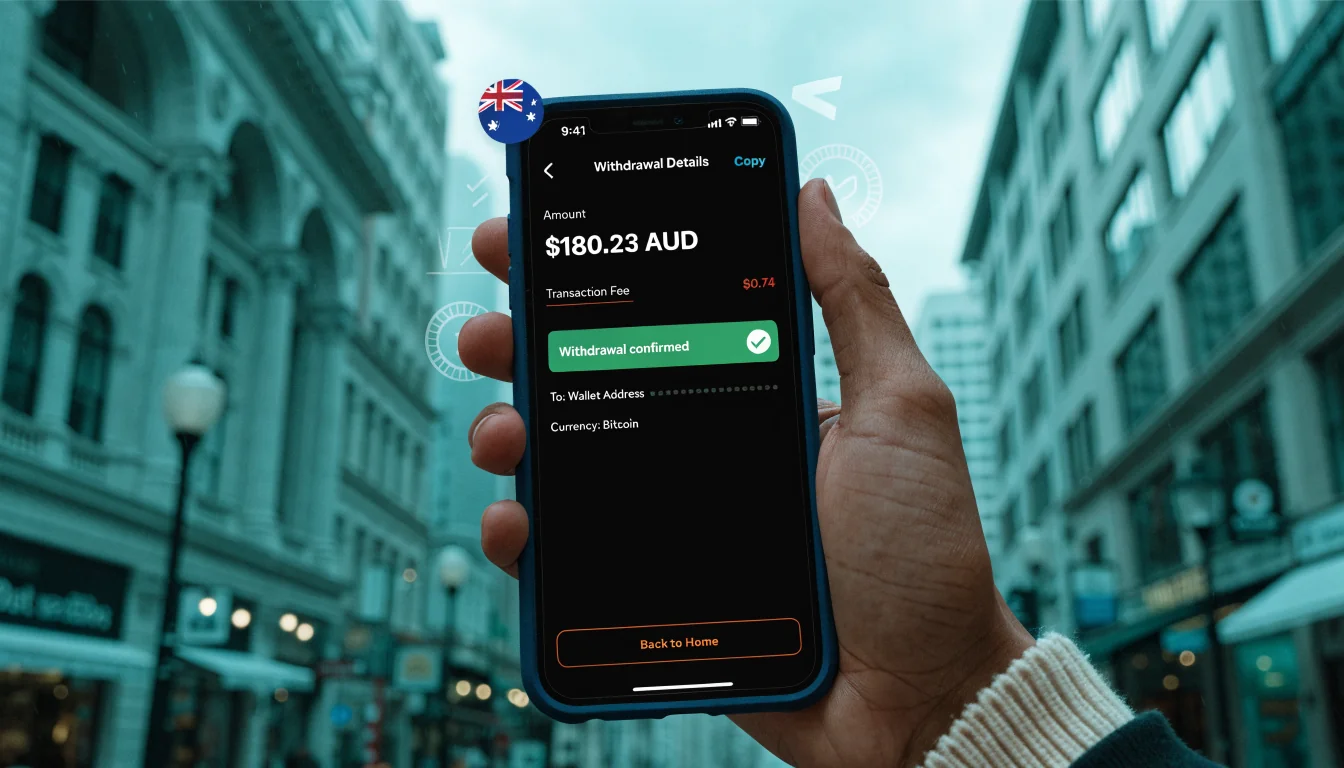
This is where crypto genuinely earns its reputation. Deposits in Bitcoin land in minutes — no waiting around, no "pending" screen refreshing itself. Withdrawals are a different story depending on the operator, though one industry review I trust put typical crypto withdrawal processing at within 24 hours once your KYC checks are done and the wagering is cleared. Compare that to an e‑wallet, where deposits are also instant but withdrawals can run same‑day to 48 hours, and you start to see why players gravitate toward crypto slots specifically for the bonus grind — you’re not losing days to a bank transfer while your winnings sit frozen.
The same review noted the fastest withdrawals across the market land under two hours, sometimes instant. That’s the ceiling, not the floor. Your actual mileage depends on the casino’s own processing queue and whether you’ve already been verified.
What to actually check before claiming
- The wagering multiplier and whether it applies to the bonus only or the deposit plus bonus.
- Whether there’s a cap on how much you can withdraw from bonus winnings.
- Which games count toward clearing the requirement — slots almost always do, table games often don’t or count less.
- Whether the bonus has a time limit to clear it before it expires.
None of these numbers are consistent enough across operators for me to hand you a rule of thumb. Every casino writes its own terms, and the terms are the only source that matters. I check them every single time now, because the one time I didn’t, I found out the hard way that "bonus funds" and "your money" aren’t the same thing until the wagering says otherwise.
Bitcoin Casino Game Selection: Slots, Table Games, and More
Here’s the part that trips people up, and it tripped me up too when I first went looking for "bitcoin casino games Australia": under the Interactive Gambling Act 2001, online casino style games — slots, poker, blackjack, roulette, all of it — are prohibited. Not "restricted." Prohibited. No domestic site can legally offer them to you, and no amount of "licensed and regulated" copy on a landing page changes that law.
So where does that leave the slots, table games and live poker rooms you keep seeing advertised? Offshore. Every operator running these games for Australian players is licensed somewhere else, outside Australian jurisdiction. The law doesn’t chase you for playing — it targets the operators, not the punters — but it also means there’s no local regulator standing behind the games, and no domestic licence to check because there isn’t one to obtain.
Offshore Licensing
Australian law prohibits domestic operators from offering casino games, so all Bitcoin casinos serving Aussie players are licensed offshore (e.g., Curaçao, Malta). This means there is no local regulator to protect players, and the operator’s jurisdiction determines the level of oversight.
That’s the trade-off. You get access to a full spread of games — video slots, blackjack variants, roulette tables, poker rooms, sometimes live dealer versions of the same — funded with crypto instead of a card. Cryptocurrency payments are accepted widely across these offshore sites, which is a big part of why "bitcoin casino" and "online casino" have basically become the same search in this country. The game selection itself isn’t shaped by Bitcoin at all — it’s shaped by whichever software providers the offshore operator has deals with. Crypto just changes how you pay to sit at the table.
One thing that doesn’t change no matter which games you pick: KYC checks. Every operator I’ve used, regardless of game library size or how flashy the slots looked, wanted identity verification at some point — usually before you can touch your winnings. I used to think crypto meant anonymous. It doesn’t, not on these sites.
A quick way to think about it:
- Slots — the bulk of any offshore Bitcoin casino’s library, run on third-party software.
- Table games — blackjack, roulette, baccarat, standard casino staples dressed up for crypto.
- Poker rooms — cash tables and sometimes tournaments, separate from the slot inventory.
None of these are legal for a domestic operator to offer you. They exist because the operator sits outside the reach of the Act — worth remembering before you treat any "licensed" badge as a local guarantee.
Playing Bitcoin Slots: Tips for Fast and Safe Gaming
I used to overthink the whole crypto side of things — wallets, addresses, confirmations — like it needed a manual. It doesn’t. A few habits made the difference between smooth sessions and staring at a screen wondering where my deposit went.
Send from a wallet you actually control. Not an exchange balance, not a friend’s address you borrowed "just this once." A crypto deposit itself lands in a few minutes once it’s sent from a proper wallet. If it’s slow, the problem usually isn’t the casino — it’s the wallet or the network you picked.
Double-check the address before you confirm. Sounds obvious. I’ve still copied the wrong line from a browser tab and had to sit through a delay that had nothing to do with the casino’s processing.
Keep your e-wallet linked and verified before you start spinning. E-wallet deposits go through instantly, and when it’s time to cash out, withdrawals through the same channel tend to clear same-day, sometimes stretching to a couple of days depending on the operator. That gap is almost always about their internal checks, not your wallet.
Screenshot your transaction ID. If a deposit doesn’t show up in your balance right away, support will ask for it first thing. Having it ready saves a back-and-forth that otherwise eats the time you saved by using crypto in the first place.
"Provably fair" isn’t a magic word. It just means the game’s outcome can be checked against a public seed after the fact — worth knowing exists, but it won’t tell you anything about how fast your money moves.
Fast gaming, in the end, is less about the slot and more about how clean your deposit and wallet setup already are before you hit spin.
Depositing Bitcoin at Australian Casinos: Methods, Speed, and Limits
I used to think a deposit is a deposit — money goes in, game starts, end of story. It isn’t. Cards, e‑wallets, bank transfers and crypto each carry their own speed and fee profile, and mixing them up cost me time I didn’t need to lose.
Fast Deposits
Using Bitcoin lets you fund your casino account within minutes, so you can start playing almost immediately.
Bank transfers are the one I’d avoid if you’re impatient. On the withdrawal side, one industry review I came across put them at up to 7 business days — slowest of the bunch, and there’s no reason deposits move faster through the same pipes. If you’ve ever waited on a bank transfer for anything, you know the feeling of just… staring at an app.
Crypto deposits, by contrast, are built for speed. That’s the whole appeal of Bitcoin at these sites: no bank sitting in the middle, no business-day counting. Cards and e‑wallets sit somewhere in between, usually quick going in, with the real differences showing up later at withdrawal.
Fees follow the same split. Bank routes tend to carry more friction than crypto rails, though exact numbers depend entirely on the operator you’re using — not something worth guessing at.
Bottom line: match the method to how fast you actually need the money moving, not just what’s already sitting in your wallet.
Bitcoin Slots Overview: Popular Types and What to Look For
I’ve clicked through more slot lobbies than I’d like to admit, and once you strip away the branding, most bitcoin casino slots fall into a handful of buckets: classic three-reel style, video slots with bonus rounds, and jackpot-style games where the prize pool grows. None of that is unique to crypto — it’s the payment rail underneath that changes.
What actually matters when you’re scanning a lobby isn’t the theme. It’s what happens after you win.
A slot’s bonus offer usually comes tied to wagering requirements, and those can lock your winnings until you’ve met them — that part doesn’t change just because you funded the account with bitcoin instead of a card. I’ve had funds sit there "won" but untouchable for longer than I expected, simply because I didn’t read the terms before spinning.
Fees are a smaller worry than people assume. Most Australian operators don’t charge you for spinning or cashing out. When a fee does show up, it’s usually not the casino nickel-and-diming you — it’s a crypto network fee, an FX conversion, or something tied to how the e-wallet or bank on the other end processes the withdrawal.
So before picking a "hot" slot from the lobby, check the bonus terms attached to it. That tells you more than the RTP badge ever will.
Withdrawing Your Bitcoin Winnings: Process, Timelines, and Fees
Cashing out is where you find out what a casino actually is. Not the homepage. Not the "24/7 support" badge. The withdrawal screen.
Request goes in, and then you wait on the operator, not the blockchain. Bitcoin itself moves fast. What slows things down is everything around it — KYC checks that get triggered the moment you try to take money out rather than put it in, payment method limits, and whatever processing window the operator has set for itself. I’ve had a withdrawal sit "pending" for reasons nobody explained, and I’ve had one clear before I’d finished my coffee. Same coin, same wallet, different casino.
By one industry review’s account, the quickest withdrawals in this market land in under two hours, sometimes instant. That’s the best case, not the promise on the tin.
Fees aren’t usually the casino’s doing — they’re network fees from the blockchain side. Ask before you play, not after you’ve won.
What payment methods are available for Australian players at online casinos?
Australian players can use widely accepted cards like Visa and Mastercard, bank transfers, e-wallets, prepaid vouchers such as Flexepin and Neosurf, and cryptocurrencies. Most offshore operators also accept PayID as their primary AUD deposit method, allowing you to fund your account without paying currency conversion fees.
How do recommended online casinos ensure game fairness?
Reputable online casinos maintain security standards using SSL/TLS encryption and PCI-DSS compliance for all transactions, including crypto rails. However, since there is no domestic licensing body for online casinos in Australia, fairness and regulation depend entirely on the overseas jurisdiction that issued the operator’s licence, such as Curaçao or Malta.
How safe are my funds at a crypto casino?
Your funds are protected by standard financial security protocols, as all featured payment options use SSL/TLS encryption and PCI-DSS compliance. Additionally, using cryptocurrency means your deposits take only a few minutes to process, and withdrawals are typically handled within 24 hours, though KYC identity checks are mandatory before you can cash out.
What law governs online gambling in Australia?
The Interactive Gambling Act 2001 (IGA) is the primary Commonwealth law governing online gambling in Australia, introduced to protect the public with a focus on harm minimisation. Under this Act, all online casino-style games — including slots, poker, blackjack, and roulette — are prohibited, although the law targets operators rather than individual players.
Created by the ”Casino Payments Info” editorial team.